Advertisement






What really powers the cloud? Behind every Google search, A...
A lot of what defines a home isn’t visible at handover. I...
Private equity has played a significant role in shaping Indi...
Luxury real estate is one of the most talked-about segments ...
Airports play a much bigger role than just enabling travel -...
Delhi has revived the Public-Private Partnership (PPP) model for in-situ slum redevelopment under its new rehabilitation policy, but the prolonged experience of Kathputli Colony has highlighted the challenges of large-scale urban renewal. More than a decade after thousands of families were shifted to transit accommodation, many beneficiaries are still awaiting permanent homes. The project, once envisioned as a model for slum rehabilitation, has become a reminder of how delays in execution can affect livelihoods, community networks and public confidence even as the government prepares to replicate the approach elsewhere.
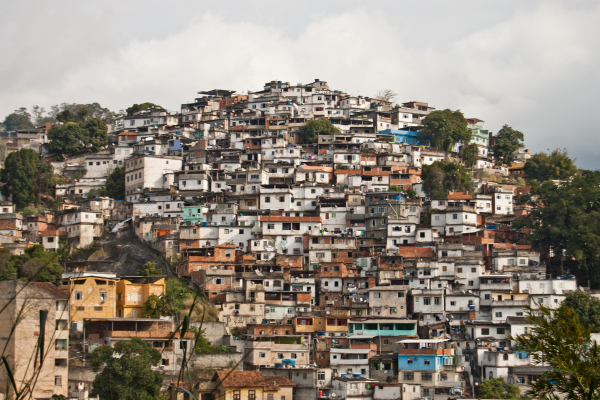
The story of Delhi's Kathputli Colony has long symbolised both the promise and the pitfalls of urban redevelopment. Home to one of the world's largest communities of traditional performers, the settlement became the capital's first in-situ slum rehabilitation project under the PPP model. While the redevelopment was intended to replace informal housing with modern apartments and community facilities, construction delays have left many displaced families living in temporary transit accommodation for years. As Delhi rolls out a fresh PPP-based rehabilitation policy, the unfinished Kathputli project has returned to the spotlight.
Kathputli Colony, located in Shadipur in west Delhi, was selected as the capital's first in-situ slum redevelopment project under a Public-Private Partnership model. The project envisaged rehabilitating approximately 2,800 eligible families by constructing Economically Weaker Section (EWS) flats while allowing the private developer to utilise a portion of the land for commercial and residential development, making the project financially viable.
The redevelopment was conceived as a landmark initiative under the "land as a resource" approach, with residents expected to receive permanent housing equipped with improved civic amenities. The master plan also included community infrastructure such as an amphitheatre, health centre, exhibition spaces for artists, retail outlets, children's park, multipurpose hall and skill development facilities, recognising the colony's unique identity as a settlement of puppeteers, magicians, musicians, dancers and craftsmen.
To facilitate construction, thousands of residents were relocated to transit accommodation at Anand Parbat with the understanding that the shift would be temporary until the rehabilitation flats were completed. However, the project encountered repeated delays arising from legal disputes, administrative hurdles and construction-related challenges, extending the stay of many families in transit housing well beyond the original timeline.
The prolonged delay has had a significant impact on the colony's traditional artist community. Many performers say living away from their original neighbourhood has disrupted their livelihoods, weakened social networks and affected access to audiences that once supported their craft. Families have also raised concerns over cramped transit accommodation and uncertainty surrounding the handover of permanent homes.
The renewed attention on Kathputli Colony comes after the Delhi government announced the Delhi Slum and JJ Cluster Rehabilitation and Relocation Policy, 2026, which revives the use of the PPP model for in-situ rehabilitation of slums located on government land. Under the new policy, the Delhi Urban Shelter Improvement Board (DUSIB) has been designated as the nodal agency for implementing such redevelopment projects, replacing the earlier multi-agency framework.
Urban planning experts view the Kathputli experience as an important case study for future redevelopment initiatives. While the project demonstrated the potential of combining public land with private investment to deliver affordable housing, it also underscored the need for stronger implementation mechanisms, realistic construction timelines, greater accountability and sustained engagement with affected communities to ensure that rehabilitation keeps pace with redevelopment.
Advertisement













 Facebook
 Whatsapp
