Advertisement






What really powers the cloud? Behind every Google search, A...
A lot of what defines a home isn’t visible at handover. I...
Private equity has played a significant role in shaping Indi...
Luxury real estate is one of the most talked-about segments ...
Airports play a much bigger role than just enabling travel -...
Housing sales across India's seven major residential markets declined 6 per cent year-on-year to 90,715 units during the April-June quarter, according to Anarock, as higher property prices and economic uncertainties weighed on buyer sentiment. The consultant attributed the slowdown to geopolitical tensions in the Middle East and uncertainty surrounding employment in the IT and ITeS sectors. While sales weakened in four major cities, Bengaluru, Hyderabad and Kolkata recorded growth. At the same time, developers launched 7 per cent more homes than a year earlier, with average residential prices across the seven cities increasing by 7 per cent. Delhi-NCR registered the highest annual price appreciation at 13 per cent.
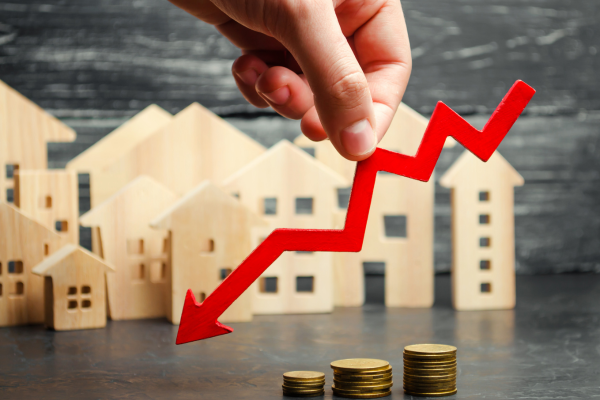
Housing sales across India's seven largest residential markets fell 6 per cent year-on-year to 90,715 units during the April-June quarter, according to data released by property consultancy Anarock, reflecting subdued homebuyer demand amid rising residential prices and broader economic uncertainty.
The consultant reported that 90,715 homes were sold across Mumbai Metropolitan Region (MMR), Delhi-NCR, Pune, Bengaluru, Hyderabad, Chennai and Kolkata during the quarter, compared with 96,285 units in the corresponding period last year. The report, released in the past week, also showed that average housing prices across these markets increased by 7 per cent over the same period.
Anarock Chairman Anuj Puri attributed the moderation in demand to external economic factors. He said the impact of the conflict in the Middle East had affected market sentiment, while uncertainties surrounding employment prospects in the IT and ITeS sectors had prompted many prospective homebuyers to postpone purchase decisions. According to him, demand growth is increasingly concentrated in premium residential projects, global capability centre (GCC)-driven employment hubs and infrastructure-led development corridors.
The sales trend varied across cities. Delhi-NCR recorded a 6 per cent decline in residential sales to 13,365 units from 14,255 units a year earlier. Mumbai Metropolitan Region, the country's largest housing market, registered an 8 per cent fall to 28,710 units from 31,275 units during the corresponding quarter of 2025.
Pune witnessed the sharpest decline among the major markets, with housing sales dropping 15 per cent to 13,090 units from 15,410 units. Chennai also recorded weaker demand, with sales declining 9 per cent to 5,135 units compared with 5,660 units in the year-ago period.
In contrast, three cities reported year-on-year growth. Bengaluru's housing sales increased marginally by 1 per cent to 15,285 units from 15,120 units, while Hyderabad recorded a 2 per cent rise to 11,270 units from 11,040 units. Kolkata posted the strongest percentage growth, with residential sales increasing 10 per cent to 3,860 units compared with 3,525 units during the corresponding quarter last year.
Despite softer demand, developers continued to introduce new residential projects. Anarock's data showed that fresh housing launches across the seven cities rose 7 per cent year-on-year to 106,000 units during the April-June quarter, up from 98,625 units in the same period last year, indicating continued confidence among developers in long-term market fundamentals.
The consultant also reported sustained price growth across all major housing markets, with average residential prices increasing 7 per cent annually during the quarter. Among the seven cities, Delhi-NCR recorded the highest annual price appreciation at 13 per cent.
The Anarock findings differ from a recent report by PropEquity, which estimated that residential sales across the same period increased 19 per cent year-on-year to 112,458 units, highlighting differing market assessments by property consultancies based on their respective methodologies and data coverage.
Source - PTI
Advertisement













 Facebook
 Whatsapp
