Advertisement






What really powers the cloud? Behind every Google search, A...
A lot of what defines a home isn’t visible at handover. I...
Private equity has played a significant role in shaping Indi...
Luxury real estate is one of the most talked-about segments ...
Airports play a much bigger role than just enabling travel -...
• The Vadodara–Mumbai section of the Delhi–Mumbai Expressway is expected to be opened to traffic by August 31, according to Maharashtra Chief Minister Shri Devendra Fadnavis.
• Construction on the Maharashtra stretch is nearing completion, with the remaining packages progressing towards commissioning.
• The access-controlled expressway is expected to substantially reduce travel time between Mumbai and Vadodara while improving freight movement to western India's ports and industrial hubs.
• The project forms part of the Delhi–Mumbai Expressway, one of India's largest greenfield highway developments being implemented by the National Highways Authority of India (NHAI).
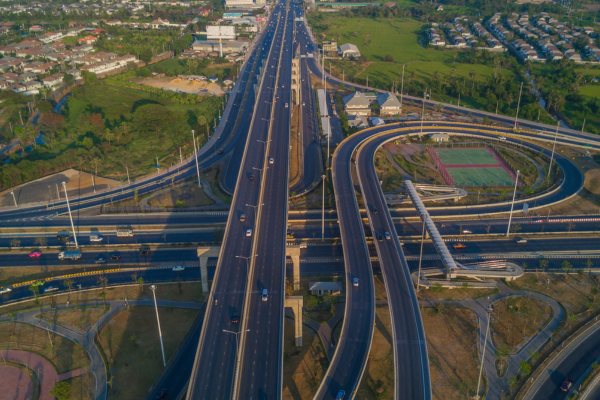
The Vadodara–Mumbai section of the Delhi–Mumbai Expressway is likely to become operational by August 31, Maharashtra Chief Minister Shri Devendra Fadnavis has said after reviewing the progress of the project during a visit to infrastructure works in Palghar district. The proposed commissioning is expected to complete a major missing link on the western end of the Delhi–Mumbai Expressway and improve road connectivity between Maharashtra and Gujarat.
The expressway segment passing through Maharashtra extends for around 157 km and has been developed in multiple construction packages. According to the state government, most of these packages have already been completed, while work on the remaining sections is progressing towards completion. Officials are aiming to make the entire stretch traffic-ready by the end of August, subject to completion of the balance construction and safety inspections.
Once operational, the corridor is expected to reduce travel time between Mumbai and Vadodara considerably by providing a high-speed, access-controlled alternative to the existing highway network. The new route has been designed to facilitate uninterrupted vehicular movement through controlled entry and exit points, thereby improving travel efficiency for both passenger and commercial traffic.
The expressway is also expected to strengthen logistics connectivity between Maharashtra, Gujarat and northern India. Improved road access to the Jawaharlal Nehru Port Authority (JNPA) and other industrial and logistics hubs is expected to support faster movement of cargo while reducing congestion on existing national highways. The corridor is likely to benefit freight operators by lowering transit times and improving operational efficiency.
The Vadodara–Mumbai section forms an integral part of the Delhi–Mumbai Expressway, a greenfield corridor being developed by the National Highways Authority of India to connect the National Capital Region with India's financial capital. The project traverses multiple states, including Haryana, Rajasthan, Madhya Pradesh, Gujarat and Maharashtra, and is intended to enhance inter-state connectivity while supporting industrial, logistics and economic activity along the route.
During the review meeting, Shri Fadnavis assessed the progress of ongoing works and directed officials to maintain construction quality while ensuring timely completion of the remaining packages. The state government is coordinating with the implementing agencies to facilitate completion of pending works and commissioning of the corridor within the targeted timeline.
Upon completion, the Vadodara–Mumbai stretch is expected to become a key component of India's expanding network of access-controlled expressways. Besides improving passenger mobility, the project is expected to strengthen freight movement, enhance regional connectivity and support economic activity across western India by providing faster and more efficient road transport infrastructure.
Source PTI
Advertisement













 Facebook
 Whatsapp
