Advertisement






What really powers the cloud? Behind every Google search, A...
A lot of what defines a home isn’t visible at handover. I...
Private equity has played a significant role in shaping Indi...
Luxury real estate is one of the most talked-about segments ...
Airports play a much bigger role than just enabling travel -...
• The Varanasi–Kolkata Expressway will include wildlife passages at every 100 metres along its stretch through Jharkhand's Chatra district to ensure safe animal movement across forested areas.
• The expressway design incorporates underpasses, box culverts and dedicated crossings to minimise habitat fragmentation and reduce wildlife-vehicle collisions.
• Authorities have also proposed protective measures such as boundary fencing, noise barriers and regulated construction practices to safeguard sensitive ecosystems during execution.
• The project aims to enhance connectivity across eastern India while integrating environmental safeguards into highway planning.
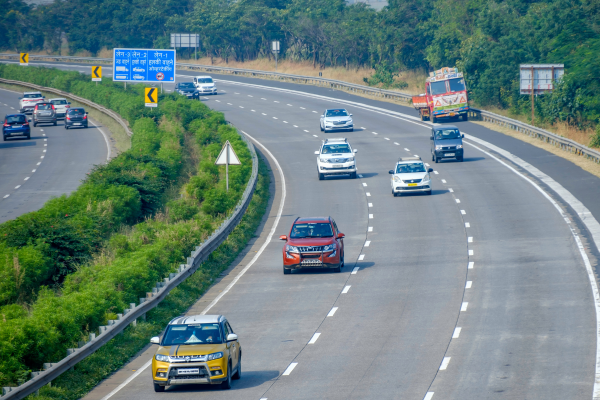
The upcoming Varanasi–Kolkata Expressway will incorporate extensive wildlife-friendly infrastructure along its alignment through Jharkhand's Chatra district, with dedicated fauna passages planned at intervals of every 100 metres to facilitate the safe movement of animals across the highway.
According to information compiled from multiple reports, the expressway passes through ecologically sensitive stretches that serve as movement corridors for wildlife. To minimise the impact on these habitats, the National Highways Authority of India (NHAI) has incorporated a series of wildlife underpasses, box culverts and dedicated animal crossings into the project design, ensuring that the new transport corridor coexists with the surrounding ecosystem.
The wildlife mitigation measures are intended to reduce habitat fragmentation and lower the risk of animal-vehicle collisions. In addition to the frequent fauna passages, the project will include boundary fencing at critical locations to guide animals towards designated crossing points and discourage accidental entry onto the expressway.
Reports also indicate that construction activities along environmentally sensitive sections will be carried out under strict safeguards. Measures such as controlled excavation, regulated movement of construction equipment and noise mitigation have been planned to minimise disturbance to wildlife during the execution phase. The project design also includes provisions for maintaining natural drainage patterns to preserve the surrounding ecology.
The expressway is part of the Bharatmala Pariyojana and is expected to significantly improve road connectivity between Uttar Pradesh, Bihar, Jharkhand and West Bengal. Once operational, it will reduce travel time, strengthen freight movement and improve access between major industrial, commercial and agricultural centres across eastern India.
The Chatra section has emerged as one of the project's most environmentally conscious stretches, reflecting a growing emphasis on integrating conservation principles into large-scale infrastructure development. Highway planners have sought to balance improved connectivity with ecological preservation by embedding wildlife protection measures into the core engineering design rather than treating them as standalone interventions.
Officials believe the project could serve as a model for future highway developments passing through forested landscapes, demonstrating how modern transport infrastructure can be developed alongside scientifically planned environmental safeguards. The Varanasi–Kolkata Expressway is expected to boost regional economic growth while preserving biodiversity through its integrated approach to sustainable infrastructure development.
Advertisement













 Facebook
 Whatsapp
