Advertisement






What really powers the cloud? Behind every Google search, A...
A lot of what defines a home isn’t visible at handover. I...
Private equity has played a significant role in shaping Indi...
Luxury real estate is one of the most talked-about segments ...
Airports play a much bigger role than just enabling travel -...
The Andhra Pradesh Capital Region Development Authority (APCRDA), along with the Indian Plumbing Association (IPA) Amaravati Chapter and ISHRAE Vijayawada Chapter, organised a technical session on district cooling and sustainable infrastructure planning for Amaravati. The programme brought together more than 150 officials, consultants, contractors and technical experts to discuss utility management, HVAC systems, plumbing standards and wastewater solutions. Industry specialists shared global best practices and emerging technologies that can support efficient urban development. The session highlighted the importance of integrated planning, technical standards and collaboration to support Amaravati’s long-term infrastructure and sustainability goals.
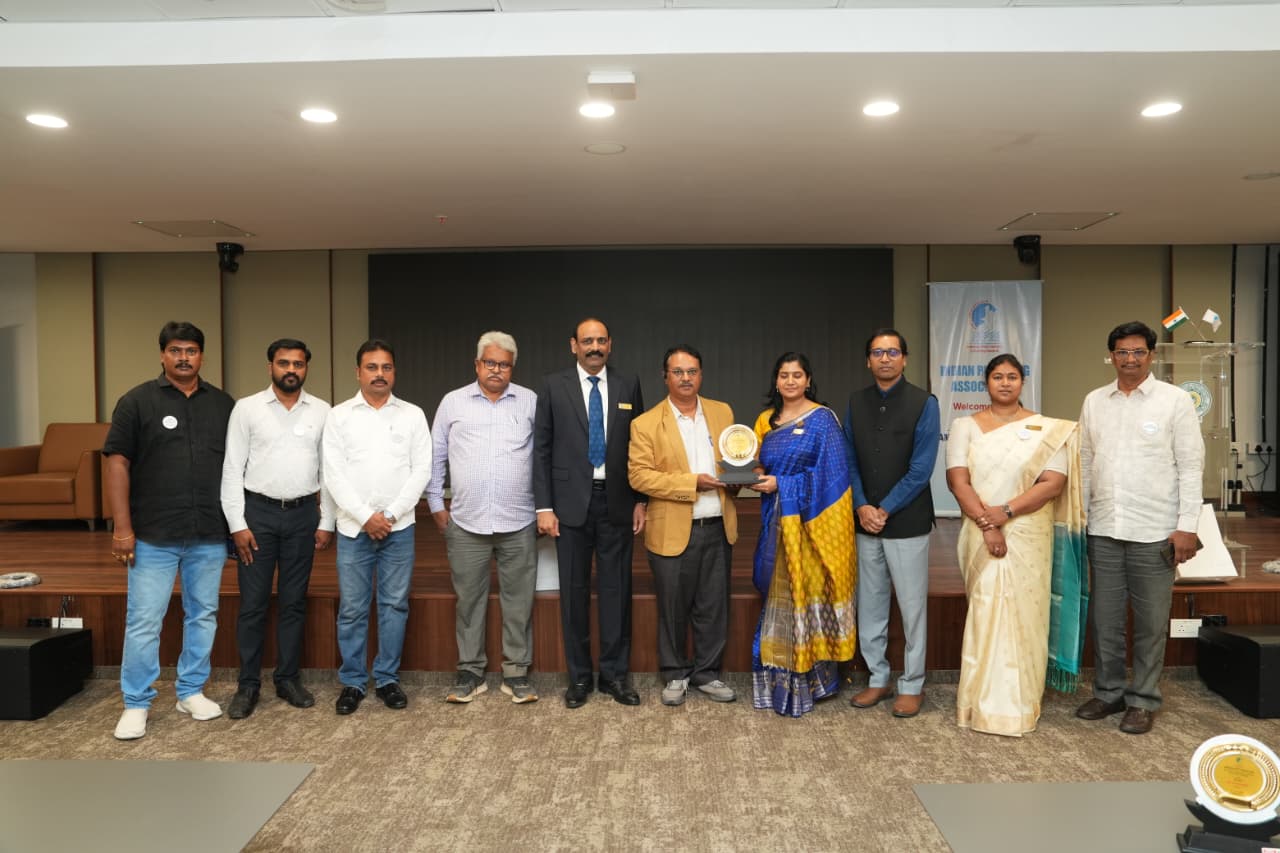
The Andhra Pradesh Capital Region Development Authority (APCRDA), in collaboration with the Indian Plumbing Association (IPA) Amaravati Chapter and ISHRAE Vijayawada Chapter, recently conducted a technical session on “District Cooling for Amaravati” as part of its efforts to strengthen sustainable infrastructure planning for the capital city.
The programme brought together more than 150 officials and technical professionals from APCRDA, Amaravati Development Corporation Limited (ADCL), Amaravati Green Infrastructure Corporation Limited (AGICL), consultants and contractors. Discussions focused on utility management systems and infrastructure solutions that can support the planned growth of Amaravati.
Speaking at the event, V. Vijay Rama Raju, IAS, Commissioner of APCRDA, stressed the need to integrate building services and centralised utility planning at the design stage of projects. He noted that the development of Amaravati as a smart, sustainable and future-ready capital city would depend on coordinated planning, quality execution and effective maintenance of public infrastructure and utility networks.
The technical session covered a wide range of topics, including district cooling systems, HVAC integration, plumbing standards, wastewater management and sustainable building services. Experts discussed how these systems can improve operational efficiency, reduce energy consumption and support long-term infrastructure sustainability in institutional, commercial and residential developments.
Dr. Anand Babu delivered a presentation on district cooling concepts and HVAC systems, while Gaurav shared insights from international district cooling projects and case studies. Bhaskar Katragadda and Suresh presented solutions related to advanced pumping technologies and wastewater management, highlighting approaches that can improve utility performance and resource efficiency.
Representatives from IPA and ISHRAE underlined the importance of adopting technical standards, encouraging innovation and promoting continuous knowledge exchange among stakeholders involved in infrastructure development. The discussions also reflected the growing focus on sustainable urban planning practices, which are increasingly being adopted across major cities in India and globally to improve energy efficiency and reduce environmental impact.
The session was coordinated by Ar. Sandeep Dixit, Chief Architect, APCRDA, who highlighted the importance of continued collaboration between government agencies, industry experts and technical institutions. He emphasised that such partnerships are essential for creating efficient, resilient and future-ready infrastructure systems that can meet the long-term needs of a developing capital city.
Amaravati has been planned as a greenfield capital with a strong emphasis on modern infrastructure, sustainability and technology-driven urban development. The latest technical workshop forms part of APCRDA’s broader efforts to evaluate advanced utility solutions and global best practices that can support the city’s future growth.
Source APCRDA
Advertisement













 Facebook
 Whatsapp
