Advertisement






What really powers the cloud? Behind every Google search, A...
A lot of what defines a home isn’t visible at handover. I...
Private equity has played a significant role in shaping Indi...
Luxury real estate is one of the most talked-about segments ...
Airports play a much bigger role than just enabling travel -...
• Mumbai has launched the redevelopment of a 100-acre slum cluster around Gilbert Hill in Andheri West, making it one of the city's largest slum redevelopment initiatives.
• The project will cover nearly 14,000 hutments and several existing residential structures under Maharashtra's newly introduced cluster redevelopment policy.
• It is the first major project among 19 large slum clusters identified across Mumbai for integrated redevelopment.
• The redevelopment aims to improve housing, civic infrastructure, road networks and public amenities while creating a planned urban neighbourhood.
• The project is expected to serve as a model for future cluster redevelopment projects across the city.
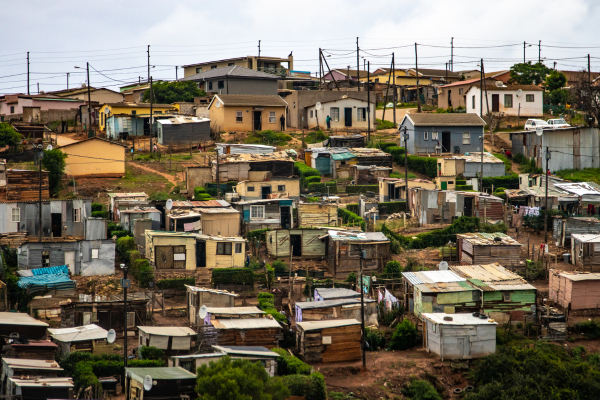
Mumbai has taken a major step towards large-scale urban renewal with the launch of a 100-acre slum cluster redevelopment project in Andheri West. The project, located around the Gilbert Hill area, is among the largest slum redevelopment initiatives undertaken in the city and is the first to move forward under Maharashtra's recently introduced cluster redevelopment policy.
The redevelopment covers a densely populated area comprising nearly 14,000 hutments along with a number of existing residential buildings. Once implemented, the project is expected to provide residents with formal housing, upgraded civic infrastructure and improved living conditions while addressing long-standing issues related to congestion and inadequate urban services.
The Andheri West project is part of the state government's broader plan to redevelop 19 major slum clusters across Mumbai through an integrated planning approach. Unlike conventional slum redevelopment projects that are carried out on individual plots, the cluster redevelopment model combines multiple land parcels, including slum pockets, non-slum areas, vacant land and older buildings, allowing authorities to undertake redevelopment on a much larger scale.
Officials believe the approach will help create better-planned neighbourhoods with wider roads, improved drainage systems, open spaces and enhanced public infrastructure. The policy is also intended to address fragmented development patterns that have often slowed redevelopment efforts in several parts of Mumbai.
The Gilbert Hill cluster holds strategic importance due to its location in one of Mumbai's key western suburbs. Andheri West has witnessed significant residential and commercial growth over the past decade, increasing pressure on civic infrastructure and housing. The redevelopment is expected to support more organised urban growth while improving connectivity and access to public amenities for residents in the area.
The state government has proposed a dedicated mechanism for implementing such projects, with redevelopment being undertaken through government agencies, private developers or joint ventures depending on project requirements. A high-level committee is also expected to oversee approvals and monitor implementation to ensure faster execution.
The initiative comes at a time when redevelopment has become a key driver of Mumbai's real estate and infrastructure growth. With limited availability of vacant land within city limits, authorities are increasingly focusing on redevelopment-led expansion to unlock land value and improve housing stock. Several large redevelopment projects involving housing colonies, old residential layouts and slum settlements are currently being planned or executed across different parts of Mumbai.
Urban planners and industry stakeholders have noted that large cluster redevelopment projects can enable more efficient infrastructure planning, improve traffic circulation and create sustainable communities compared to piecemeal redevelopment. The Andheri project is therefore being closely watched as a potential benchmark for similar initiatives proposed elsewhere in the city.
Advertisement













 Facebook
 Whatsapp
