Advertisement






What really powers the cloud? Behind every Google search, A...
A lot of what defines a home isn’t visible at handover. I...
Private equity has played a significant role in shaping Indi...
Luxury real estate is one of the most talked-about segments ...
Airports play a much bigger role than just enabling travel -...
Mumbai’s next phase of urban expansion is increasingly being defined by infrastructure-led growth across the extended Mumbai Metropolitan Region (MMR), with industry stakeholders referring to the trend as “Mumbai 3.0”. Spanning emerging locations such as Panvel, Karjat, Khalapur, Pen and Alibaug, the growth cycle is being supported by major connectivity projects including the Navi Mumbai International Airport, Atal Setu, the Virar–Alibaug Corridor and railway upgrades. Real estate developers and market experts say rising property prices and limited land availability in Mumbai and parts of Navi Mumbai are prompting homebuyers and investors to explore peripheral markets. Organised plotted developments, integrated townships and branded land projects are gaining traction as buyers seek affordability, flexibility, lifestyle amenities and long-term capital appreciation in infrastructure-linked micro-markets.
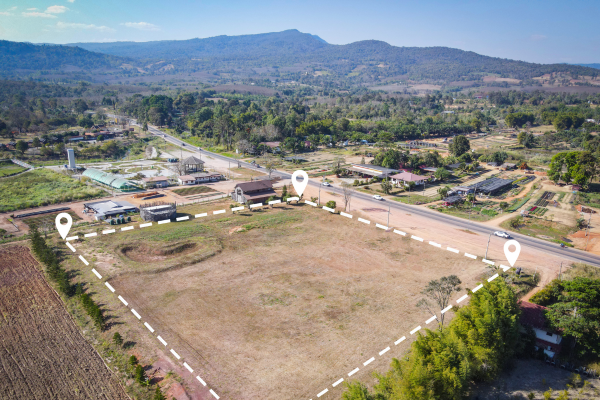
The Maharashtra government’s Mumbai 3.0 initiative is accelerating attention towards emerging real estate corridors across the wider Mumbai Metropolitan Region, as developers, investors and homebuyers increasingly look beyond the traditional urban centres of Mumbai, Navi Mumbai and Thane. Industry participants describe Mumbai 3.0 as the next phase of metropolitan expansion, driven by infrastructure investments, improved connectivity and the search for affordable housing options amid rising property prices in established markets.
Mumbai’s urban growth has historically moved outward in successive phases, beginning with South Mumbai, followed by suburban expansion, Navi Mumbai and later Thane. According to developers and market observers, the latest cycle reflects a structural shift rather than a branding exercise, as the region responds to constraints such as land scarcity, urban saturation and housing affordability challenges within the city.
The emerging growth belt stretches across locations including Panvel, Karjat, Khalapur, Pen and Alibaug, where several large-scale infrastructure projects are under development. These include the Navi Mumbai International Airport, the Mumbai Trans Harbour Link (Atal Setu), the Virar–Alibaug Corridor, the Panvel–Karjat railway expansion and connectivity improvements around Jawaharlal Nehru Port Trust.
Bhavesh Shah, Joint Managing Director of Today Group, stated that Mumbai 3.0 represents the most significant transformation of the MMR in decades, creating a new metropolitan framework shaped by connectivity and urban planning. He indicated that unlike previous growth cycles, multiple corridors are now evolving simultaneously, with infrastructure increasingly determining the direction of future development.
Vishal Ratanghayra, Founder and CEO of Platinum Corp., noted that Mumbai’s expansion has historically followed infrastructure development and that a similar pattern is now emerging across peripheral locations. He observed that affordability remains a major demand driver, particularly among younger buyers who are increasingly choosing plotted developments and organised land communities as long-term wealth creation assets.
According to Ratanghayra, organised plotted communities, integrated townships and branded land developments are expected to play a significant role in creating a more decentralised growth model across the MMR. He added that transparency, legal clarity and clear land titles have become essential requirements for buyers evaluating plotted developments.
Industry experts believe infrastructure improvements are also changing buyer behaviour. Porush Jhunjhunwala, CEO of Banke International Properties, stated that purchasers are increasingly willing to consider locations farther from Mumbai provided connectivity remains efficient and commuting times are predictable. This shift, he said, is opening up new investment corridors throughout the region.
The plotted development segment is witnessing strong interest from younger investors, non-resident Indians and second-home buyers. Developers report growing demand for projects incorporating landscaped open spaces, wellness facilities, clubhouses, sports amenities, co-working infrastructure and low-density planning concepts.
Parthh K Mehta, CMD of Paradigm Realty, said the effects of Mumbai 3.0 are becoming visible across asset classes, particularly within the luxury segment. He noted that infrastructure projects such as the 21.8-km Atal Setu, the Navi Mumbai International Airport and new expressway corridors are enhancing the attractiveness of plotted developments in Panvel, Karjat and Khalapur.
According to market estimates cited by industry participants, plotted developments in Mumbai 3.0 corridors are currently priced between INR 3,000 and INR 15,000 per sq ft depending on proximity to infrastructure projects. This compares with traditional luxury markets in Mumbai, where prices can exceed INR 50,000 to INR 1 lakh per sq ft. Well-connected nodes around airports and major transport corridors are projected to record annual appreciation of approximately 15-25 per cent in the coming years.
Market observers expect Mumbai 3.0 to evolve as a network of interconnected urban clusters rather than a single destination. As connectivity projects become operational and decentralised development gains momentum, these emerging corridors are likely to accommodate residential, commercial and social infrastructure while supporting the region’s next phase of expansion.
Source - PTI
Advertisement













 Facebook
 Whatsapp
