Advertisement






What really powers the cloud? Behind every Google search, A...
A lot of what defines a home isn’t visible at handover. I...
Private equity has played a significant role in shaping Indi...
Luxury real estate is one of the most talked-about segments ...
Airports play a much bigger role than just enabling travel -...
The Navi Mumbai Municipal Corporation (NMMC) has initiated discussions with environmental organisations, researchers and industry stakeholders to position the city as a recycling hub through a series of circular economy and waste management initiatives. At a special meeting chaired by Municipal Commissioner Dr Kailas Shinde, proposals ranging from plaster of Paris (POP) idol recycling and decentralised waste management to textile recycling, biomass briquettes and biodegradable alternatives to single-use plastics were reviewed. The civic body is also considering a recycling project proposed by the Institute of Chemical Technology (ICT), Mumbai. The discussions come as NMMC prepares for the implementation of Solid Waste Management Rules, 2026, while seeking sustainable solutions for festival idol immersion, urban biodiversity conservation and citizen participation in environmental governance.
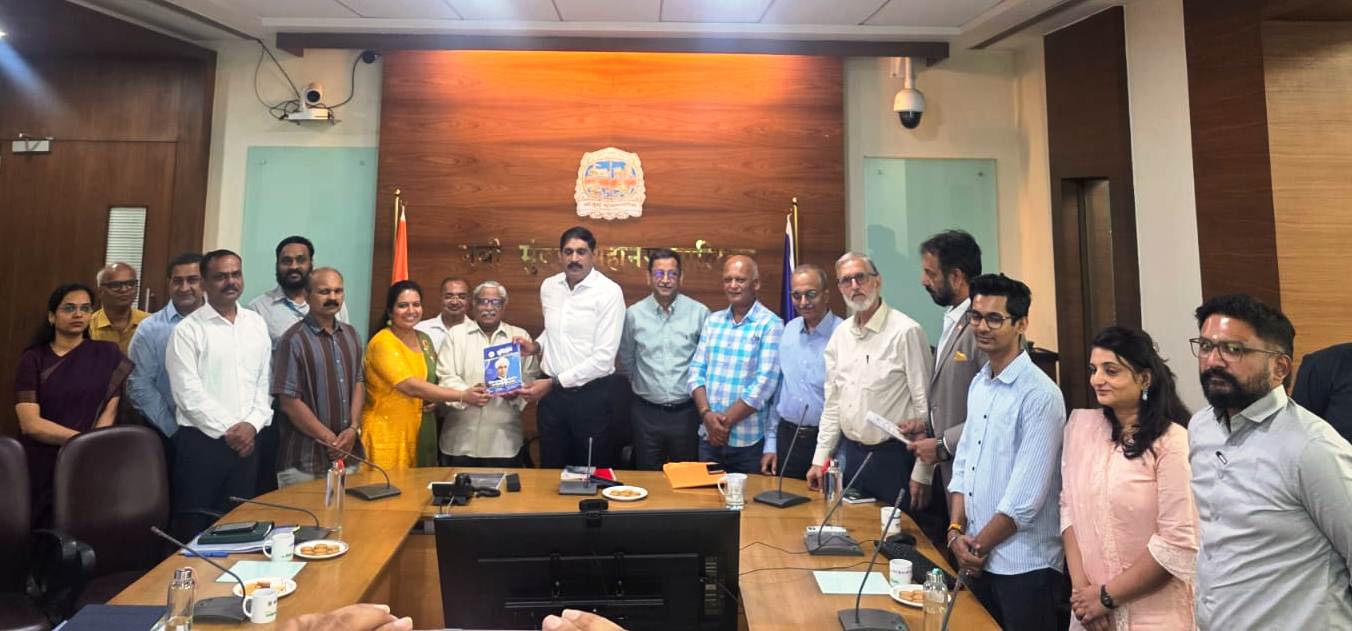
The Navi Mumbai Municipal Corporation (NMMC) has begun evaluating a range of recycling and environmental management initiatives aimed at transforming the city into a recycling hub, following a special meeting held in the past week under the chairmanship of Municipal Commissioner Dr Kailas Shinde. The meeting brought together environmental organisations, researchers, academic institutions and civic stakeholders to identify sustainable solutions for urban environmental challenges, including the management and reuse of plaster of Paris (POP) idols.
During the meeting, representatives from the Institute of Chemical Technology (ICT), Mumbai, presented several innovative concepts focused on waste recovery and resource reuse. These included details of a pilot POP recovery project, decentralised waste management models and small-scale waste processing technologies. ICT also proposed establishing a recycling project in Navi Mumbai, with the municipal corporation stating that the proposal's feasibility would be examined.
Representatives of sculptors' associations expressed their willingness to use recycled POP material for manufacturing new idols, supporting efforts to create a circular system for idol production and disposal.
Environmental organisation Nuotera presented a model under which recycled POP from immersed idols could be converted into school furniture, including study tables. The organisation proposed entering into a memorandum of understanding with the civic body to facilitate the collection and transfer of immersed idols for recycling purposes.
Project Mumbai proposed the development of a citizen volunteering portal to encourage public participation in environmental initiatives. The organisation also presented an 'Agni Suraksha Vision' focused on enhancing fire safety through citizen engagement and creating a volunteer network to support civic initiatives across the city.
The meeting also reviewed Navi Mumbai's contribution towards Maharashtra Climate Week 2027 and the role of scientific biodiversity management in strengthening the state's environmental profile. Dr Shinde noted that a recent tree census had identified more than 1.5 million trees across over 225 locations within the municipal limits. He stated that the civic body was prioritising native species plantation to improve the city's environmental value while highlighting the importance of civic marshals in environmental management and behavioural change initiatives.
Additional presentations included proposals from the Art of Living Foundation's Eco Kranti initiative, which showcased biodegradable alternatives to single-use plastic products, particularly for use in restaurants and hospitals. Presspal India demonstrated the use of biomass briquettes produced from garden and agricultural waste as an alternative fuel source for cremation, reducing dependence on conventional wood.
Dr Shinde also outlined key provisions of the newly implemented Solid Waste Management Rules, 2026, stressing the responsibilities of institutions and housing societies generating more than 100 kg of waste daily. He emphasised the need for effective implementation mechanisms and highlighted the importance of GPS-based idol traceability during Ganeshotsav and Navratri immersions to ensure compliance with environmental regulations.
The meeting additionally featured a presentation on a Textile Recycling Facility (TRF) being developed in collaboration with the Ministry of Textiles' Textile Committee and NMMC, described as the first initiative of its kind in India. The commissioner urged participating organisations and researchers to convert their concepts into scalable and practical projects, stating that the discussions represented a significant step towards establishing Navi Mumbai as a centre for recycling and sustainable resource management.
Advertisement













 Facebook
 Whatsapp
