Advertisement






What really powers the cloud? Behind every Google search, A...
A lot of what defines a home isn’t visible at handover. I...
Private equity has played a significant role in shaping Indi...
Luxury real estate is one of the most talked-about segments ...
Airports play a much bigger role than just enabling travel -...
The Union Cabinet has approved a one-time budgetary support of up to INR 10,000 crore for Oil Marketing Companies to provide Aviation Turbine Fuel price stabilisation support to scheduled Indian airlines covering both domestic and international operations. The decision, announced on 3 June 2026, is a direct response to exceptional fuel price volatility stemming from the ongoing West Asia crisis. The support will be disbursed on an interest-free basis and will remain operational for 36 months or until the advance is fully recovered, whichever is earlier. It builds upon a series of earlier measures including a 25 per cent cap on domestic ATF base price increases, a 25 per cent reduction in landing and parking charges, and VAT reductions on ATF in Delhi and Maharashtra to 7 per cent.
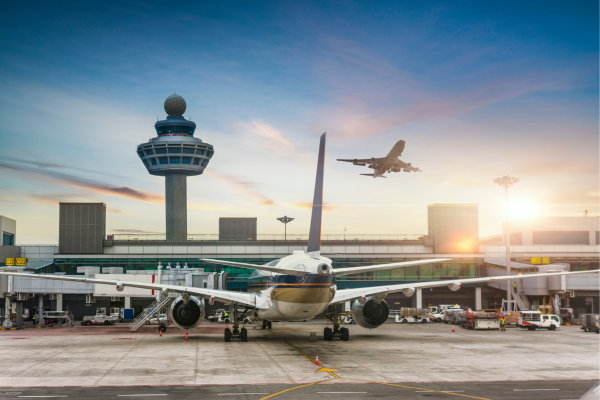
The Union Cabinet, chaired by Prime Minister Narendra Modi, approved on 3 June 2026 a one-time budgetary support of up to INR 10,000 crore for Oil Marketing Companies (OMCs) to provide Aviation Turbine Fuel (ATF) price stabilisation support to scheduled Indian airlines for both their domestic and international operations. The mechanism is a direct response to the acute fuel price volatility generated by the ongoing West Asia crisis, which has disrupted aviation economics across global markets.
ATF constitutes approximately 40 per cent of airline operating costs under normal market conditions and can climb to as much as 60 per cent of total operating expenditure during periods of extreme price volatility. Such fluctuations directly affect route planning, operational continuity, and fare stability, with knock-on consequences for passengers, cargo operators, and the broader travel and hospitality ecosystem. The Cabinet's approval is intended to introduce a measure of predictability into ATF pricing for Indian carriers and to insulate passengers from the impact of sudden fuel price shocks.
Civil Aviation Minister Ram Mohan Naidu, welcoming the decision, stated that the government had taken a series of calibrated steps since the onset of the current crisis to support the aviation sector while protecting passenger interests. He noted that an earlier measure under the Emergency Credit Line Guarantee Scheme had earmarked nearly INR 5,000 crore for airlines to provide liquidity support, and that the latest approval extended this assistance through an interest-free disbursement to OMCs specifically for ATF price stabilisation. He added that the intervention was expected to reduce uncertainty in fuel costs for airlines and ultimately contribute to lower airfares for passengers.
The Minister outlined a broader package of sector-level relief measures already in place. For domestic operations, the increase in ATF base prices had been moderated and capped at 25 per cent despite significantly steeper rises in global fuel markets. Landing and parking charges for domestic carriers had been reduced by 25 per cent. The governments of Delhi and Maharashtra which together account for approximately 75 to 80 per cent of the country's ATF uplift had reduced the value-added tax on ATF to 7 per cent, a concession the Minister specifically acknowledged.
The ATF price stabilisation support mechanism will remain operational for a period of 36 months, subject to annual review, or until the advance amount disbursed to OMCs is fully recovered and settled whichever occurs earlier. Oversight of implementation, claim verification, reconciliation, and settlement will be handled by a Monitoring Committee comprising representatives of the Ministry of Civil Aviation, the Ministry of Petroleum and Natural Gas, and the Department of Expenditure.
The Minister noted that the decision had been welcomed across the aviation industry for its potential cascading effect on connected sectors including tourism, hospitality, trade, and exports. He stated that the stabilisation support was expected to ensure continuity in air operations for both passenger services and high-value air cargo. The Ministry of Civil Aviation confirmed that it had been in sustained engagement with airlines and other stakeholders throughout the crisis to monitor operational challenges and coordinate a policy response.
Source: PIB
Advertisement













 Facebook
 Whatsapp
