Advertisement






The Gulf conflict has disrupted global supply chains, pushed...
REITs have changed the way commercial real estate is owned a...

What does it take to preserve a real estate legacy while bui...
What really powers the cloud? Behind every Google search, A...
A lot of what defines a home isn’t visible at handover. I...
• The Cabinet Committee on Economic Affairs approved three separate national highway upgradation and construction projects on 3 June 2026, with a combined capital outlay of INR 19,834 crore across Bihar, Telangana, and Odisha.
• The projects cover a total of 494.47 km, spanning the Khagaria–Purnea corridor on NH-31 and NH-231, the Armoor–Mancherial and Jagtial–Karimnagar stretches on NH-63 and NH-563, and the Rameshwar–Paradeep coastal highway.
• All three corridors will be built to 4-lane standards, with design speeds of 100 km per hour, and are expected to collectively reduce travel times, lower vehicle operating costs, and strengthen logistics connectivity across the three states.
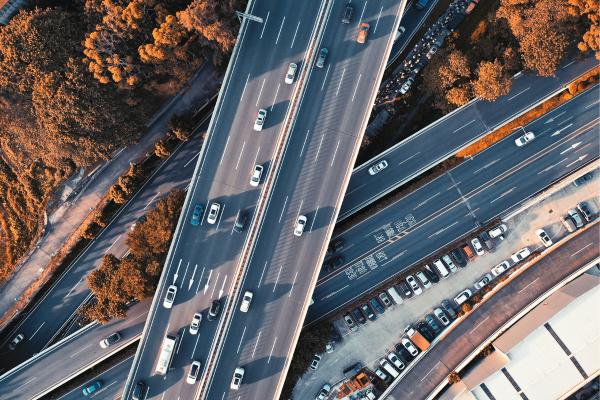
The Cabinet Committee on Economic Affairs (CCEA), chaired by Prime Minister Narendra Modi, cleared three highway projects on 3 June 2026 in a single sitting, committing a combined capital outlay of INR 19,834 crore to upgrade and construct national highway corridors in Bihar, Telangana, and Odisha.
In Bihar, the CCEA approved the upgradation of the 143.529-km Khagaria–Purnea section of NH-31 and NH-231 to 4-lane standard on Build-Operate-Transfer (Toll) mode at a cost of INR 3,936.05 crore. The corridor, which passes through the districts of Khagaria, Bhagalpur, Katihar, and Purnia, currently suffers from severe geometric deficiencies, sharp curves, and congestion through built-up areas. A 6.729-km greenfield bypass of Purnea city will be developed as part of the project. Upon completion, travel time along the corridor is expected to reduce to approximately two hours. The upgraded highway will connect five PM GatiShakti Economic Nodes — comprising one textile cluster, two mega food parks, and two fishing and seafood parks — along with 11 logistic nodes including four major railway stations, one airport, four national highways, and two state highways.
In Telangana, the CCEA approved the widening of the Armoor–Jagtial–Mancherial section of NH-63 and the Jagtial–Karimnagar section of NH-563 to 4-lane standard across three work packages, covering a combined length of 190.76 km at a total capital cost of INR 7,597.16 crore. The NH-63 section will be developed on Hybrid Annuity Model, while the NH-563 section will follow BOT (Toll) mode. Both stretches currently face severe congestion through heavily built-up towns including Korutla, Jagtial, Dharmapuri, Lakshettipet, Mancherial, Gangadhara, and Karimnagar. Bypasses to built-up areas will be constructed with open tolling. Travel time between Armoor and Mancherial is expected to reduce by approximately one hour and 30 minutes, while the Jagtial–Karimnagar journey is projected to shorten by around 45 minutes. The project will connect five Economic Nodes, seven Social Nodes, and ten Logistic Nodes under the PM GatiShakti framework.
In Odisha, the CCEA approved the construction of a new 160.18-km coastal highway from Rameshwar to Paradeep on Hybrid Annuity Model across two packages at a total capital cost of INR 8,300.79 crore. Package I covers a 4-lane access-controlled stretch from Rameshwar to Konark (79.40 km), while Package II provides a 2-lane carriageway with paved shoulder from Konark to Paradeep (80.78 km). The corridor passes through Khurda, Puri, Kendrapada, and Jagatsinghpur districts. Existing road geometry along the Puri–Satapada and Puri–Konark stretches is poor, with approximately 40 per cent ribbon development impeding long-distance movement. On completion, travel time between Rameshwar and Paradeep is expected to fall by approximately two hours and 30 minutes. The project will connect nine Economic Nodes and five Logistic Nodes.
All three projects are designed to a speed of 100 km per hour and are expected to deliver reductions in fuel consumption, carbon emissions, and vehicle operating costs across their respective corridors.
Source: PIB
Advertisement













 Facebook
 Whatsapp
