Advertisement






What really powers the cloud? Behind every Google search, A...
A lot of what defines a home isn’t visible at handover. I...
Private equity has played a significant role in shaping Indi...
Luxury real estate is one of the most talked-about segments ...
Airports play a much bigger role than just enabling travel -...
Delhi Lieutenant Governor Taranjit Singh Sandhu has called for a coordinated and time-bound strategy across the National Capital Region (NCR) to address air pollution before the onset of winter. During a review meeting with the Commission for Air Quality Management (CAQM), officials identified road dust, vehicular emissions, biomass burning and industrial pollution as major pollution sources. The discussions focused on inter-agency coordination, dust-control measures, mechanised road sweeping and long-term environmental strategies aimed at improving air quality across Delhi-NCR.
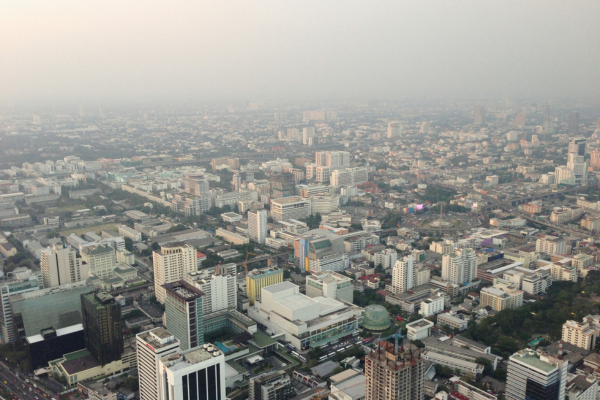
Delhi Lieutenant Governor Taranjit Singh Sandhu earlier this week directed agencies across the National Capital Region (NCR) to implement a coordinated and time-bound roadmap to tackle air pollution before the winter season, when air quality in the Capital typically deteriorates. The directive was issued during a meeting with Rajesh Verma, Chairperson of the Commission for Air Quality Management (CAQM), to review ongoing pollution-control measures and assess preparedness for the coming months.
The meeting focused on strengthening pollution-control initiatives, improving coordination among government departments and developing long-term environmental strategies for Delhi and neighbouring NCR regions. Sandhu stressed that air pollution remains a regional challenge requiring regional solutions and called for concerted action by agencies across Delhi and adjoining states to achieve measurable improvements in air quality before winter.
Officials identified road dust, vehicular emissions, biomass burning and industrial pollution as the principal contributors to poor air quality in Delhi-NCR. While biomass burning and industrial emissions largely originate from areas outside the Capital, road dust was highlighted as a major local source of pollution requiring immediate attention.
During the discussions, the Lieutenant Governor emphasised the need to intensify dust-mitigation measures across the city. He called for wider deployment of mechanised road sweeping machines, timely repair of damaged roads, end-to-end coverage of road-cleaning operations and prompt disposal of silt removed from drains. The meeting also reviewed the need for enhanced roadside plantation and more effective utilisation of existing dust-control infrastructure.
Sandhu noted that road dust remains one of the most significant yet often underestimated sources of pollution within Delhi. He urged agencies responsible for road maintenance and civic infrastructure to adopt a mission-mode approach to dust management, given that many of the relevant authorities operate within the city itself.
The review comes amid broader efforts by central and regional authorities to strengthen year-round pollution-control measures across Delhi-NCR. In recent weeks, the Union Environment Ministry has also reviewed air-quality action plans and called for increased deployment of mechanised sweeping equipment and road-cleaning resources to address particulate pollution.
The CAQM and NCR agencies have been focusing on coordinated interventions across transport, industry, dust management, waste handling and biomass-burning control to address the region's persistent air-quality challenges. Officials indicated that sustained implementation of these measures, coupled with stronger inter-agency cooperation, would be critical in limiting pollution levels during the high-risk winter period.
Advertisement













 Facebook
 Whatsapp
