Advertisement






What really powers the cloud? Behind every Google search, A...
A lot of what defines a home isn’t visible at handover. I...
Private equity has played a significant role in shaping Indi...
Luxury real estate is one of the most talked-about segments ...
Airports play a much bigger role than just enabling travel -...
The Central Road Research Institute (CRRI) carried out a detailed study of Layout Pooling Scheme (LPS) roads being developed in Amaravati, focusing on internal road networks and associated civic infrastructure. Over a two-day field visit, the team examined construction progress across multiple LPS zones, including drainage, sewerage systems, and power line planning. Findings were presented to the Amaravati Development Corporation (ADC) leadership. The study also included technical recommendations on road design standards based on traffic load requirements for both internal and trunk roads in the capital region.
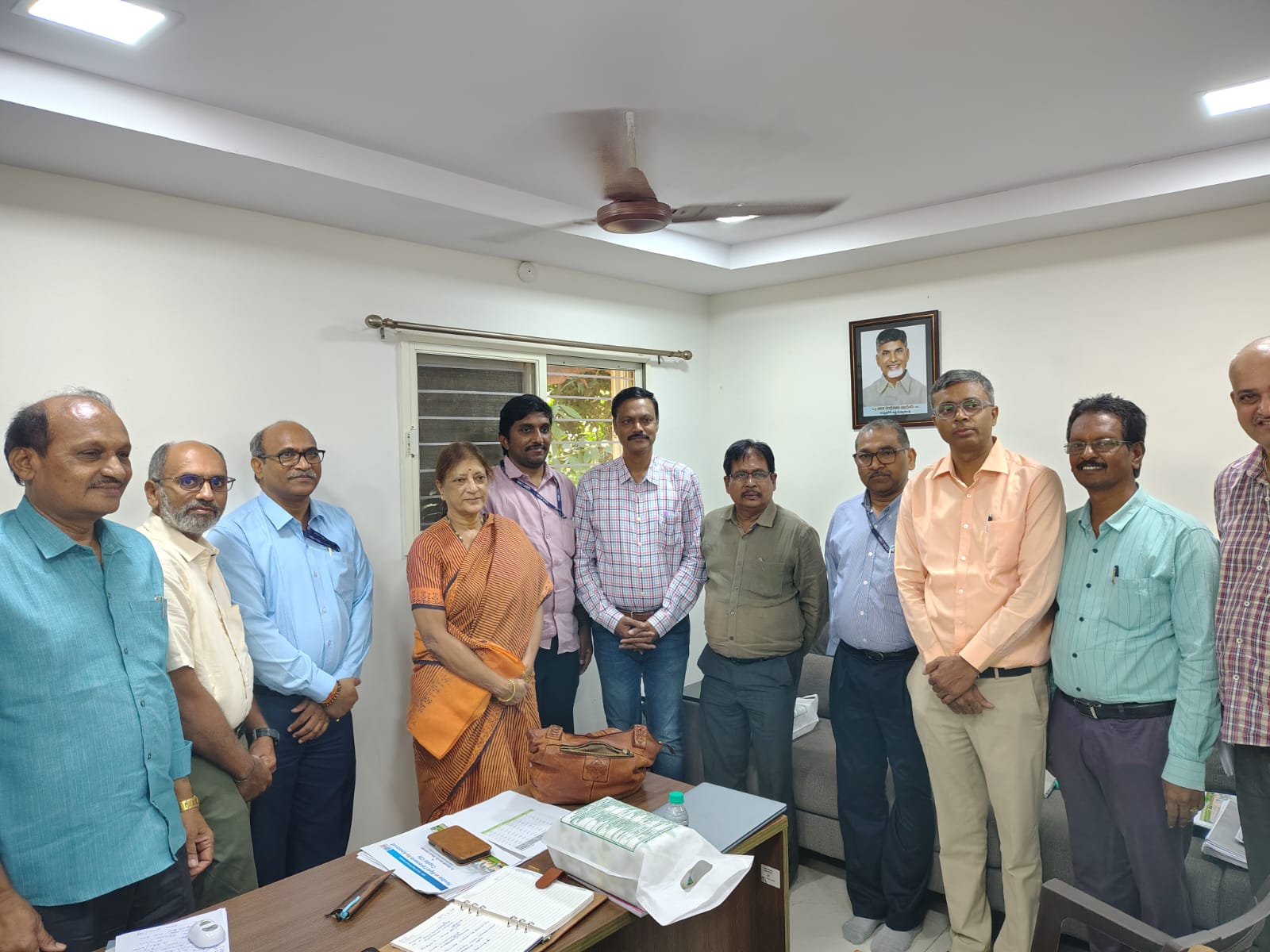
The Central Road Research Institute (CRRI) conducted a detailed assessment of Layout Pooling Scheme (LPS) roads being constructed in Amaravati under the state government’s capital development programme. The study focused on infrastructure development within the capital region, including internal road networks, storm water drainage systems, sewerage arrangements, and underground power line works in LPS zones developed for farmers.
The CRRI team carried out field inspections over a two-day visit across LPS Zone-2, Zone-5, Zone-9, Zone-10, Zone-12, and Zone-12A. During the review, the team examined construction designs and planning documents prepared by the Amaravati Development Corporation (ADC) to assess execution standards and technical compliance.
As part of the engineering assessment, it was suggested that LPS roads should be designed to handle a cumulative traffic load of 5 msa, equivalent to 5 million standard axles. In a similar observation, experts noted that trunk roads should be constructed to withstand a cumulative traffic load of 100 msa, also referenced in terms of 5 million standard axles, as per the report shared during the study discussion.
The findings of the study were presented to the ADC Chairperson and Managing Director through a detailed PowerPoint presentation. The presentation summarised the key observations from the field inspections and technical review conducted over the two-day visit in Amaravati.
The interaction also included senior technical officials and experts. CRRI Director C.H. Ravisekhar, Chief Scientist Dr. K. Ravinder, Principal Scientist Dr. Bharat (Flexible Pavement), Chief Scientist (Geotech) Dr. P.S. Prasad, Senior Principal Scientist S.H. Dinesh Ganveer, along with ADC Chief Engineers C.H. Dhanunjaya and B. Narasimha Murthy, Superintending Engineer R. Hanumanth Reddy, and IPD HOD Dr. K.V. Ganesh Babu, were part of the meeting and discussions.
Source APCRDA
Advertisement













 Facebook
 Whatsapp
