Advertisement






The Gulf conflict has disrupted global supply chains, pushed...
REITs have changed the way commercial real estate is owned a...

What does it take to preserve a real estate legacy while bui...
What really powers the cloud? Behind every Google search, A...
A lot of what defines a home isn’t visible at handover. I...
A USD 500 million artificial intelligence roadmap for Pune was unveiled at SHAKTI Summit 2026, organised by the Hindu Economic Forum (HEF) Pune District Chapter at the Pune International Centre. The initiative seeks to position Pune as a global hub for applied AI through investments in computing infrastructure, talent development and industry-focused solutions. The summit also showcased ISACA, an indigenous autonomous surface craft developed for defence, naval and rescue applications. Attended by Maharashtra Governor Jishnu Dev Varma, the event focused on strategic sectors including defence, aerospace, artificial intelligence, technology, infrastructure and venture capital, while outlining plans to strengthen domestic innovation, industrial growth and technological self-reliance.
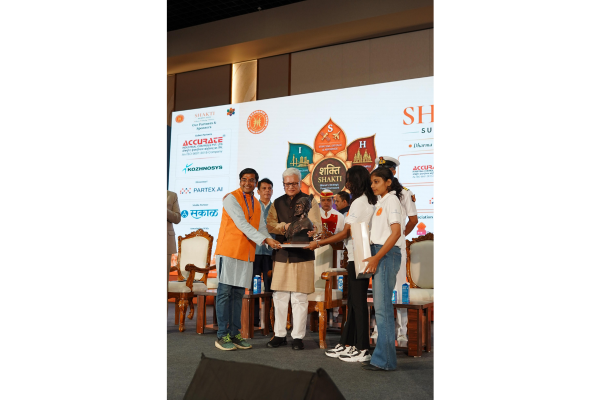
A USD 500 million roadmap aimed at establishing Pune as a global centre for applied artificial intelligence was unveiled during SHAKTI Summit 2026, organised by the Pune District Chapter of the Hindu Economic Forum (HEF) at the Pune International Centre. Held in the past week, the summit brought together policymakers, industry leaders, entrepreneurs and technology experts to discuss strategic sectors including artificial intelligence, defence, aerospace, infrastructure, technology and venture capital.
Maharashtra Governor Jishnu Dev Varma attended the event as chief guest and unveiled ISACA, an indigenous autonomous surface craft developed for naval, defence, disaster management, search and rescue operations. The summit was positioned as an execution-oriented platform focused on advancing Bharat’s strategic capabilities across key economic and industrial sectors.
Addressing participants, the Governor highlighted the need for stronger collaboration between government institutions, industry, investors and knowledge centres in areas considered critical to India's long-term economic growth and strategic self-reliance. He noted that sectors such as artificial intelligence, semiconductors, electronics, defence, aerospace, robotics, advanced manufacturing, healthcare, infrastructure and the digital economy had become integral to national strength and competitiveness.
One of the key announcements at the summit was the Pune AI Vision, presented by Partex.AI. The roadmap outlines a phased strategy beginning with a USD 50 million foundation stage focused on distributed GPU clusters and the creation of an AI Model Foundry. The long-term plan envisages scaling the initiative into a USD 500 million platform capable of training 100,000 professionals and developing export-oriented AI solutions for defence, manufacturing and healthcare sectors.
Gaurav Tripathi, President of the HEF Pune District Chapter and Co-founder and Chief Technology Officer of Partex.AI, said the initiative seeks to position Pune as Bharat’s applied AI and strategic capital hub by leveraging the city’s industrial base, research capabilities and digital infrastructure. He stated that the roadmap aligns manufacturing strengths and technological expertise with national priorities linked to self-reliance and economic growth.
Dr Gunjan Bharadwaj, Founder and Chief Executive Officer of Partex.AI, said Pune possessed a unique combination of talent, industrial capacity and innovation ecosystems that could support the development of advanced decision-making technologies for domestic and global markets. He added that the company would contribute expertise in AI-driven platforms across sectors including defence, manufacturing and life sciences.
The summit also featured the public display of ISACA, described as India’s first indigenously developed autonomous surface vessel. Developed by Accurate Industrial Controls, the craft has undergone trials evaluated by the Indian Navy. The vessel integrates artificial intelligence, sensor fusion technologies and indigenous collision-avoidance software for maritime applications.
Kiran Jadhav, Chairman and Managing Director of Accurate Group, said indigenous autonomous vessel technology reflected India's growing technological capabilities and commitment to self-reliance in strategic sectors.
Discussions throughout the summit focused on defence, aerospace, rare earth minerals, infrastructure, startups, artificial intelligence, technology and the temple economy. To facilitate continued engagement beyond the event, the HEF Pune District Chapter announced the formation of a Defence Working Group aimed at advancing initiatives emerging from the summit’s deliberations.
Advertisement













 Facebook
 Whatsapp
