Advertisement






What really powers the cloud? Behind every Google search, A...
A lot of what defines a home isn’t visible at handover. I...
Private equity has played a significant role in shaping Indi...
Luxury real estate is one of the most talked-about segments ...
Airports play a much bigger role than just enabling travel -...
• A consortium led by Reliance Industries has emerged as the winning bidder for the redevelopment of the Juhu Galli-Gilbert Hill slum cluster in Andheri West, one of Mumbai’s largest rehabilitation projects.
• Spread across nearly 100 acres, the project is expected to transform a densely populated informal settlement into a planned urban precinct through the Slum Rehabilitation Authority (SRA) framework.
• The redevelopment is poised to reshape a key western suburb location while creating rehabilitation housing, upgraded infrastructure and new development opportunities in the area.
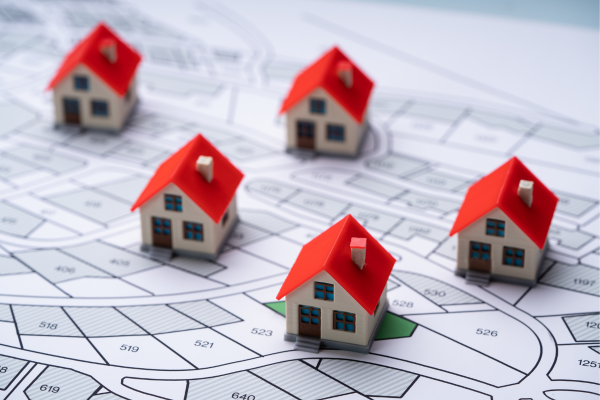
A Reliance-led consortium has won the bid to redevelop the sprawling Juhu Galli-Gilbert Hill slum cluster in Andheri West, securing what is being regarded as one of Mumbai’s largest slum rehabilitation projects and a landmark urban renewal initiative for the city’s western suburbs.
The project covers a vast cluster spread across nearly 100 acres in a strategically located part of Andheri West. Over the years, the area has evolved into one of Mumbai’s most densely populated informal settlements, surrounded by established residential neighbourhoods, commercial developments and transport infrastructure. Its scale and location have long made it one of the most closely watched redevelopment opportunities in the city.
The successful consortium, led by Reliance Industries and supported by development partners, prevailed in a competitive bidding process that attracted interest from several major real estate and infrastructure players. The project will be executed under the Slum Rehabilitation Authority (SRA) framework, which seeks to provide free rehabilitation housing to eligible residents while unlocking development potential on portions of the land.
Urban planners and real estate observers view the redevelopment as a significant milestone in Mumbai’s continuing effort to address housing challenges through large-scale cluster-based redevelopment. Unlike smaller rehabilitation schemes, the Juhu Galli-Gilbert Hill project involves the comprehensive transformation of an extensive urban settlement, requiring coordinated planning, rehabilitation, infrastructure upgrades and phased execution.
The redevelopment is expected to provide modern housing units to thousands of eligible residents while introducing improved civic amenities, road networks, public infrastructure and open spaces. Authorities believe the project could serve as a model for future large-scale redevelopment initiatives in land-constrained urban areas where fragmented development has often slowed progress.
The location of the project adds to its significance. Andheri West remains one of Mumbai’s most sought-after residential and commercial districts due to its connectivity, proximity to business hubs and access to transport networks. The redevelopment of such a large land parcel has the potential to alter the area's urban landscape and create a new mixed-use neighbourhood over the long term.
While the project has now crossed a major milestone with the selection of a developer consortium, significant work lies ahead. Detailed planning, resident rehabilitation processes, regulatory approvals and phased construction activities will determine the pace of implementation. Large-scale rehabilitation projects in Mumbai have historically faced challenges relating to stakeholder coordination, consent management and execution timelines.
Nevertheless, the award of the project marks an important step forward in unlocking one of the city’s most valuable redevelopment opportunities. If implemented successfully, the Juhu Galli-Gilbert Hill redevelopment could become one of the most transformative urban regeneration projects undertaken in Mumbai in recent years, combining rehabilitation objectives with broader city-building goals.
Advertisement













 Facebook
 Whatsapp
