Advertisement






What really powers the cloud? Behind every Google search, A...
A lot of what defines a home isn’t visible at handover. I...
Private equity has played a significant role in shaping Indi...
Luxury real estate is one of the most talked-about segments ...
Airports play a much bigger role than just enabling travel -...
Train services on the historic Pathankot–Jogindernagar narrow-gauge railway line have resumed after nearly four years, restoring a vital transport corridor for residents of Himachal Pradesh's Kangra region. Operations were suspended after severe floods damaged the Chakki Railway Bridge, disrupting connectivity for thousands of commuters and affecting tourism and local trade. The reconstruction of the bridge has enabled the revival of services, bringing back one of India's longest and most scenic heritage railway routes while improving affordable regional connectivity.
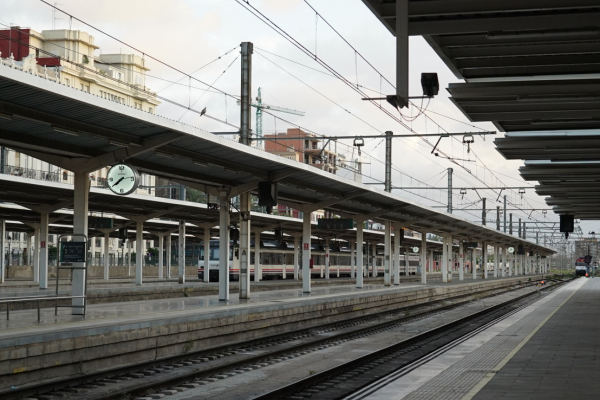
Train services on the Pathankot–Jogindernagar narrow-gauge railway line have resumed after a suspension of nearly four years, restoring an important transport link for residents across Kangra and adjoining regions of Himachal Pradesh. The revival follows the completion of reconstruction work on the Chakki Railway Bridge, which had been damaged during severe floods, interrupting operations on the heritage route.
The reopening marks the return of a railway line that serves not only as an affordable mode of transport but also as a significant tourism asset for the region. The Pathankot–Jogindernagar line connects several towns and pilgrimage destinations while passing through the Kangra Valley, making it an important corridor for daily commuters, students, traders and visitors.
Rail services had remained suspended after floods damaged a major section of the Chakki Railway Bridge on the Punjab–Himachal Pradesh border, severing connectivity on the route. To restore operations, the Ministry of Railways undertook the reconstruction of the bridge, with the new structure built at an estimated cost of around INR 70 crore. Following safety inspections and successful trial runs, regular passenger services have now resumed.
According to the revised schedule, trains are operating from Pathankot towards Baijnath and onward services are available from the Himachal Pradesh side, reconnecting communities that had relied on alternative and often more expensive road transport during the suspension period. Passengers have welcomed the restoration, noting the railway's affordability compared with bus travel.
The Kangra Valley Railway, which became operational for passenger services in 1929, stretches approximately 164 kilometres between Pathankot and Jogindernagar. It passes through the foothills of the Dhauladhar range and features hundreds of bridges and numerous curves, making it one of India's most distinctive narrow-gauge railway routes.
The prolonged disruption had affected tourism, local businesses and daily mobility across Kangra Valley, prompting repeated public demands for the restoration of services. Residents and stakeholders had argued that the railway functions as a lifeline for the region and plays an important role in supporting economic activity and access to educational and commercial centres.
The resumption of operations is expected to improve regional connectivity and provide renewed support to the tourism sector, which benefits from visitors travelling to destinations across Kangra Valley. The route also holds heritage significance and has been included in UNESCO's tentative list for an extension to the Mountain Railways of India, underscoring its cultural and engineering value.
Source - PTI
Advertisement













 Facebook
 Whatsapp
