Advertisement






The Gulf conflict has disrupted global supply chains, pushed...
REITs have changed the way commercial real estate is owned a...

What does it take to preserve a real estate legacy while bui...
What really powers the cloud? Behind every Google search, A...
A lot of what defines a home isn’t visible at handover. I...
Divyansh Group has announced plans to invest INR 300 crore in a new residential development in Hapur, marking its entry into the city’s housing market. The project will introduce Hapur’s first residential development built using Mivan construction technology and will feature high-rise towers rising up to G+27 floors. Positioned in the affordable luxury segment, the project will offer 3 BHK and 4 BHK apartments ranging from 1,880 sq ft to 2,435 sq ft. The investment comes amid increasing residential demand in emerging National Capital Region (NCR) markets, where improving infrastructure and connectivity are attracting homebuyers seeking larger homes outside established NCR locations.
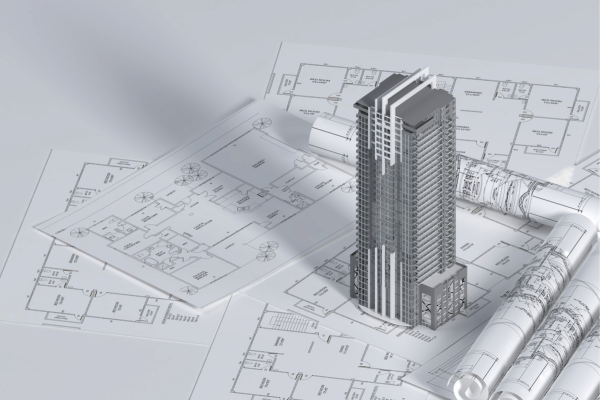
Divyansh Group has announced an investment of INR 300 crore to develop a premium residential project in Hapur, marking the developer’s entry into the city’s real estate market and introducing what it claims will be the city’s first Mivan-based high-rise residential development.
The project, announced earlier this week, will be located in a prime area of Hapur and is planned within the affordable luxury housing segment. The development will comprise residential towers rising up to G+27 floors, making it among the tallest residential projects proposed in the city.
According to the developer, the project will be the first residential scheme in Hapur to adopt Mivan construction technology. Widely used in large-scale housing developments, the technology is known for improving construction quality, structural durability and execution efficiency while reducing construction timelines through the use of aluminium formwork systems.
The residential development will offer a mix of 3 BHK and 4 BHK apartments aimed at homebuyers seeking larger living spaces. The 3 BHK residences will be available in configurations of 1,880 sq ft and 2,065 sq ft, while the 4 BHK apartments will have a built-up area of 2,435 sq ft.
The announcement comes at a time when emerging markets within the National Capital Region are witnessing growing interest from both developers and homebuyers. Industry participants attribute this trend to improving infrastructure, enhanced regional connectivity and increasing demand for spacious homes outside the traditional residential hubs of Delhi, Noida and Gurugram.
Hapur has increasingly featured in discussions around peripheral NCR growth corridors, with residential demand being driven by homebuyers seeking comparatively larger homes and lower acquisition costs while retaining access to employment centres across the wider region.
Chanderjeet Pathak, Chairman of Divyansh Group, said the company had identified growing demand for quality residential developments in Hapur. He stated that the project aims to introduce modern construction standards, lifestyle-oriented amenities and high-rise living to a market that has traditionally been dominated by low-rise residential developments.
Pathak further said the adoption of Mivan technology reflects the company’s focus on construction quality, timely delivery and long-term value creation for residents.
The project has been designed to cater to aspirational homebuyers looking for larger residences supported by contemporary amenities and planned community infrastructure. While specific launch timelines and possession schedules have not been disclosed, the development is expected to contribute to the ongoing expansion of Hapur’s organised residential market.
Apart from adding new housing stock, the project is expected to generate employment during the construction phase and support ancillary economic activity linked to the city’s urban development. With high-rise residential projects still relatively limited in Hapur, the proposed development reflects the gradual shift in housing preferences as emerging NCR locations continue to attract both developer investment and end-user demand.
Advertisement













 Facebook
 Whatsapp
