Advertisement






What really powers the cloud? Behind every Google search, A...
A lot of what defines a home isn’t visible at handover. I...
Private equity has played a significant role in shaping Indi...
Luxury real estate is one of the most talked-about segments ...
Airports play a much bigger role than just enabling travel -...
As Mumbai prepares for the 2026 monsoon season, municipal bodies across the Mumbai Metropolitan Region (MMR) have intensified efforts to reduce waterlogging and flood-related disruptions. The Brihanmumbai Municipal Corporation (BMC) has deployed IoT-enabled dewatering pumps, activated pumping stations and accelerated desilting works, while neighbouring municipalities including Thane, Navi Mumbai, Kalyan-Dombivli, Mira-Bhayandar and Vasai-Virar have undertaken extensive drainage cleaning and flood-preparedness measures. Regional agencies such as MMRDA have also implemented monsoon action plans across infrastructure projects, reflecting a broader shift towards technology-driven monitoring, improved drainage systems and coordinated emergency response mechanisms to strengthen urban resilience during periods of heavy rainfall.
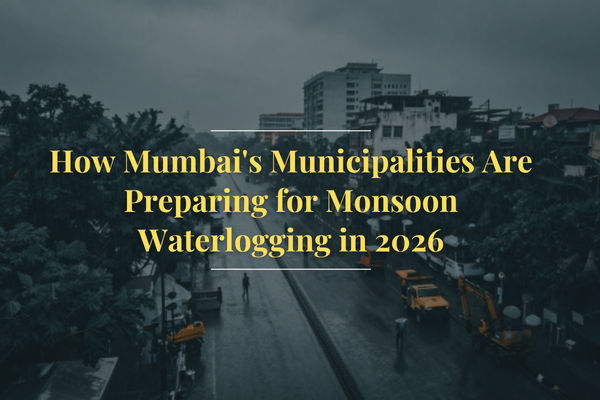
With the monsoon season approaching, municipal corporations across Mumbai and the Mumbai Metropolitan Region (MMR) are undertaking a range of measures to reduce waterlogging and flooding. While Mumbai has long battled waterlogging during intense rainfall, neighbouring cities such as Thane, Navi Mumbai, Kalyan-Dombivli, Mira-Bhayandar and Vasai-Virar are also stepping up preparations as urbanisation continues to put pressure on existing stormwater infrastructure.
This year, municipalities are focusing not only on traditional desilting operations but also on technology-driven monitoring systems, pumping infrastructure, flood-prone location mapping and inter-agency coordination.
Mumbai: Technology and Pumping Infrastructure Take Centre Stage
The Brihanmumbai Municipal Corporation (BMC) has identified nearly 500 waterlogging-prone locations across the city for the 2026 monsoon season. To tackle flooding in low-lying areas, the civic body has deployed 547 portable dewatering pumps, which will supplement the city's existing major and mini pumping stations. The pumps have been positioned across the island city, eastern suburbs and western suburbs to ensure faster removal of accumulated rainwater.
In a significant technological upgrade, BMC has introduced an Internet of Things (IoT)-based monitoring system for all portable pumps. The system enables real-time tracking of pump operations, location, performance and working hours through a centralised dashboard, allowing quicker response during heavy rainfall events.
Desilting remains a major focus area. The civic body has accelerated cleaning of major and minor drains, while work on the Mithi River continues ahead of the monsoon. At the same time, Mumbai's 43 pumping stations have been activated, and emergency response infrastructure has been placed on standby.
Thane: Drain Cleaning and Flood-Point Monitoring
The Thane Municipal Corporation (TMC) has intensified desilting operations across drains and water channels ahead of the rainy season. The city has witnessed recurring waterlogging at several junctions in recent years, prompting authorities to prioritise vulnerable stretches and improve stormwater flow capacity.
Civic officials have also been conducting inspections of drainage networks and coordinating with state agencies on flood management measures. Particular attention is being paid to low-lying pockets, road underpasses and rapidly developing urban zones that have seen increased runoff during heavy rainfall.
Navi Mumbai: Focus on Stormwater Network Efficiency
The Navi Mumbai Municipal Corporation (NMMC) has continued its annual pre-monsoon programme involving large-scale cleaning of stormwater drains, nullahs and catch pits. The city, which generally performs better than older urban centres due to planned infrastructure, is nevertheless strengthening flood preparedness in areas that have experienced localised waterlogging in recent years.
Emergency control rooms, field teams and pumping arrangements have been kept ready for deployment during extreme weather conditions. Officials have also undertaken inspections of construction sites and drainage outlets to minimise obstructions in the stormwater network.
Kalyan-Dombivli: Addressing Chronic Waterlogging Challenges
The Kalyan-Dombivli Municipal Corporation (KDMC) is focusing on desilting drains, clearing natural water channels and preparing emergency machinery before the onset of heavy rains.
Areas around Kalyan, Dombivli and adjoining suburbs have historically faced flooding due to rapid urban expansion and inadequate drainage capacity. This year, civic authorities have prioritised vulnerable locations and strengthened monitoring mechanisms to ensure quicker response during intense rainfall spells.
The municipality is also coordinating with state agencies and railway authorities in locations where flooding affects transportation corridors.
Mira-Bhayandar: Strengthening Drainage Before Peak Rains
The Mira-Bhayandar Municipal Corporation (MBMC) has undertaken extensive pre-monsoon desilting of drains and nullahs while identifying waterlogging-prone locations across the city.
Officials are focusing on improving drainage efficiency in rapidly developing residential areas where runoff volumes have increased significantly over the past decade. Flood-control teams and emergency equipment have been mobilised, while monitoring of critical infrastructure such as roads, bridges and culverts has been intensified ahead of the season.
Vasai-Virar: Managing Growth and Monsoon Risks
The Vasai Virar City Municipal Corporation (VVCMC) faces unique challenges due to its large geographic spread and ongoing urban expansion. The civic body has prioritised cleaning of major drains, natural water channels and flood-prone stretches across Vasai, Nalasopara and Virar.
Authorities have also initiated inspections of vulnerable areas and coordinated with disaster management teams to improve preparedness. Pumping equipment, emergency personnel and response mechanisms have been kept ready for deployment during heavy rainfall events.
A Regional Approach to Flood Preparedness
Beyond individual municipalities, regional agencies are also stepping up preparations. The Mumbai Metropolitan Region Development Authority (MMRDA) has activated a monsoon preparedness plan for metro construction corridors and established a 24x7 disaster control mechanism to coordinate emergency response during the rainy season. High-risk construction activities will be suspended during severe weather alerts.
While desilting and pumping infrastructure remain the first line of defence against flooding, civic bodies across the MMR are increasingly relying on technology, data monitoring and coordinated response systems to minimise disruption during extreme rainfall events.
As climate change continues to increase the frequency of intense rain events, the effectiveness of these measures will be closely watched when the monsoon reaches Mumbai and its neighbouring cities in the coming weeks.
Advertisement













 Facebook
 Whatsapp
