Advertisement






What really powers the cloud? Behind every Google search, A...
A lot of what defines a home isn’t visible at handover. I...
Private equity has played a significant role in shaping Indi...
Luxury real estate is one of the most talked-about segments ...
Airports play a much bigger role than just enabling travel -...
• Delhi Metro Rail Corporation (DMRC) is expanding last-mile connectivity services across Delhi-NCR through integrated mobility solutions linked with metro stations.
• The initiative includes bike taxis, auto-rickshaws and cab services integrated with metro travel through digital platforms and mobile applications.
• DMRC has partnered with Sahkar Taxi Cooperative Ltd. to improve first- and last-mile transport access for daily commuters.
• Additional metro train trips and station connectivity upgrades are also being introduced to improve commuter movement and reduce dependence on private vehicles.
• The move is part of DMRC’s broader focus on sustainable urban transport, multimodal connectivity and improved public transport usage in Delhi-NCR.
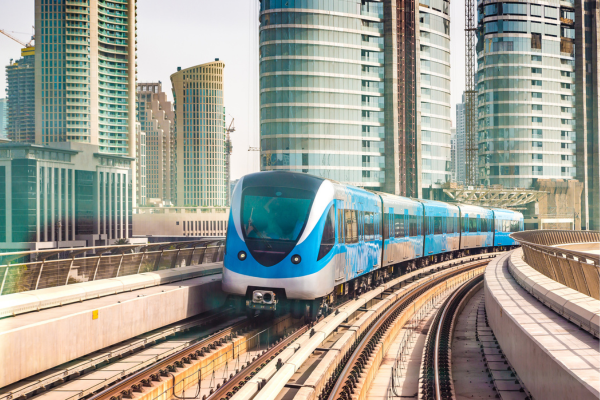
The Delhi Metro Rail Corporation (DMRC) has expanded its focus on last-mile connectivity in Delhi-NCR by introducing integrated mobility solutions aimed at improving access to metro stations and making daily travel more convenient for commuters. The initiative forms part of DMRC’s larger strategy to strengthen public transport usage and support sustainable urban mobility across the region. Advertisement






As part of the latest measures, DMRC is integrating bike taxis, cab services and auto-rickshaw facilities with metro operations to help commuters complete end-to-end journeys more efficiently. The services are expected to improve connectivity for passengers travelling to and from metro stations, particularly in residential and commercial areas where direct public transport access remains limited.
The corporation recently partnered with Sahkar Taxi Cooperative Ltd. to introduce organised feeder transport services connected with metro stations across the National Capital Region. Under the arrangement, passengers will be able to access app-based mobility options integrated with metro travel through digital platforms including the DMRC Sarthi app and Bharat Taxi platform. The system is expected to provide features such as route planning, real-time vehicle tracking and fare visibility for commuters.
Initial operations are likely to begin from selected stations including Millennium City Centre and Botanical Garden metro stations, where dedicated bike taxi and feeder mobility services are planned during the early phase of implementation. DMRC is aiming to create smoother first- and last-mile connectivity by reducing dependence on unorganised local transport systems around metro corridors.
The latest initiative comes as Delhi-NCR continues to face increasing traffic congestion, rising private vehicle ownership and growing pressure on urban road infrastructure. Urban transport planners have repeatedly highlighted that lack of reliable last-mile connectivity remains one of the biggest challenges affecting metro ridership despite the rapid expansion of metro rail networks in major Indian cities.
Over the past few years, DMRC has consistently worked on improving multimodal integration around metro stations through feeder buses, parking infrastructure, pedestrian access and interchange upgrades. Under Phase III expansion works, the corporation has also been developing foot overbridges, ramps and station connectivity improvements to support smoother passenger movement between corridors and nearby urban zones.
DMRC has additionally increased metro train frequency on high-demand days in recent months to support higher commuter movement and encourage greater use of public transport. The corporation has stated that these efforts are intended to support energy-efficient transportation systems while reducing dependence on private vehicles in the capital region.
The focus on integrated urban mobility has become increasingly important as metro systems across India move beyond rail operations and look at complete city transport connectivity. Similar last-mile transport models and digital mobility integrations are also being explored in cities such as Hyderabad and Bengaluru, where metro networks are expanding rapidly alongside rising commuter demand.
Source PTI
Advertisement













 Facebook
 Whatsapp
