Advertisement






What really powers the cloud? Behind every Google search, A...
A lot of what defines a home isn’t visible at handover. I...
Private equity has played a significant role in shaping Indi...
Luxury real estate is one of the most talked-about segments ...
Airports play a much bigger role than just enabling travel -...
The state government of Uttar Pradesh is set to introduce a new township policy to tackle housing and urbanisation issues. The policy aims to promote affordable housing through private investment and create an investment-friendly environment for private developers by offering incentives and exemptions. The government will develop affordable housing with the assistance of private players to maintain balance in the regional disparity in urbanisation. The minimum size of land for development will be 12.5 acres in towns with a population of fewer than 2.5 lakh and 25 acres in bigger towns.
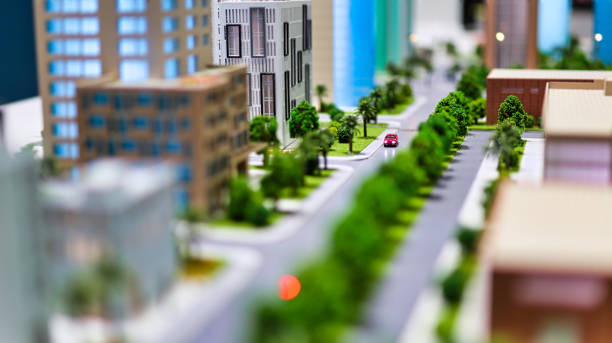
The Uttar Pradesh state government is set to introduce a new township policy to address housing and urbanisation issues. The policy will be taken up by the state cabinet in the coming weeks and is aimed at promoting affordable housing to the working class while also encouraging private investment in the sector. The new policy will allow the development of 12.5-acre land within towns having population below 2.5 lakh while in bigger towns the minimum size will be 25 acre.
Advertisement






Officials have studied models from other states, including Maharashtra, Gujarat and Andhra Pradesh, to make the new policy more attractive and sustainable. The state government is also expected to offer better deals to landowners belonging to the Scheduled Castes to ensure their financial stability in the long run.
The housing department will develop affordable housing with the help of private players, and incentives and exemptions will be offered to encourage private developers to invest in the sector. The government is also focusing on timely execution of projects to ensure that they are completed within the stipulated timeframe.
The move comes as urbanisation in UP lags behind the national average, with just 23.3% of the state's population living in urban areas, compared to a national average of 31.16%. Regional disparity in the state's urban system is also evident, with the western region being highly urbanised, while the eastern part has an urbanisation rate of just 13.4%. The central region and Bundelkhand have urbanisation rates of 20.6% and 22.75%, respectively.
To address this imbalance, the state government has introduced policies in the past to promote private investment in the housing sector, such as the hi-tech townships policy in 2003 and the integrated township policy (licence based) in 2005, but these policies failed to achieve their objectives.
Under the new policy, the government will allow the development of smaller projects within towns with a population below 2.5 lakh, while larger towns will require a minimum land area of 25 acres. This is intended to make projects more manageable and easier to execute within the stipulated timeframe.
Overall, the new policy is aimed at promoting sustainable development, addressing environmental concerns, and encouraging private investment in the housing sector to provide affordable housing to the working class.
Advertisement













 Facebook
 Whatsapp
