Advertisement






The Gulf conflict has disrupted global supply chains, pushed...
REITs have changed the way commercial real estate is owned a...

What does it take to preserve a real estate legacy while bui...
What really powers the cloud? Behind every Google search, A...
A lot of what defines a home isn’t visible at handover. I...
The Reserve Bank of India’s proposal to prevent non-banking financial companies (NBFCs) from offering revolving credit products has drawn concerns from the Federation of Indian Micro and Small and Medium Enterprises (FISME), which said the measure could affect working-capital finance for MSMEs. The RBI’s draft directions state that NBFCs should offer only term-loan products and not revolving credit facilities. The central bank has invited stakeholder feedback until August 28, 2026. FISME has urged the RBI to distinguish productive working-capital finance from consumer revolving credit and regulate risks through underwriting, monitoring, disclosure and data-governance requirements rather than imposing a blanket restriction.
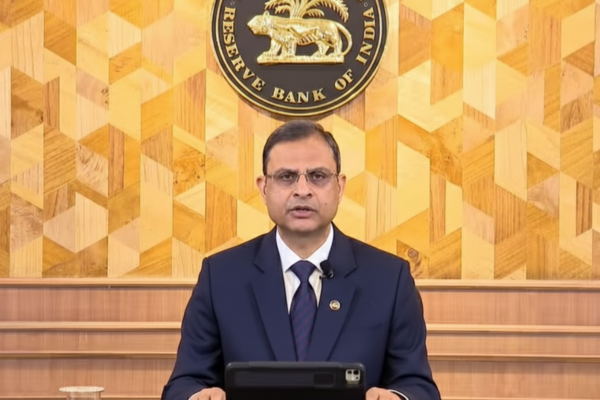
The Federation of Indian Micro and Small and Medium Enterprises (FISME) has urged the Reserve Bank of India (RBI) to reconsider its proposal to prohibit non-banking financial companies (NBFCs) from offering revolving credit, saying the measure could disrupt working-capital financing for MSMEs. The proposal was included in the Draft Reserve Bank of India (Non-Banking Financial Companies - Credit Facilities) Amendment Directions, 2026, issued earlier this month, with stakeholder feedback invited until August 28, 2026.
Under the draft, the RBI has proposed that NBFCs should offer only credit products that are in the nature of term loans and should not provide any revolving credit products. FISME has raised concerns that an across-the-board restriction could affect legitimate financing arrangements used by small and medium enterprises to manage short-term cash-flow requirements.
The industry body said NBFCs have an important role in serving enterprises, geographical areas, sectors and loan-ticket sizes that are not adequately covered by banks. It acknowledged the RBI’s concerns around opaque lending practices, indefinite loan rollovers, hidden borrower stress and harmful app-based lending, but said productive working-capital finance should be treated differently from consumer revolving credit.
FISME Secretary General Anil Bhardwaj said regulation should focus on the risks and conduct associated with a financial product rather than remove a legitimate financing instrument solely because it operates on a revolving basis. The organisation has therefore called for the RBI to retain its objective of ensuring transparent, responsible and non-evergreened credit while reconsidering the blanket prohibition.
FISME has also recommended that the final directions distinguish consumer convenience credit from productive working-capital finance. It said risks could instead be addressed through stronger underwriting, monitoring, disclosure and data-governance requirements, while retaining the role of NBFCs in financing market segments that remain inadequately served by banks.
Industry experts have also highlighted the importance of revolving facilities for MSMEs. Ranen Banerjee, Partner and Leader, Economic Advisory, PwC India, explained that a key feature of such facilities is that the credit limit is restored once the amount drawn within the sanctioned limit is repaid. This allows MSMEs to pay interest only on the amount they use, repay funds when required and access the facility again without applying for a fresh loan, unlike a conventional term loan.
Banerjee said the proposed restriction could have some impact on MSMEs, although the effect may be limited because NBFCs account for around 10–11 per cent of total outstanding credit.
Shrikant Goyal, Managing Director, Getfive Funds, said micro and small enterprises generally operate with thinner liquidity buffers and frequently face delays between making sales and receiving payments. Revolving or flexi credit can help them meet salaries, raw material costs and other expenses during this period. He said a ban could therefore affect their short-term liquidity and cash flows, although it could encourage more structured cash-flow and expense management over the longer term.
The MSME sector contributes 31 per cent of India’s GDP, accounts for approximately 35 per cent of manufacturing output and represents close to half of the country’s merchandise exports.
Advertisement













 Facebook
 Whatsapp
