Advertisement






The Gulf conflict has disrupted global supply chains, pushed...
REITs have changed the way commercial real estate is owned a...
What does it take to preserve a real estate legacy while bui...
What really powers the cloud? Behind every Google search, A...
A lot of what defines a home isn’t visible at handover. I...
India’s commercial real estate market is entering the second half of 2026 with connectivity, infrastructure, quality, flexibility and value increasingly influencing occupier and investor decisions. GCCs accounted for 43% of office leasing across major Indian cities during the first half of the year, while the country’s office stock crossed 1 billion sq ft. In Delhi NCR, infrastructure upgrades, expanding residential catchments and new employment opportunities are supporting demand for offices and organised retail. Industry leaders expect mixed-use developments, experiential retail and integrated commercial destinations to gain importance, with occupiers prioritising accessibility and consumer ecosystems and investors focusing increasingly on sustainable, demand-backed assets.
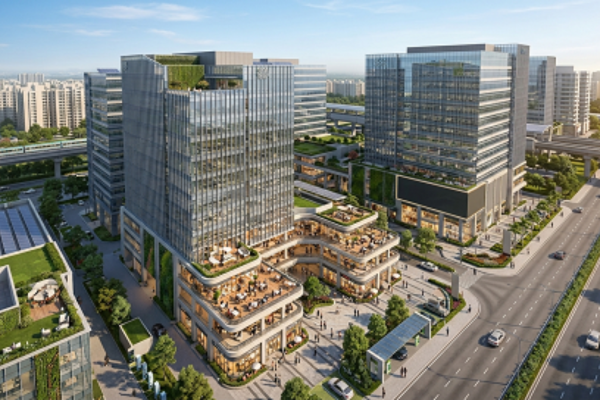
India’s commercial real estate market is entering the second half of 2026 with occupiers and investors increasingly assessing properties on the basis of connectivity, infrastructure, quality, sustainability and underlying demand. In Delhi NCR, these factors are influencing demand across office and retail markets as GCC expansion, infrastructure improvements, residential growth and changing business and consumer requirements shape commercial property decisions.
According to the latest industry report cited in the industry assessment, global capability centres (GCCs) accounted for 43% of total office leasing across India’s major cities during the first half of 2026. The country’s total office inventory also crossed 1 billion sq ft during the year, highlighting the scale of the commercial office market.
Sanchit Bhutani, Managing Director, Group 108, said the sector was moving towards a more demand-driven phase, with occupiers and investors evaluating opportunities based on connectivity, quality and sustainability. He said infrastructure development in Noida and Greater Noida, together with new business and employment opportunities, was supporting demand for modern office spaces and would require developers to align commercial assets more closely with changing business and investment requirements.
Retail demand is similarly being shaped by the strength and composition of surrounding catchments. Harinder Singh Hora, Founder Chairman, Reach Group, said current retail leasing momentum reflected changes in the way commercial destinations were being planned and used. He pointed to residential areas, workplaces, hospitality, entertainment and dining as components that can support footfall throughout the day. He cited Gurugram’s emerging growth corridors as an example of expanding consumer catchments supporting organised retail.
Mitul Jain, Managing Director, SPJ Group, said retail real estate was increasingly adopting an experiential format, with destinations designed to encourage consumers to spend time beyond simply completing transactions. In Gurugram, he said, demand was increasing for locations combining shopping, dining, entertainment and convenience, particularly where accessibility and connectivity were strong. Visibility, access, catchment strength and consistent footfall were also becoming important considerations for occupiers and investors.
Investment decisions are also increasingly being linked to fundamental demand. Ashwani Kumar of Pyramid Infratech said H2 2026 investment activity would be driven more by asset fundamentals than market sentiment. Connectivity, catchment areas, development quality and an area's ability to support economic activity would remain important factors. In Gurugram, he said, infrastructure development and population growth were creating opportunities for commercial and retail spaces serving businesses and consumers.
In Greater Noida, improving infrastructure and expanding residential catchments are also supporting commercial development. Azad Ahmad Lone, President, Biigtech, said occupiers were seeking visibility, accessibility and strong consumer ecosystems, while investors were focusing on sustainable demand rather than short-term speculation. He expects mixed-use developments, experiential retail and integrated destinations combining retail, dining, entertainment and business uses to gain traction.
Retail operators are also placing greater emphasis on repeat visits. Ajendra Singh, Vice President (Sales and Marketing), Spectrum Metro, said catchment strength, ease of access, tenant mix, entertainment and food and beverage offerings would remain important to maintaining consistent footfall and retail performance during H2 2026.
The broader outlook indicates that commercial assets combining location, infrastructure, sustainability and demonstrable demand are likely to receive greater attention from both occupiers and investors as the NCR market progresses through the second half of 2026.
Advertisement













 Facebook
 Whatsapp
