Advertisement






The Gulf conflict has disrupted global supply chains, pushed...
REITs have changed the way commercial real estate is owned a...

What does it take to preserve a real estate legacy while bui...
What really powers the cloud? Behind every Google search, A...
A lot of what defines a home isn’t visible at handover. I...
The Delhi Metro Rail Corporation (DMRC) has commenced construction of a new underground station at Shivaji Stadium as part of the Magenta Line extension between Janakpuri West and R K Ashram Marg. The station will be integrated with the existing Airport Express Line through a 230-metre underground subway and linked to Rajiv Chowk through an 800-metre subway with travellers. The 9.9-km Central Vista corridor will have nine underground stations and is expected to strengthen connectivity to key government, judicial, memorial and convention destinations in central New Delhi.
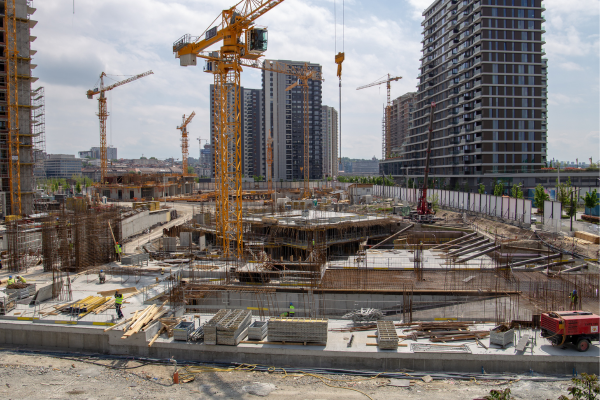
The Delhi Metro Rail Corporation (DMRC) has started construction of the new Shivaji Stadium Metro Station as part of the Magenta Line extension from Janakpuri West to R K Ashram Marg. The project forms part of the 9.9-km Central Vista corridor, which is being developed to improve metro connectivity across central New Delhi. Delhi Lieutenant Governor Taranjit Singh Sandhu laid the foundation for construction of the diaphragm wall at the station. The upcoming station is planned as a deep underground facility and will integrate with existing metro infrastructure in the area.
The new Shivaji Stadium station will be constructed below the existing Airport Express Line alignment, requiring the diaphragm wall to reach a depth of around 38 metres, according to DMRC. The overall engineering depth of the station is expected to be around 29 metres. The station will be connected to the existing Shivaji Stadium station on the Airport Express Line through a 230-metre underground subway. This link is intended to allow passengers to interchange between the Magenta Line and Airport Express Line without having to exit the connected metro network.
A separate 800-metre underground subway will connect the new station with Rajiv Chowk Metro Station. The subway will be equipped with travelators to facilitate passenger movement between the two locations. The construction will require substantial quantities of concrete and excavation. DMRC estimates that around 3,000 cubic metres of concrete will be used each month, requiring approximately 500 transit mixer trips.
Excavation is expected to involve nearly 15,000 cubic metres of material every month, with around 750 dumper trips required for its movement. About 25 dumper trips are expected to take place each day for the disposal of excavated material. Given the station's location in a busy central area, DMRC said measures would be adopted to limit the impact of construction on commuters and residents. These include covering excavated material, washing vehicle wheels, preventing material from spilling onto roads and cleaning affected stretches promptly.
The Central Vista corridor will extend for 9.9 km and include nine underground stations. These are Shivaji Stadium, Yuge Yugeen Bharat, Central Secretariat, Kartavya Bhawan, India Gate, War Memorial-High Court, Baroda House, Bharat Mandapam and Indraprastha.
Construction at Central Secretariat Metro Station, another component of the corridor, began on June 24. The planned alignment is expected to improve access to government offices, judicial institutions, national memorials and major convention facilities in central New Delhi. The Central Vista corridor is expected to provide additional metro connectivity through some of the capital's busiest institutional and administrative areas while strengthening interchange between existing metro corridors.
The Shivaji Stadium interchange is particularly significant because of its planned connections with both the Airport Express Line and Rajiv Chowk. The additional links are expected to provide passengers with more direct interchange options and help distribute passenger traffic across central Delhi's metro network. Afcons Infrastructure Ltd has been entrusted with the construction work for the new station. As work progresses, the project will involve extensive underground construction in a densely developed part of the capital, making traffic management and control of construction-related movement important aspects of the execution process.
The Central Vista corridor is ultimately expected to form another important component of Delhi's expanding metro network, improving access to major institutional and public destinations while strengthening connections between existing lines.
Source PTI
Advertisement













 Facebook
 Whatsapp
