Advertisement






The Gulf conflict has disrupted global supply chains, pushed...
REITs have changed the way commercial real estate is owned a...

What does it take to preserve a real estate legacy while bui...
What really powers the cloud? Behind every Google search, A...
A lot of what defines a home isn’t visible at handover. I...
Unauthorised construction continues to pose a challenge for Hyderabad's civic authorities, with thousands of violations and complaints pending across the city's municipal jurisdictions. The absence of a dedicated municipal building tribunal has added to the difficulty of handling disputes and enforcement cases efficiently. The Telangana High Court had earlier suggested creating a specialised forum to deal with building permission, illegal construction and demolition matters. Despite proposals to operationalise such a tribunal, the mechanism remains unavailable. The continuing gap has raised concerns over enforcement, case backlogs and the growth of unauthorised structures across Hyderabad.
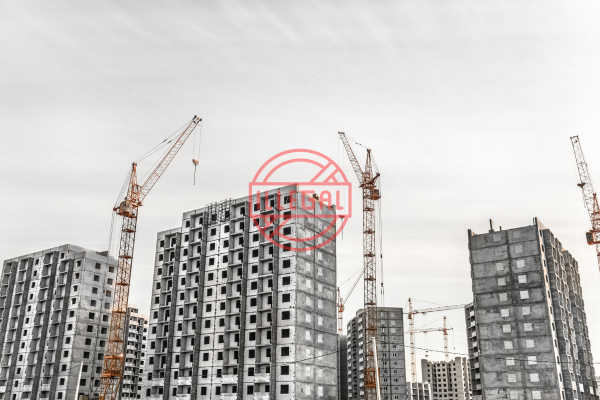
Unauthorised construction remains a growing concern across Hyderabad, with civic authorities facing a large number of complaints and enforcement cases while a dedicated municipal building tribunal proposed to deal with such disputes is yet to become operational.
The issue covers Hyderabad and the newer municipal corporations that now handle different parts of the metropolitan region. Officials have reported a substantial number of complaints involving buildings that allegedly violate sanctioned plans, development rules or other municipal requirements. In the Cyberabad Municipal Corporation area alone, more than 1,000 complaints relating to illegal constructions have been received, according to civic officials.
The absence of a specialised forum has become an important part of the problem. Building-related disputes currently have to move through existing administrative and judicial channels, which can take considerable time. A dedicated tribunal was proposed to provide a quicker mechanism for dealing with cases involving unauthorised structures, building permissions and demolition orders.
The Telangana High Court had in March 2026 suggested that the state government consider establishing such a tribunal. The court noted that a specialised forum could help deal with the volume of disputes and reduce the burden on the High Court.
The proposal is not new. The erstwhile Greater Hyderabad Municipal Corporation had previously sought steps towards creating a tribunal, with the objective of speeding up decisions on unauthorised construction cases. At one stage, authorities had indicated that the body could become operational by June 2025, but the proposed mechanism has not materialised.
For civic agencies, the consequences extend beyond the number of pending complaints. Enforcement against an unauthorised building can involve inspections, notices, appeals, demolition proceedings and legal challenges. When these stages remain unresolved for long periods, structures may continue to exist even after violations have been identified.
The problem is also emerging in areas experiencing rapid development. Officials have flagged concentrations of unauthorised construction in parts of Kukatpally and Madhapur, including cases where buildings meant for limited residential use are being used for purposes such as hostels. Such changes can place additional pressure on infrastructure and raise questions about whether the premises comply with the permissions under which they were constructed.
Recent incidents have added urgency to the enforcement debate. In August, a seven-storey under-construction building in Madhapur collapsed, killing two people. Authorities subsequently said they would survey illegal structures in the area and take action against buildings found to have violated construction rules.
The incident has brought attention to the distinction between technical violations and structures that may present serious safety risks. Effective enforcement requires authorities to identify violations early, issue appropriate directions and ensure that orders are implemented.
The High Court has repeatedly stressed that municipal and town-planning rules cannot be disregarded merely because construction has already taken place. In a July case, the court imposed a INR 3 lakh penalty on a property owner who had constructed additional floors and a penthouse without authorisation, signalling a stricter approach towards violations.
A functioning municipal tribunal could provide a specialised avenue for property owners, developers and civic authorities to contest or enforce decisions. It could also help separate routine building disputes from cases requiring immediate action.
For Hyderabad's property market, the issue is significant because prolonged uncertainty around unauthorised structures can affect neighbourhood planning, infrastructure capacity, property transactions and redevelopment decisions.
Until a dedicated tribunal is established and enforcement mechanisms are strengthened, civic bodies will continue to face the challenge of balancing a growing volume of complaints with the need for timely action. The continuing rise in unauthorised construction has therefore made the long-pending tribunal proposal increasingly important to Hyderabad's urban governance.
Advertisement













 Facebook
 Whatsapp
