Advertisement






The Gulf conflict has disrupted global supply chains, pushed...
REITs have changed the way commercial real estate is owned a...

What does it take to preserve a real estate legacy while bui...
What really powers the cloud? Behind every Google search, A...
A lot of what defines a home isn’t visible at handover. I...
Ongoing construction work linked to the Barapullah Phase-III elevated corridor is expected to slow traffic movement on NH-9 towards Sarai Kale Khan in Delhi, as finishing works continue on the project connecting the area to Mayur Vihar. The corridor, aimed at providing signal-free connectivity between East and South Delhi via AIIMS, has a revised cost of INR 1,635.03 crore and had been targeted for completion by June 2026, following delays stretching back nearly a decade.
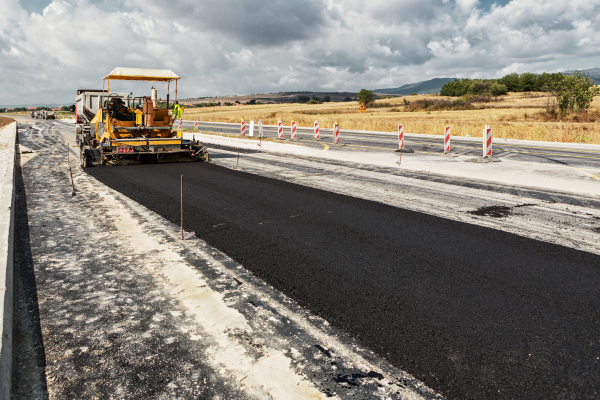
Ongoing construction activity linked to the Barapullah Phase-III elevated corridor is expected to slow traffic movement on National Highway 9 towards Sarai Kale Khan in Delhi, as finishing works on the project continue at one of the capital's busiest transit junctions. Sarai Kale Khan already functions as a major multimodal hub, hosting an Inter-State Bus Terminal, a railway station, a metro interchange and an upcoming Regional Rapid Transit System interchange, making the area particularly sensitive to construction-related disruption.
The Barapullah Phase-III elevated road, being built over the Barapullah drain, is designed to extend the existing Barapullah corridor by connecting Sarai Kale Khan to Mayur Vihar in East Delhi. Once complete, the corridor is intended to provide direct, signal-free connectivity between East and South Delhi, including access to AIIMS, significantly cutting travel time for commuters who currently rely on congested surface routes through Ring Road, the DND Flyway and NH-24.
The Delhi Cabinet had earlier cleared a revised cost of INR 1,635.03 crore for the project, as part of a broader package of road infrastructure works approved alongside a six-lane elevated corridor on MB Road between Saket and Pul Prahladpur. The government had set a target of completing the Barapullah extension by 30 June 2026, with Public Works Department officials stating that finishing works, including carriageways, loops, connectivity points, safety systems, cycle tracks and landscaping, were being carried out on a war footing under continuous monitoring.
The project has a long and troubled history, having remained stalled for nearly a decade owing to technical, environmental and procedural challenges before construction activity picked up pace under the current Delhi government. Officials have highlighted the corridor's engineering features, including a specially designed bridge over the Yamuna with spans extended to 125 metres to minimise disruption to the river's natural flow, as well as what has been described as India's first flyover incorporating a dedicated cycle track.
Despite the stated completion targets, residual finishing work around the Sarai Kale Khan stretch continues to affect traffic flow on NH-9, a pattern that has recurred through much of the corridor's construction history, given the area's role as a convergence point for multiple major roads, including Ring Road, Mathura Road and the approach routes to the DND Flyway. Traffic bottlenecks around Sarai Kale Khan have historically persisted even after individual road-widening or flyover projects in the vicinity were completed, with transport planning experts previously noting that improvements on one stretch often shift congestion to adjoining junctions rather than resolving it altogether, underscoring the need for coordinated planning across the surrounding road network as the Barapullah extension nears completion.
Advertisement













 Facebook
 Whatsapp
