Advertisement






What really powers the cloud? Behind every Google search, A...
A lot of what defines a home isn’t visible at handover. I...
Private equity has played a significant role in shaping Indi...
Luxury real estate is one of the most talked-about segments ...
Airports play a much bigger role than just enabling travel -...
Passenger traffic on the Delhi-Meerut Namo Bharat corridor has risen sharply during the Kanwar Yatra as road restrictions and diversions have made road travel more difficult across parts of Delhi-NCR and western Uttar Pradesh. Several stations have recorded more than 40 per cent growth, with Ghaziabad seeing an increase of over 50 per cent and daily usage of 15,000 to 20,000 passengers. The corridor also recorded its highest-ever average daily ridership of around 1.5 lakh passengers during the ongoing pilgrimage period. NCRTC has added 52 daily train trips to manage the higher demand.
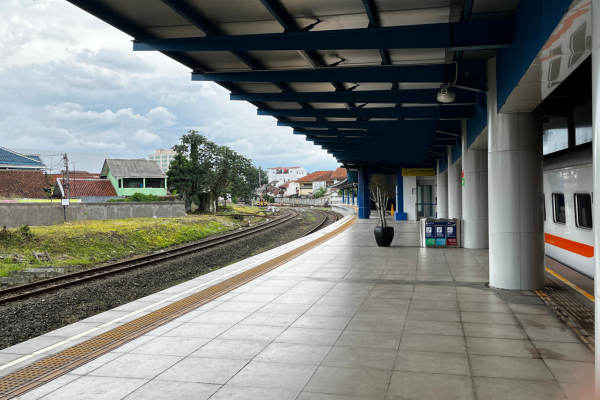
Passenger footfall at several Namo Bharat stations on the Delhi-Meerut corridor has increased by more than 40 per cent during the ongoing Kanwar Yatra, according to the National Capital Region Transport Corporation (NCRTC).
The increase has been recorded as several important roads along the pilgrimage route have been closed or restricted for general traffic. The resulting diversions and traffic conditions have made road journeys less predictable, leading more commuters to use the Namo Bharat service for faster and more reliable connectivity.
Ghaziabad station has recorded the sharpest increase among the major stations, with passenger footfall rising by more than 50 per cent. The station is currently being used by around 15,000 to 20,000 commuters every day.
Muradnagar and Guldhar stations have also recorded higher passenger numbers during the pilgrimage period. The two Modinagar stations have seen passenger growth of nearly 40 per cent.
In Meerut, passenger traffic has increased at Brahmapuri, Meerut Central and Meerut North stations. Ghaziabad, Anand Vihar and Begumpul continue to be among the busiest stations on the corridor.
The increase in ridership comes as authorities have introduced traffic restrictions in several areas to facilitate the movement of Kanwariyas. For daily commuters travelling between Delhi, Ghaziabad and Meerut, the restrictions have affected regular road routes and increased travel uncertainty.
NCRTC had anticipated the increase in demand during the Kanwar Yatra and has been operating 52 additional train trips every day during the pilgrimage period. With the additional services, trains are running at an interval of around eight minutes across the entire Sarai Kale Khan-Modipuram corridor.
The additional services are intended to accommodate the increase in passenger traffic and maintain regular train availability during a period when road movement is facing restrictions.
The corporation has also temporarily closed a few entry and exit gates at selected Namo Bharat stations in line with administrative directions. Passengers continue to access the stations and trains through alternate gates, NCRTC said.
The rise in passenger traffic has also pushed overall ridership on the Delhi-Meerut corridor to a new high.
The corridor recorded its highest-ever average daily ridership of around 1.5 lakh passengers during the first Monday of the holy month of Shravan. This surpassed the previous highest daily ridership of around 1.25 lakh passengers recorded in June.
The latest increase comes after the Delhi-Meerut Namo Bharat corridor was expanded to cover the full Sarai Kale Khan-Modipuram route. The corridor now provides a direct regional rail connection between Delhi and Meerut, with services also serving key urban centres such as Ghaziabad, Muradnagar and Modinagar.
The Namo Bharat network has increasingly become an alternative for commuters travelling between Delhi and cities in western Uttar Pradesh, particularly when road congestion affects travel times. The latest ridership figures show how demand can shift towards regional rail services when road movement is disrupted by large public events and traffic restrictions.
For the current Kanwar Yatra period, NCRTC's additional services and shorter train intervals are providing extra capacity on the corridor. The increase in station-level footfall, particularly at Ghaziabad and the Meerut stations, also indicates higher dependence on the corridor for daily travel during the pilgrimage period.
Source PTI
Advertisement













 Facebook
 Whatsapp
