Advertisement






What really powers the cloud? Behind every Google search, A...
A lot of what defines a home isn’t visible at handover. I...
Private equity has played a significant role in shaping Indi...
Luxury real estate is one of the most talked-about segments ...
Airports play a much bigger role than just enabling travel -...
China is strengthening its efforts to prevent and reduce the impact of landslides and floods as extreme weather events become more frequent. The government plans to improve monitoring of geological hazards, particularly shallow landslides and debris flows caused by heavy rainfall, while enhancing flood management infrastructure. Authorities have identified key high-risk regions for focused intervention and are also using aerospace remote sensing to improve risk detection. The move follows a series of deadly landslides and ongoing heavy rainfall that has raised concerns over public safety and infrastructure resilience.
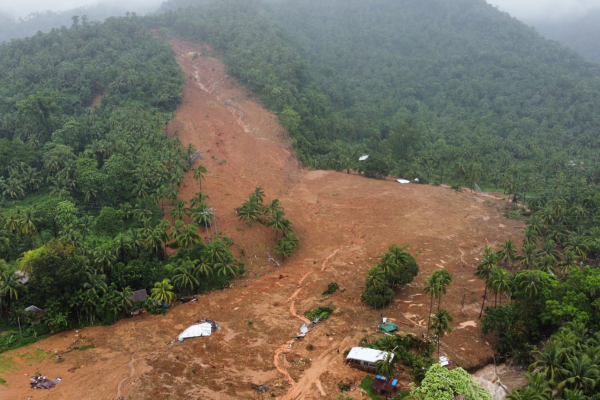
China is strengthening its ability to prevent and reduce the impact of landslides and floods as part of its broader efforts to improve disaster management in response to climate change, according to state broadcaster CCTV.
The country's Ministry of Natural Resources will place greater focus on preventing shallow landslides, which are among the most common geological hazards, as well as debris flows triggered by extreme rainfall. The ministry plans to prioritise disaster prevention measures in several high-risk regions, including the Yaxia Hydropower Project construction site, the Yanshan-Taihang Mountains, the Three Gorges Reservoir Area and the Wumeng Mountains.
As part of its strategy, China will also explore the use of aerospace remote sensing technology to improve the identification, monitoring and early detection of geological hazards. The move is aimed at strengthening risk assessment capabilities and enabling quicker responses to potential disasters.
The latest measures come as the country continues to face increasingly frequent extreme weather events. Climate experts have repeatedly warned that rising global temperatures are increasing the intensity and frequency of heavy rainfall, floods and related geological disasters across several parts of China.
In a separate development, Water Resources Minister Li Guoying inspected flood control measures in Beijing and Tianjin during a two-day visit carried out in the past week. During the inspection, he reviewed reservoir safety and the management of small and medium-sized rivers. He also directed authorities to strengthen monitoring and forecasting systems and ensure that no reservoir dams fail during the August flood season.
The renewed focus on disaster preparedness follows a series of fatal incidents reported in recent weeks. Flash flood-triggered landslides in Gansu province claimed 25 lives, while another landslide caused by a mountain collapse in Chongqing resulted in 51 deaths, highlighting the growing risks posed by extreme weather.
The Ministry of Transport also issued a notice warning of increased road traffic risks across 25 county-level areas in Guangdong and Guangxi after persistent rainfall. Some locations recorded rainfall levels nearly three times higher than the seasonal average, raising concerns over transport safety and potential disruptions.
China has been investing in improving its disaster monitoring and early warning systems in recent years as climate-related risks continue to grow. According to official data released last year, the country had identified more than 270,000 geological hazard sites that pose potential threats to nearly 11 million people, underlining the scale of the challenge facing authorities.
Source Reuters
Advertisement













 Facebook
 Whatsapp
