Advertisement






What really powers the cloud? Behind every Google search, A...
A lot of what defines a home isn’t visible at handover. I...
Private equity has played a significant role in shaping Indi...
Luxury real estate is one of the most talked-about segments ...
Airports play a much bigger role than just enabling travel -...
Australia’s housing market recorded a second consecutive month of sharper price declines, with national home values falling further in July as high borrowing costs and uncertainty over proposed tax changes weighed on buyer and seller sentiment. Sydney and Melbourne remained the weakest-performing markets, while the slowdown also spread to mid-sized cities. The weakening trend has drawn attention from the Reserve Bank of Australia, as softer housing activity could have broader implications for the country's economy, including the real estate, construction and home services sectors.
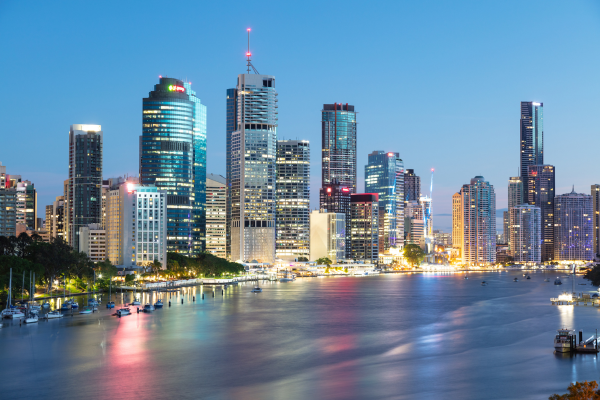
Australia's housing market continued to weaken over the past month, with national home prices registering a second straight month of notable declines as elevated borrowing costs and uncertainty surrounding proposed tax changes reduced market activity.
According to property consultancy Cotality, national home prices declined by 0.7% in July compared with the previous month, marking the sharpest monthly fall since December 2022. Annual home price growth also slowed to 5.3%, a significant moderation from the double-digit growth recorded during the early part of the year.
Sydney and Melbourne remained the weakest-performing capital cities, recording monthly price declines of 1.4% and 1.2%, respectively. Home values in both cities are now more than 5% below their recent peak levels. The slowdown also became more evident across mid-sized cities, with Perth's previously strong housing market remaining almost unchanged during the month.
Cotality's Head of Research, Gerard Burg, said revised data for the previous two months showed that home prices had declined more than initially reported, highlighting that the market correction had gathered pace. He noted that the trend was particularly visible across Australia's mid-sized capital cities.
He further stated that new property listings had weakened across the country in recent weeks, led by Sydney, as many homeowners chose to postpone selling amid softer market conditions and wait for stronger demand before listing their properties.
The continued weakness in the housing market has also attracted the attention of the Reserve Bank of Australia (RBA). During public remarks made in the past week, RBA Governor Michele Bullock referred several times to the slowing housing market, reinforcing market expectations that the central bank may pause further interest rate increases after implementing three rate hikes this year.
Australia's housing sector plays an important role in the broader economy, with residential property activity supporting industries such as real estate services, construction, home renovation, building materials and trade-related businesses. A prolonged decline in housing transactions could therefore affect economic activity beyond the property market.
Separate figures released by property data provider PropTrack also pointed to continued weakness. Its home price index showed a 0.3% monthly decline in July, marking the fourth consecutive month of price falls, while Sydney recorded a 0.6% drop.
PropTrack indicated that uncertainty surrounding proposed changes to tax benefits for investment properties had likely reduced buyer confidence. The company also noted that continuing price declines may be encouraging prospective buyers to delay purchases until housing values become more stable.
Australia's housing market had witnessed strong price growth in recent years, supported by limited housing supply, population growth and resilient demand. However, higher borrowing costs and policy uncertainty have increasingly weighed on market sentiment, leading to slower price growth and lower transaction volumes across several major cities.
Source Reuters
Advertisement













 Facebook
 Whatsapp
