Advertisement






The Gulf conflict has disrupted global supply chains, pushed...
REITs have changed the way commercial real estate is owned a...

What does it take to preserve a real estate legacy while bui...
What really powers the cloud? Behind every Google search, A...
A lot of what defines a home isn’t visible at handover. I...
The Mumbai Metropolitan Region Development Authority (MMRDA) has crossed a major construction milestone on the Orange Gate–Marine Drive underground road tunnel, with more than 650 metres excavated using a tunnel boring machine (TBM). Part of the INR 8,056 crore project, the twin-tube corridor is being developed to create a high-speed underground connection between the Eastern Freeway and Marine Drive. Once completed, the tunnel is expected to cut travel time across South Mumbai by up to 20 minutes while easing congestion on existing surface roads.
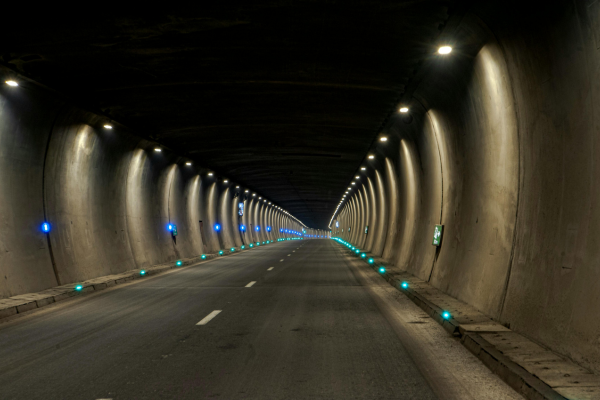
Construction of Mumbai's first deep underground road corridor has achieved a significant milestone, with the Mumbai Metropolitan Region Development Authority (MMRDA) completing more than 650 metres of excavation on the Orange Gate–Marine Drive tunnel project. The progress marks an important step in one of the city's most technically challenging transport infrastructure developments, which aims to strengthen east-west connectivity across South Mumbai.
The Orange Gate–Marine Drive tunnel is a 9.96-km underground road corridor being built at an approved cost of INR 8,056 crore. Nearly 7 km of the alignment comprises twin tunnels linking Orange Gate, near the Eastern Freeway, with Marine Drive. Designed as a high-speed underground route, the project seeks to reduce travel time between Mumbai's eastern and western waterfronts while integrating with major transport assets, including the Mumbai Coastal Road and the Mumbai Trans Harbour Link (Atal Setu).
Excavation is being carried out using a 12.19-metre slurry shield tunnel boring machine specially selected for Mumbai's coastal geology and high groundwater conditions. The alignment passes beneath densely populated neighbourhoods as well as critical transport corridors, including the Central Railway, Western Railway and Metro Line 3, at depths ranging from around 12 metres to nearly 52 metres. These engineering constraints make the project one of India's most complex urban road tunnelling exercises.
Each tunnel will accommodate two traffic lanes along with an emergency lane and has been designed for vehicle speeds of up to 80 kmph. The corridor will also incorporate cross passages at regular intervals, mechanical ventilation systems, fire-resistant infrastructure, intelligent traffic management systems and modern lighting to enhance operational safety. According to MMRDA, the project has now achieved around 14% physical progress.
The authority expects the tunnel to substantially ease congestion on existing roads by diverting through traffic away from busy surface corridors in South Mumbai. Once operational, travel time between Orange Gate and Marine Drive is projected to reduce to about five minutes, improving freight movement, commuter mobility and overall traffic efficiency while contributing to lower fuel consumption and vehicle emissions.
The project forms part of MMRDA's broader strategy to expand underground transport infrastructure across the Mumbai Metropolitan Region. With tunnelling progressing steadily, the Orange Gate–Marine Drive corridor is expected to become a key component of the city's future road network, providing a direct underground link between the eastern waterfront and the western seafront while supporting Mumbai's long-term mobility requirements.
Advertisement













 Facebook
 Whatsapp
