Advertisement






The Gulf conflict has disrupted global supply chains, pushed...
REITs have changed the way commercial real estate is owned a...
What does it take to preserve a real estate legacy while bui...
What really powers the cloud? Behind every Google search, A...
A lot of what defines a home isn’t visible at handover. I...
Mumbai’s struggle to preserve its limited open spaces is becoming increasingly visible as redevelopment, infrastructure projects, commercial activity and planning changes compete for land in the city. Recent reports by the Free Press Journal, Hindustan Times and The Times of India have highlighted concerns over public grounds, gardens, playgrounds and other ecological assets. A recent study by the Urban Design Research Institute and NAGAR found that public open space varies sharply across Mumbai’s 24 wards, from 9.4 sq m per resident in A Ward to just 0.5 sq m in B Ward. Separately, civic data cited by Hindustan Times shows that many of the 2,360 plots reserved for gardens, parks and playgrounds remain undeveloped or inaccessible. Architects, planners and residents have raised concerns that continued development pressure, coupled with delays in implementing an effective open spaces policy, could further reduce access to public land.
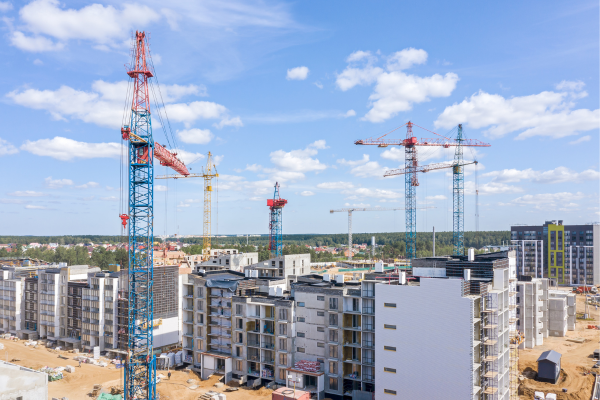
Mumbai’s limited stock of public open spaces is facing renewed pressure from development and redevelopment, with recent reports highlighting how reserved plots, recreational grounds and ecological assets are increasingly being caught between the city’s need for additional infrastructure and the requirement to preserve land for public use. The issue has prompted architects, urban planners, activists and residents to call for stronger protection of Mumbai’s remaining open spaces.
The scale of the challenge is reflected in the uneven availability of public open space across the city. A report by the Urban Design Research Institute (UDRI) and NAGAR found that per-capita public open space across Mumbai’s 24 administrative wards ranges from 9.4 sq m in A Ward to just 0.5 sq m in B Ward. The assessment used existing and reserved open spaces identified under Development Plan 2034 against ward-level population data.
The gap between land earmarked for public recreation and land that residents can actually use is another concern. Hindustan Times reported in June that many of Mumbai’s 2,360 plots reserved for gardens, parks and playgrounds remain undeveloped. Civic data also showed that 394 recreational-ground plots were being maintained by contractors rather than the Brihanmumbai Municipal Corporation (BMC), while several plots earmarked for public use had yet to be formally handed over by developers. Activists alleged that some such plots were being amalgamated with private development parcels.
The problem is not restricted to undeveloped reservations. In May, the Free Press Journal reported on a BMC proposal involving two garden-reserved plots in Malabar Hill that were proposed for conversion into residential reservations. The proposal also involved redesignating a football ground at Bandra Reclamation as an exhibition centre. The changes triggered concerns over the further reduction of recreational space in a city already facing a shortage of accessible public land.
Mumbai’s open-space policy has also remained unresolved for more than a decade, according to a recent Times of India report. The prolonged policy uncertainty has raised questions about the management, protection and public accessibility of recreational land, particularly where plots remain vulnerable to encroachment, neglect or competing uses.
The historical record indicates that the problem has been developing over several decades. Hindustan Times reported that only 31% of the open-space provisions made under the 1991 Development Plan had been implemented by the time of the revised DP 2034. For the 1964 Development Plan, only 6.93% of planned open spaces had been created.
The pressure is also evident in Mumbai’s wider ecological landscape. A Free Press Journal report cited estimates that between 1991 and 2018, the city lost 81% of its open land, 40% of its green cover and around 30% of its water bodies, while built-up area increased by 66%.
More recently, a collective of 127 architects, urban designers, planners and allied professionals urged the Maharashtra government and BMC to adopt a long-term approach towards protecting Mumbai’s public and ecological assets. Their concerns included the growing commercialisation and construction pressure on parks, playgrounds, wetlands and mangroves.
For Mumbai’s real estate sector, the issue presents a direct planning challenge: redevelopment and infrastructure expansion require land, but the city’s remaining open spaces also serve recreational, ecological and public functions. The continuing debate is therefore increasingly centred on how development can be accommodated without reducing the amount and accessibility of land available to residents.
Advertisement













 Facebook
 Whatsapp
