Advertisement






The Gulf conflict has disrupted global supply chains, pushed...
REITs have changed the way commercial real estate is owned a...

What does it take to preserve a real estate legacy while bui...
What really powers the cloud? Behind every Google search, A...
A lot of what defines a home isn’t visible at handover. I...
Union Road Transport and Highways Minister Nitin Gadkari has highlighted the condition of the Mumbai-Pune Expressway, saying the road has remained pothole-free nearly 27 years after it was constructed during his tenure as Maharashtra's PWD minister. His comments came amid criticism over damage near the recently completed Missing Link project on the same corridor. Gadkari clarified that the affected Missing Link was a Maharashtra government project and called for greater use of technology to identify road defects before they become major problems. He also stressed the need for infrastructure planning based on long-term requirements rather than immediate needs.
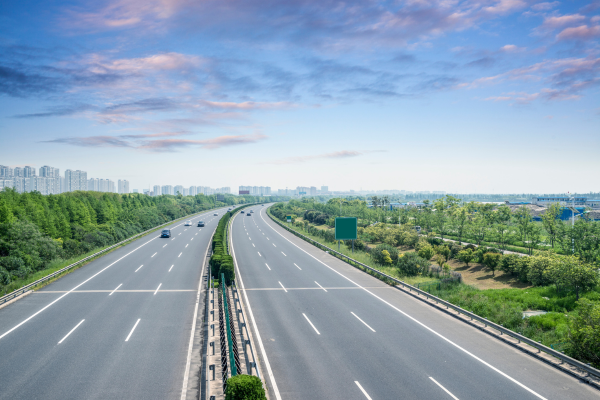
Union Road Transport and Highways Minister Nitin Gadkari has pointed to the long-term condition of the Mumbai-Pune Expressway, saying the 27-year-old road remains pothole-free. He made the remarks while addressing the Festival of Thinkers organised by Symbiosis International University in Pune.
Gadkari recalled that the Mumbai-Pune Expressway was constructed during his tenure as a Maharashtra minister and said the road had continued to remain free of potholes despite years of use. His comments came after he faced criticism on social media following damage to a structure near the newly completed Missing Link on the Mumbai-Pune Expressway. He clarified that the Missing Link is a state government project and that he was not responsible for that particular work.
The Missing Link is a 13.3-km project designed to bypass the steep Khandala and Lonavala ghat section of the existing expressway. It was inaugurated in May and is intended to reduce the travel distance between Mumbai and Pune while improving road safety and easing movement through the difficult terrain. A landslide occurred near Tunnel 2 following heavy rainfall in July, bringing renewed attention to the project.
Gadkari used the discussion to stress the importance of technology in monitoring infrastructure. He said tools such as drones, artificial intelligence, LiDAR, satellite-based systems, network survey vehicles and dash cameras should be used to identify defects at an early stage. Such systems can help authorities monitor road conditions and take preventive action before smaller defects develop into larger structural or maintenance problems.
He also stressed that infrastructure projects should be planned with a 25- to 50-year perspective. According to Gadkari, planning only for present traffic requirements can result in infrastructure becoming inadequate as cities and economies expand. He linked long-term infrastructure planning with economic growth, employment generation and the development of industry, trade and tourism.
The minister also reflected on the planning of the Mumbai-Pune Expressway, saying that he had pushed for an eight-lane road after considering future traffic requirements at the time. He later felt that infrastructure planning needed an even broader outlook after observing highway development in other countries.
The Mumbai-Pune Expressway was constructed in the late 1990s and became one of India's major access-controlled expressways, providing a faster road connection between Mumbai and Pune. The corridor continues to handle substantial traffic between the two cities and is now being supplemented by projects such as the Missing Link.
The road is maintained by the Maharashtra government. In a response placed before Parliament earlier this year, the Ministry of Road Transport and Highways stated that the Mumbai-Pune Expressway had been constructed and was being maintained by the Maharashtra government. The ministry also noted that the state had adopted measures relating to safety and congestion management on the corridor.
Gadkari's remarks also come at a time when road quality and monsoon-related damage have received increased attention across Maharashtra. The emphasis on preventive monitoring reflects a wider shift towards using technology to assess road conditions rather than relying only on physical inspections after defects appear.
For the Mumbai-Pune corridor, the focus is now not only on maintaining the existing expressway but also on ensuring that new infrastructure connected to it can withstand heavy rainfall, traffic loads and challenging terrain. The performance of these projects will remain closely linked to the quality of design, construction, monitoring and regular maintenance.
Source PTI
Advertisement













 Facebook
 Whatsapp
