Advertisement






The Gulf conflict has disrupted global supply chains, pushed...
REITs have changed the way commercial real estate is owned a...
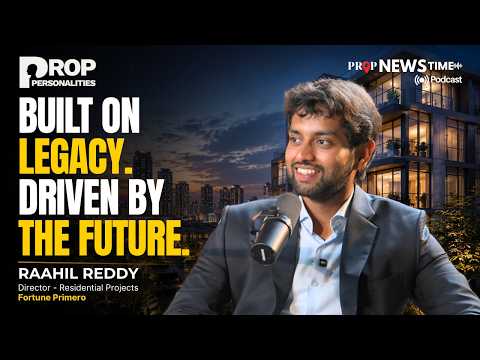
What does it take to preserve a real estate legacy while bui...
What really powers the cloud? Behind every Google search, A...
A lot of what defines a home isn’t visible at handover. I...
President Droupadi Murmu said India’s economy continues to remain resilient despite global warfare and instability, with growth projected to be more than twice the global average. In her address to the nation on the eve of Independence Day, she highlighted the role of self-reliance, digital infrastructure, renewable energy and physical connectivity in strengthening the country’s economic base. She also pointed to India’s progress on Sustainable Development Goals and the rapid expansion of highways, waterways, railways and airways. According to her, these developments are creating business opportunities, supporting employment and improving investor confidence.
President Droupadi Murmu said India continues to move ahead as the world’s fastest-growing major economy despite the uncertainty created by conflicts and instability in different parts of the world. She said the country’s economic growth is projected to remain more than twice the global average.
In her address to the nation on the eve of the 80th Independence Day, the President said global warfare and instability are affecting countries across the world. Against this backdrop, she highlighted the role of initiatives such as the Atmanirbhar Bharat Abhiyan in strengthening India’s economic foundation as well as its national security.
The remarks come amid continued disruptions to global trade and energy markets caused by conflicts in the Middle East and risks around important maritime shipping routes. For India, the broader impact of such instability has also increased the importance of domestic capacity in areas linked to energy, manufacturing and critical infrastructure.
Murmu also highlighted India’s focus on sustainable development. She said the country is pursuing modernisation while also taking a leading role internationally in environmental protection. India, she noted, has achieved several Sustainable Development Goals that were targeted for 2030 ahead of schedule.
Renewable energy has also gained momentum in recent years. India had already achieved 50% of its installed electricity capacity from non-fossil fuel sources in 2025, five years ahead of the target set under its Nationally Determined Contributions to the Paris Agreement.
Digital infrastructure was another major part of the President’s address. Murmu said India has developed the world’s largest and most advanced digital infrastructure, with digital payments becoming common even among street vendors and small shops in rural areas.
She said India now accounts for more than half of the world’s real-time digital transactions. The expansion of digital payments, particularly through platforms such as UPI, has helped bring formal digital transactions into everyday economic activity. The President described the country’s digital transformation as a model that has attracted global attention.
Technology has also changed the way government welfare benefits are delivered. Murmu said digital systems have enabled government schemes to reach beneficiaries directly and transparently, reducing the dependence on intermediaries.
The President further pointed to the expansion of India’s physical infrastructure. Highways, waterways, railways and airways have expanded rapidly in recent years, supporting connectivity between cities, industrial centres and smaller markets.
According to Murmu, this infrastructure development is creating new business opportunities and employment while also strengthening investor confidence. Better connectivity is particularly important for the movement of goods and people and for linking emerging economic centres with larger markets.
The focus on infrastructure is also part of a wider development strategy aimed at improving opportunities beyond established urban centres. The President has previously highlighted the need to extend growth to regions and communities that had historically received fewer development opportunities.
India’s economic progress, therefore, is being driven not only by headline growth figures but also by changes in infrastructure, technology, energy and access to government services. The combination of physical connectivity and digital systems is increasingly influencing how businesses operate and how citizens access economic and public services.
Source PTI
Advertisement













 Facebook
 Whatsapp
