Advertisement






The Gulf conflict has disrupted global supply chains, pushed...
REITs have changed the way commercial real estate is owned a...

What does it take to preserve a real estate legacy while bui...
What really powers the cloud? Behind every Google search, A...
A lot of what defines a home isn’t visible at handover. I...
Navi Mumbai International Airport (NMIA) has received its first international freighter, marking another step in the expansion of its cargo operations. The Hong Kong Air Cargo-operated Airbus A330-200F arrived from Hong Kong carrying around 60 tonnes of import and export shipments. The carrier will operate three weekly services, resulting in six weekly cargo air traffic movements between the two cities. NMIA is also preparing for 13 additional freighter services connecting it with major markets across Asia, Europe and West Asia. The expansion comes as cargo operations at Mumbai airport face a planned suspension of dedicated freighter flights.
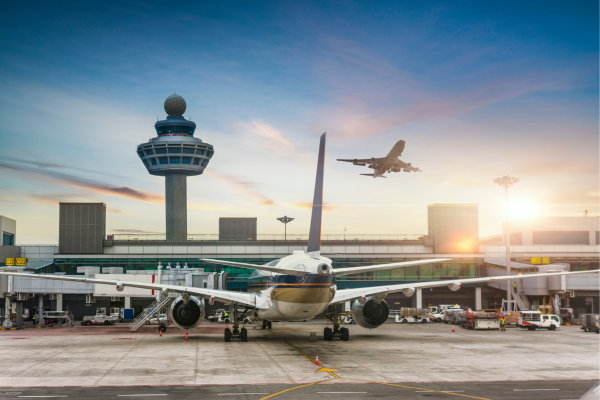
Navi Mumbai International Airport (NMIA) has recorded its first arrival of an international freighter, with a Hong Kong Air Cargo aircraft landing at the facility from Hong Kong.
The development is part of the airport's ongoing expansion of international cargo operations, with 13 new freighter services expected to be added to its network. Hong Kong Air Cargo will operate three services a week between Hong Kong and Navi Mumbai, translating into six weekly cargo air traffic movements.
The service will be operated using an Airbus A330-200F freighter with a cargo capacity of around 60 tonnes for import and export shipments.
Navi Mumbai International Ltd (NMIAL), which manages the airport, is jointly owned by the Adani Group and the Maharashtra government's City and Industrial Development Corporation (CIDCO). The Adani Group holds a 74 per cent stake in NMIAL, while CIDCO owns the remaining 26 per cent.
The international cargo expansion follows the start of other international operations at NMIA. The airport began its first international passenger service with an Air India Express flight to Abu Dhabi in July. It subsequently handled its first dedicated international freighter service when IndiGo Cargo operated a flight to Sharjah, carrying around 20 tonnes of goods.
NMIA is now expanding its international cargo network, with operators having filed applications and received approvals for services to several major destinations. These include Hong Kong, Chengdu, Bangkok, Taipei, Kuala Lumpur, Singapore, Abu Dhabi, Doha, Frankfurt, Istanbul, Dubai, Amsterdam, Bahrain, Paris and Riyadh.
The expansion is also taking place at a time when Mumbai's Chhatrapati Shivaji Maharaj International Airport is preparing for a temporary suspension of dedicated freighter operations. The airport is expected to suspend cargo-only flights from August 2026 to May 2027 to undertake runway, taxiway and cargo apron works. Mumbai airport had handled about 890,000 tonnes of cargo in FY2024-25, accounting for nearly a quarter of India's total air cargo traffic during the year.
This makes the development of NMIA's cargo network particularly relevant for freight movement in the Mumbai Metropolitan Region. Earlier reports had indicated that several international freighter operators were preparing to shift operations to Navi Mumbai as Mumbai airport's cargo infrastructure undergoes the planned works.
NMIA's cargo infrastructure has been planned in phases. The airport's cargo terminal began operations with an initial annual handling capacity of around 0.50 million metric tonnes. The operator's current cargo plans provide for the capacity to increase to about 2.60 million metric tonnes in the final phase, with facilities designed to handle domestic, international, express and transit cargo. The terminal will also cater to specialised cargo such as pharmaceuticals, perishables, oversized shipments, cold-chain cargo, hazardous goods, live animals and valuable cargo.
Technology is another part of the planned cargo system. NMIA's cargo ecosystem includes a cargo community system intended to connect airlines, freight forwarders, Customs, trucking companies and the airport operator. Automated truck-slot management is also planned to help manage vehicle movement and reduce cargo terminal congestion.
The airport has also attracted long-term investment in its cargo infrastructure. FedEx and NMIA broke ground earlier this year on a proposed 300,000-square-foot fully automated air cargo hub. The project involves a long-term investment of more than INR 2,500 crore and is planned as a regional consolidation and redistribution hub connecting India with Southeast Asia, West Asia, Europe and the US.
NMIA's international cargo network is therefore being built alongside its passenger operations rather than as a separate later-stage development. The airport operator said the increase in freighter activity expected through the end of August would expand connections with key markets across Asia, Europe and West Asia and provide additional air cargo options for exporters, importers and other businesses.
The airport said its cargo development is aligned with the National Logistics Policy and Maharashtra government's Logistics Policy 2024. It is also positioning the facility as a multimodal logistics gateway for western India, with its location providing access to industrial and commercial centres across the Mumbai Metropolitan Region.
Source PTI
Advertisement













 Facebook
 Whatsapp
