Advertisement






The Gulf conflict has disrupted global supply chains, pushed...
REITs have changed the way commercial real estate is owned a...

What does it take to preserve a real estate legacy while bui...
What really powers the cloud? Behind every Google search, A...
A lot of what defines a home isn’t visible at handover. I...
Kerala is set to begin full export-import operations at Vizhinjam International Seaport, moving the facility beyond its existing transshipment role. The launch will take place alongside Mission Samudra, a state-backed port-led industrial and logistics development programme supported by a INR 400 crore catalytic fund. The mission will cover eight industrial clusters, three new cities and the state’s 600-kilometre coastline. Direct cargo movement through Vizhinjam is expected to reduce transit time and logistics costs while supporting exports, warehousing, cold storage, logistics parks and employment across Thiruvananthapuram and neighbouring districts.
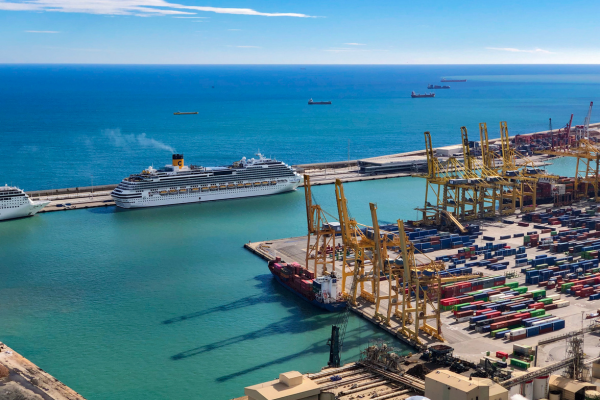
The Kerala government is set to start full export-import (EXIM) operations at Vizhinjam International Seaport, marking a shift from the port’s current focus on transshipment to direct international cargo movement. The EXIM launch will take place alongside the rollout of Mission Samudra, the state’s port-led industrial and logistics development programme.
Chief Minister V D Satheesan will flag off the first export container at a ceremony on August 18, with Union Minister for Ports, Shipping and Waterways Sarbananda Sonowal scheduled to attend as the chief guest. The first export container has already completed a trial movement to Valencia in Spain, paving the way for the start of regular EXIM services.
The Kerala government said Mission Samudra is based on the idea of developing a wider port city and positioning Vizhinjam as the anchor of a larger maritime economic region. The programme will cover eight industrial clusters, three new cities and Kerala’s 600-kilometre coastline.
The state has allocated a INR 400 crore catalytic fund for the mission. It will be divided across three main areas covering ports and connectivity, cities and logistics, and development and clusters. A separate horizontal component will focus on programme management and capacity building. In total, the mission will comprise 14 sub-schemes.
The start of EXIM operations is expected to change how cargo from Kerala and surrounding regions reaches international markets. Exporters that currently route shipments through Colombo, Singapore and Dubai will have the option of sending consignments directly through Vizhinjam.
This is expected to reduce both transit time and logistics costs. Small and medium enterprises involved in agricultural products, spices, cashew, marine products, handloom and textiles are among the sectors that could benefit from direct access to overseas markets.
The port has so far operated mainly as a transshipment facility, with containers being transferred between vessels. Since commencing commercial operations in 2024, Vizhinjam has developed into a major container-handling facility and has handled more than two million TEUs within 18 months, according to reports.
The transition to gateway EXIM operations follows the port’s receipt of final Customs approval. The approval comes with certain operational conditions during the initial phase. Import cargo will be limited to eligible full-container-load shipments for Direct Port Delivery, while export operations will initially focus on factory-stuffed, self-sealed or Customs-sealed full-container-load shipments. Cargo requiring loose stuffing, de-stuffing or examination through a Container Freight Station will not be permitted until a designated CFS becomes operational.
The development of supporting logistics infrastructure is expected to become an important part of the next phase. The commencement of EXIM services is likely to increase demand for warehousing, cold storage facilities, container freight stations and logistics parks in the region. The state government expects this expansion to generate employment in Thiruvananthapuram and neighbouring districts across logistics, port operations, trade, construction and related urban services.
Mission Samudra is also expected to attract private investment. The Kerala government estimates that the programme could generate more than ten times the public investment by 2031, with private participation expected across industries, logistics, services and infrastructure.
The wider plan is intended to connect the state’s maritime infrastructure with road, rail and inland waterways, along with manufacturing zones and new urban developments. Kerala’s revised budget has also provided for Mission Samudra projects, including the development of a port city and improved connectivity around Vizhinjam.
Better connectivity will be important for the port’s long-term role in the state’s export economy. Plans include improving road and rail links between Vizhinjam and the wider transport network, while manufacturing zones, stuffing centres and dry ports are also envisaged around Vizhinjam and Kochi.
The port’s location is another factor behind the state’s plans. Vizhinjam is around 10 nautical miles from the east-west international shipping route and has the depth and infrastructure required to handle some of the world’s largest container vessels. Its first-phase berth is around 800 metres, while expansion plans are expected to increase the berth length to 1,200 metres by 2027 and 2,000 metres by 2028.
However, the initial EXIM launch will not mean that all cargo handled at Vizhinjam will immediately become gateway cargo. Reports indicate that transshipment is expected to continue accounting for the larger share of cargo in the initial phase, with gateway EXIM cargo making up the remaining share.
The state government expects the combination of direct cargo movement, industrial clusters and improved connectivity to strengthen Kerala’s manufacturing and export base. It also expects customs duty, GST and port-related charges generated through increased cargo activity to contribute to government revenues.
With EXIM services scheduled to commence on August 18, Vizhinjam is entering a new phase in its development. The immediate focus will be on establishing direct cargo movement and building the supporting logistics network, while Mission Samudra provides the broader framework for linking the port with manufacturing, urban development and trade infrastructure.
Source PTI
Advertisement













 Facebook
 Whatsapp
