Advertisement






The Gulf conflict has disrupted global supply chains, pushed...
REITs have changed the way commercial real estate is owned a...

What does it take to preserve a real estate legacy while bui...
What really powers the cloud? Behind every Google search, A...
A lot of what defines a home isn’t visible at handover. I...
The Uttar Pradesh government has approved INR 8.99 crore for installing 1,342 CCTV cameras at 296 key traffic junctions across 51 districts. The project is aimed at improving road safety, monitoring traffic violations and strengthening enforcement in locations that are not covered by the Integrated Traffic Management System or Smart City surveillance projects. The network will include Automatic Number Plate Recognition and pan-tilt-zoom cameras, along with recording and supporting equipment. The state has directed the Uttar Pradesh Police headquarters’ traffic and road safety wing to complete the procurement process, with the sanctioned funds to be utilised by March 2027.
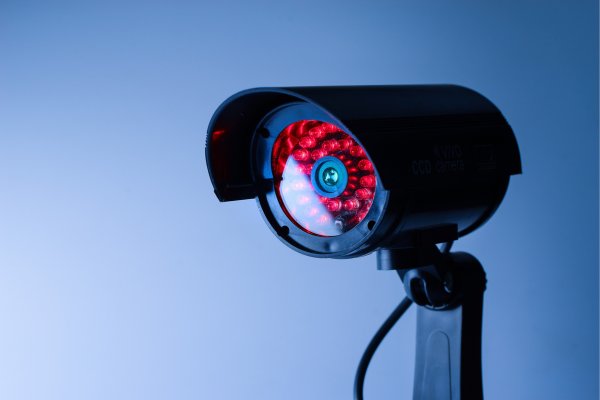
The Uttar Pradesh government has approved an allocation of INR 8.99 crore for the installation of 1,342 CCTV cameras at 296 key junctions across 51 districts, with the aim of improving traffic monitoring and road safety.
The cameras will be installed at busy intersections that currently do not have coverage under the Integrated Traffic Management System (ITMS) or Smart City surveillance projects. The expanded network is expected to help authorities monitor traffic violations, improve enforcement and respond more quickly to incidents at busy and accident-prone junctions.
Under the approved plan, 158 major intersections will receive five cameras each, accounting for 790 cameras. This component has been allocated around INR 5.08 crore. Another 138 locations, including three-way, T-junction and Y-junction intersections, will receive four cameras each, adding 552 cameras at an estimated cost of INR 3.91 crore.
The surveillance equipment will include Automatic Number Plate Recognition (ANPR) cameras and pan-tilt-zoom (PTZ) cameras, along with network video recorders and other associated equipment. The system is intended to provide authorities with better visibility of traffic movement and violations at junctions where integrated surveillance infrastructure is currently unavailable.
The project covers 51 districts that do not already have ITMS or Smart City surveillance coverage. The six districts specifically identified under the plan are Bhadohi, Kasganj, Lalitpur, Mirzapur, Shamli and Sitapur.
The Uttar Pradesh Police headquarters’ traffic and road safety wing has been directed to carry out the procurement in accordance with the prescribed financial and procurement rules. The sanctioned amount is required to be utilised by March 31, 2027.
The move is part of Uttar Pradesh’s wider effort to expand technology-based traffic management in areas that are outside existing integrated surveillance systems. The additional cameras are expected to support the monitoring of traffic violations and road conditions while helping enforcement agencies identify problems at busy junctions.
The state has been expanding its use of CCTV infrastructure for traffic management and public safety over the past few years. Earlier initiatives, including surveillance deployments under the state’s Operation Trinetra, have also focused on expanding camera coverage and supporting police investigations and enforcement.
The latest project is more specifically focused on traffic junctions and road safety. By placing ANPR and PTZ cameras at identified intersections, authorities will be able to monitor vehicle movement as well as traffic violations. The network can also provide recorded footage for enforcement and investigation when required.
The expansion could also help bridge the gap between districts that already have integrated traffic management infrastructure and those where surveillance remains limited. This is particularly relevant for urban and semi-urban areas where traffic volumes have increased but technology-enabled enforcement has not expanded at the same pace.
With procurement now assigned to the traffic and road safety wing of the state police headquarters, the next stage will involve identifying the exact locations, procuring the equipment and completing installation within the sanctioned period. The implementation will also need to avoid duplication with surveillance infrastructure being created through other government schemes.
The project is expected to strengthen traffic regulation at the selected junctions rather than create a single statewide surveillance network. Its effectiveness will depend on the quality of camera coverage, continuous monitoring and how quickly violations detected through the system are acted upon.
Advertisement













 Facebook
 Whatsapp
