Advertisement






The Gulf conflict has disrupted global supply chains, pushed...
REITs have changed the way commercial real estate is owned a...

What does it take to preserve a real estate legacy while bui...
What really powers the cloud? Behind every Google search, A...
A lot of what defines a home isn’t visible at handover. I...
The Partition of India in 1947 transformed the physical and property landscape of Delhi and Punjab alongside the political map of the subcontinent. The mass movement of people created an immediate housing crisis, while governments had to manage abandoned homes, agricultural land and commercial properties. Refugee camps evolved into permanent settlements, rehabilitation colonies became established neighbourhoods, and new administrative systems were created to manage evacuee property and compensate displaced families. Nearly eight decades later, the residential colonies, landholding patterns and planned urban centres that emerged during and after Partition remain an important part of the region's built environment.
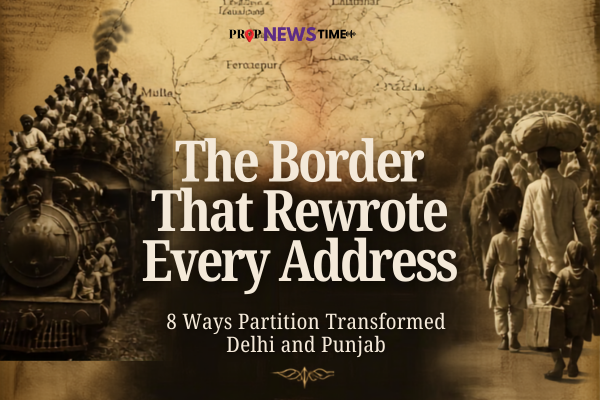
When India was partitioned in 1947, millions of people crossed the newly created border, leaving behind homes, land, farms and businesses. Delhi and East Punjab received large numbers of displaced families, creating an urgent need for housing and rehabilitation. The response involved temporary camps, allocation of land and property, development of new residential colonies and the creation of administrative mechanisms to manage evacuee assets and compensation claims. Over time, many of these settlements became permanent parts of Delhi and Punjab's urban landscape.
1. Delhi's housing landscape changed rapidly
The arrival of large numbers of refugees placed immediate pressure on Delhi's existing housing stock. Temporary settlements were established at locations including Purana Qila and Kingsway Camp, while public buildings and open spaces were also used to accommodate displaced families. As rehabilitation progressed, temporary arrangements were replaced by more permanent housing, contributing to the expansion of Delhi beyond its older urban boundaries. The Land and Development Office's records of rehabilitation colonies reflect the scale of this post-Partition housing exercise.
2. Refugee colonies became established neighbourhoods
Several residential colonies created or developed as part of refugee rehabilitation eventually became established neighbourhoods within Delhi. Areas including Patel Nagar, Rajinder Nagar, Lajpat Nagar and other rehabilitation settlements developed residential and commercial activity as displaced families rebuilt their lives. What began primarily as a response to an immediate housing crisis gradually became part of the city's permanent urban structure, with these neighbourhoods later experiencing redevelopment, rising property values and changing land uses as Delhi expanded.
3. Evacuee property reshaped ownership patterns
Partition resulted in large numbers of properties being left behind by people who migrated across the new border. These properties were classified and administered under the emerging evacuee-property framework, with the government using them as part of the wider rehabilitation process. The system involved identifying properties, assessing claims and allocating or otherwise managing assets for displaced persons. The administrative legacy has continued for decades, with government departments retaining records and responsibilities relating to properties originally brought under rehabilitation arrangements.
4. Punjab's agricultural land was reorganised
The property impact of Partition extended into rural Punjab, where displaced farming families had to rebuild their agricultural livelihoods after leaving land across the border. The government established mechanisms for resettling displaced persons on available agricultural land, including through legislation such as the East Punjab Displaced Persons (Land Resettlement) Act, 1949. The process changed patterns of landholding and settlement across parts of Indian Punjab and became an important component of the wider rehabilitation programme.
5. Refugee communities rebuilt commercial centres
Rehabilitation involved rebuilding livelihoods as well as providing homes. Displaced families established shops, workshops and other businesses in and around their new residential settlements, helping new markets develop alongside refugee colonies. Over time, these commercial areas became integrated into Delhi's wider economy, demonstrating how housing rehabilitation and economic reconstruction developed together. The establishment of local businesses also helped communities become more self-sufficient and gave many displaced families a means to rebuild livelihoods after losing their original properties.
6. New cities emerged from the post-Partition reorganisation
The loss of Lahore, which became part of Pakistan, created the need for a new capital for Indian Punjab. Chandigarh was subsequently developed as a planned city, representing a different response to the disruption caused by Partition. While rehabilitation colonies primarily addressed the housing needs of displaced populations, Chandigarh involved the creation of a new administrative and urban centre. Other rehabilitation settlements, including Faridabad, also expanded during this period as part of efforts to accommodate displaced communities and provide opportunities for economic reconstruction.
7. Property administration became a major challenge
The scale of displacement created complex questions around property ownership, documentation and compensation. Governments had to process claims from people who had left assets behind, assess available properties and administer rehabilitation arrangements. In Delhi, government agencies continue to maintain records of rehabilitation properties and deal with matters including lease administration, mutation, substitution and other property-related permissions. This administrative framework demonstrates how the consequences of Partition extended well beyond the initial years of displacement into the long-term management of property rights.
8. Partition's property legacy remains visible today
The impact of Partition can still be seen in Delhi's neighbourhoods and Punjab's landholding and settlement patterns. Former rehabilitation colonies have become established residential and commercial areas, while properties once administered under rehabilitation frameworks have passed through successive generations and undergone redevelopment. The continued presence of government records relating to evacuee and rehabilitation properties also reflects the long-term nature of the administrative changes created after 1947. Conclusion
Partition permanently changed the property map of Delhi and Punjab. Its effects extended from emergency refugee camps and rehabilitation colonies to agricultural resettlement, commercial markets, planned cities and new systems of property administration. Many settlements created in response to the displacement eventually became established parts of the region's urban landscape, while property claims and rehabilitation records continued to shape land administration for decades. Nearly 80 years later, the legacy of 1947 remains visible not only in the region's history but also in its neighbourhoods, property records, landholdings and built environment.
Sources: Ministry of Home Affairs, L&DO, Government of India, Government of Chandigarh
Advertisement













 Facebook
 Whatsapp
