Advertisement






The Gulf conflict has disrupted global supply chains, pushed...
REITs have changed the way commercial real estate is owned a...

What does it take to preserve a real estate legacy while bui...
What really powers the cloud? Behind every Google search, A...
A lot of what defines a home isn’t visible at handover. I...
An Air India Airbus A320 operating a Phuket-Delhi flight experienced a sudden loss of around 300 feet in altitude during cruise, with sources reporting multiple technical glitches, including an autopilot disconnection and triple hydraulic failures. The aircraft also encountered turbulence before stabilising and continuing its journey to Delhi. At least 17 passengers and crew members were reported injured in the incident. The Aircraft Accident Investigation Bureau (AAIB) has begun a probe, while France's BEA and Airbus are joining the investigation to provide technical assistance. The pilot's confirmatory psychoactive substance test is also awaited.
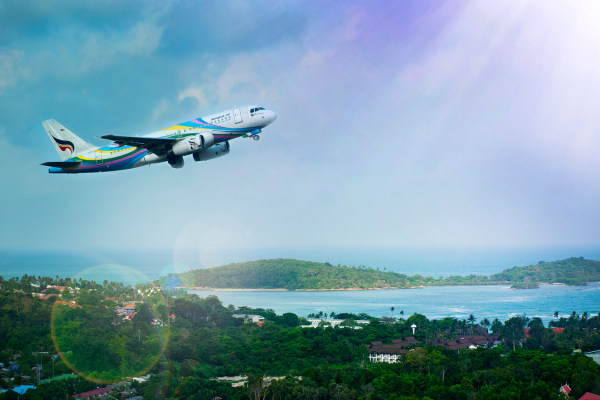
An Air India A320 operating flight AI2379 from Phuket to Delhi experienced a sudden loss of approximately 300 feet in altitude during cruise before the aircraft stabilised and continued safely to the national capital. The aircraft, registered as VT-EXO, was carrying 137 passengers, including three infants, and eight crew members. A few passengers and cabin crew members suffered injuries during the incident.
Sources familiar with the matter said the aircraft experienced several technical problems during the flight. These reportedly included the autopilot disconnecting, after which the co-pilot manually regained control of the aircraft. A flight-control stall message was subsequently displayed.
The aircraft also reportedly experienced failures involving its hydraulic systems. Sources have indicated that all three hydraulic systems were affected during the flight, along with other technical and mechanical glitches. Various indicator switches also reportedly went off briefly.
The aircraft encountered turbulence during the flight as well. Initial information had pointed towards a turbulence-related event, but the investigation is now examining the reported technical failures and their sequence in greater detail. The exact relationship between the turbulence, hydraulic issues, autopilot disconnection and the temporary loss of altitude has not yet been established.
Hydraulic systems are important to aircraft operations as they use pressurised fluid to operate various mechanical components. On commercial aircraft, hydraulic power is used for several flight-control and other critical functions. The A320 family has multiple hydraulic systems and related backup arrangements, which are designed to provide redundancy in the event of individual system failures.
After the crew managed the problems, the aircraft continued its flight and landed safely in Delhi. The AAIB has commenced a formal investigation into the serious incident under Annex 13 of the International Civil Aviation Organization, which sets out procedures for investigating aircraft accidents and incidents.
France's Bureau of Enquiry and Analysis for Civil Aviation Safety (BEA) is also participating in the investigation because the aircraft is manufactured by Airbus in France. Airbus has said it is providing technical assistance to the investigating authorities and is sending a team of specialists to support the probe.
The investigation will examine the aircraft's flight data, cockpit recordings, technical records and other available evidence to determine what happened during the flight. The sequence of the reported system failures and the aircraft's sudden altitude change will be among the key areas of examination.
The incident also comes as authorities are separately examining the pilot-in-command's psychoactive substance screening. The Civil Aviation Ministry had said the initial screening result required further analysis and that confirmatory testing had been carried out. The final result is awaited.
Pilot grouping ALPA India has meanwhile pointed out that some commonly used over-the-counter medicines can produce a non-negative result during psychoactive substance screening. The group has said such preliminary results therefore need to be confirmed through the prescribed testing process before any conclusions are drawn.
The number of reported injuries and the circumstances inside the cabin are also part of the authorities' assessment. While the aircraft landed safely and there was no reported loss of life, the combination of the sudden altitude change and the reported technical issues has made the incident subject to a detailed safety investigation.
Source PTI
Advertisement













 Facebook
 Whatsapp
