Advertisement






The Gulf conflict has disrupted global supply chains, pushed...
REITs have changed the way commercial real estate is owned a...

What does it take to preserve a real estate legacy while bui...
What really powers the cloud? Behind every Google search, A...
A lot of what defines a home isn’t visible at handover. I...
The government is stepping up efforts to reduce road fatalities, with a target of cutting road accidents and deaths by half by 2030 and working towards zero road fatalities in the longer term. Road Transport and Highways Minister Nitin Gadkari said 100 districts with high accident rates have been identified for focused intervention, including action at accident-prone black spots. India recorded 5,13,563 road accidents and 1,83,382 deaths in 2025, with an average of 59 crashes and 21 fatalities every hour. Two-wheeler users accounted for the largest share of road deaths, highlighting the need for stronger compliance with helmet and traffic safety rules.
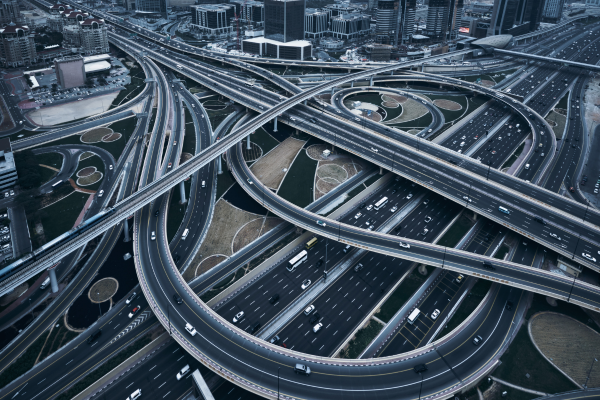
India is stepping up its road safety efforts as the government works towards reducing road fatalities to zero and cutting road accidents and deaths by 50 per cent by 2030.
Road Transport and Highways Minister Nitin Gadkari said 100 districts with high accident rates have been identified for urgent intervention. The focus will include accident-prone black spots and other locations where crashes and fatalities are concentrated.
Addressing an event organised by ICICI Lombard, Gadkari said changing public behaviour and ensuring compliance with traffic rules continue to be among the biggest challenges in improving road safety.
The government’s approach is centred on identifying the specific causes and locations of crashes and taking targeted measures rather than relying only on broader road safety campaigns. A data-driven programme covering the 100 high-risk districts has already been taken up, with authorities examining high-risk corridors, junctions, road-user groups and accident patterns to identify suitable interventions.
The need for such measures is reflected in the latest accident figures. India recorded 5,13,563 road accidents in 2025, an increase of 5.3 per cent, while 1,83,382 people lost their lives. This works out to an average of 59 accidents and 21 deaths every hour.
Police departments of states and Union Territories have also reported 2,85,770 road accidents during the first six months of 2026, according to the figures cited by the minister.
Two-wheelers remained the biggest concern among vehicle categories. They accounted for the highest share of total road accident fatalities in 2025, followed by light vehicles such as cars, taxis, vans and other light motor vehicles, and then trucks and lorries.
Among road users, two-wheeler riders accounted for 46.2 per cent of total fatalities. Pedestrians followed with 20.6 per cent, while people travelling in cars, taxis, vans and other light motor vehicles accounted for 12.4 per cent.
Gadkari said wider use of helmets among two-wheeler users could help reduce deaths and serious injuries. The figures indicate that road-user behaviour remains an important part of the road safety problem, alongside road design and enforcement.
The focus on specific districts is also linked to findings from a joint analysis by the Ministry of Road Transport and Highways and SaveLIFE Foundation. The report on the country's 100 districts with the highest severity of road accident fatalities found that 89,085 people were killed in these districts during 2023 and 2024, accounting for more than a quarter of all road accident deaths recorded in India during the two-year period.
The analysis also found that accidents were concentrated around known locations, including specific road stretches, crash-prone spots and police station areas. This has strengthened the case for directing road engineering, enforcement and other safety measures towards locations where the risk is highest.
The government has also been working on a broader road safety framework covering road engineering, vehicle safety, enforcement, education and emergency care. Gadkari has previously pointed to poor road engineering and weak project planning as factors that can contribute to crashes, indicating that safer roads require interventions beyond driver behaviour alone.
Gadkari said road crashes also have a substantial economic impact, with losses estimated at around 3 per cent of India's GDP. He described the issue as a basic challenge for policymakers and outlined a strategy based on better road engineering, safer automobiles and stricter enforcement.
The minister also highlighted the growth of India's automobile industry while discussing vehicle safety. He said the industry has expanded from around INR 14 lakh crore when he took charge as transport minister to about INR 22 lakh crore currently.
For comparison, Gadkari put the size of the US automobile industry at around INR 78 lakh crore and China's at INR 47 lakh crore. He added that the Indian automobile sector has created around 4.5 crore jobs, making it the largest employment-generating industry in the country according to his assessment. He also pointed to the industry's contribution to government revenues through the Goods and Services Tax.
The Ministry of Road Transport and Highways is responsible for the development and maintenance of National Highways, making road infrastructure and engineering an important part of the government's road safety efforts.
At the ICICI Lombard event, Sandeep Goradia, Chief of the company's retail, business strategy and solutions team, said its road safety initiatives were aimed at encouraging responsible road behaviour and safer choices.
As part of its 25-year celebrations, ICICI Lombard is distributing 25,000 helmets and is also attempting a Guinness World Records title as part of its road safety programme.
The scale of India's road accident problem means that reducing fatalities will depend on how effectively infrastructure improvements, enforcement and road-user behaviour are addressed together. With the government focusing on the 100 highest-risk districts and targeting a 50 per cent reduction in fatalities by 2030, the implementation of these measures at the local level will be critical to achieving measurable improvements.
Source PTI
Advertisement













 Facebook
 Whatsapp
