Advertisement






The Gulf conflict has disrupted global supply chains, pushed...
REITs have changed the way commercial real estate is owned a...

What does it take to preserve a real estate legacy while bui...
What really powers the cloud? Behind every Google search, A...
A lot of what defines a home isn’t visible at handover. I...
Mumbai Metro One has introduced a mixed-loop operating pattern on the Versova-Andheri-Ghatkopar corridor from August 10 to increase train frequency during evening peak hours. Under the revised arrangement, alternate services will operate between Ghatkopar and Andheri, while the following train will continue on the full Ghatkopar-Versova route. The change reduces the peak-hour gap between Andheri and Ghatkopar from 3 minutes 20 seconds to 3 minutes and is expected to raise carrying capacity on the section by more than 20%, adding capacity for around 28,000 commuters.
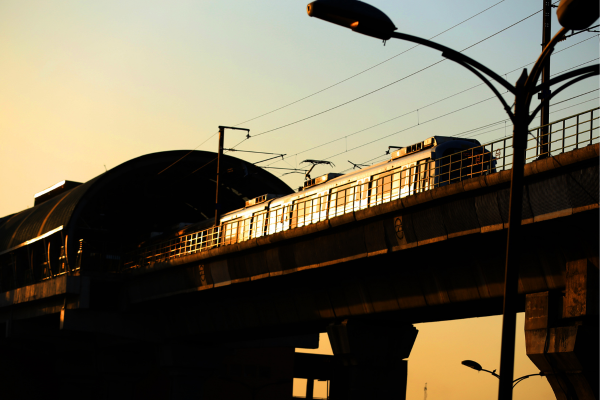
Mumbai Metro One has introduced a mixed-loop train operation from August 10 on the Versova-Andheri-Ghatkopar corridor, with the new arrangement aimed at easing congestion and reducing waiting times during the evening peak period.
Under the revised schedule, trains will alternate between two operating patterns. One service will run on a short loop between Ghatkopar and Andheri, while the following train will continue along the existing Ghatkopar-Versova full route. The operator is using the arrangement to increase the number of services on the busiest portion of the corridor without adding new infrastructure.
The most significant change will be on the Andheri-Ghatkopar section, where the interval between peak-hour trains has been reduced from 3 minutes 20 seconds to 3 minutes. Mumbai Metro One expects the shorter headway to increase carrying capacity on the section by more than 20%, equivalent to additional capacity for around 28,000 commuters.
The Andheri-Ghatkopar stretch is one of the busiest sections of the 11.4-km Versova-Andheri-Ghatkopar corridor. More than 85% of Mumbai Metro One passengers travelling on the corridor are expected to benefit from the revised arrangement, particularly those using the Andheri-Ghatkopar segment during the evening rush.
The short-loop services will operate specifically during the evening peak. The first short-loop train is scheduled to leave Andheri’s Down platform at 6:23 pm, while the last such service will depart at around 8:23 pm. This concentrated deployment is intended to direct additional capacity towards the period when demand is highest.
The revised operating pattern will also increase the total number of weekday services across the corridor. Mumbai Metro One currently operates 476 weekday trips, which will rise to 484 trips under the new timetable. The additional services are being achieved through changes to the operating pattern rather than through expansion of the existing corridor.
The adjustment, however, involves a corresponding change for commuters travelling between Versova and Azad Nagar. During peak hours, the headway on that section will increase to 362 seconds under the revised arrangement. The change therefore prioritises additional frequency on the high-demand Andheri-Ghatkopar segment while altering service intervals on another part of the corridor.
Mumbai Metro One CEO Shyamantak Choudhury said the mixed-loop operation is intended to make better use of the existing infrastructure and increase capacity during peak periods. The operator has described the revised schedule as an operational measure to reduce waiting times and provide more convenient services to commuters.
The introduction of short-loop services comes as Mumbai Metro One seeks to manage rising demand on its established east-west connection. By directing alternate trains towards the busiest section, the operator is attempting to improve passenger movement without undertaking physical expansion of the existing line.
For commuters using Andheri and Ghatkopar, the immediate change will be shorter intervals between trains during the evening peak, along with higher available carrying capacity. The revised timetable will remain focused on using the existing fleet and infrastructure more efficiently to accommodate demand on the corridor.
Advertisement













 Facebook
 Whatsapp
