Advertisement






What really powers the cloud? Behind every Google search, A...
A lot of what defines a home isn’t visible at handover. I...
Private equity has played a significant role in shaping Indi...
Luxury real estate is one of the most talked-about segments ...
Airports play a much bigger role than just enabling travel -...
• Indian Railways will launch its first indigenous hydrogen-powered train on 17 July 2026, with operations commencing on the Jind–Sonipat section of Northern Railway, marking a significant milestone in the country's transition towards sustainable rail transport.
• Powered by a 1,200 kW hydrogen fuel cell propulsion system, the 10-coach train can accommodate around 2,600 passengers and generates electricity onboard using hydrogen, producing only water vapour and heat as by-products.
• Supporting the project is India's largest railway hydrogen storage and refuelling facility at Jind, capable of storing nearly 3,000 kg of hydrogen, along with dedicated safety, monitoring and maintenance infrastructure.
• The pilot project aligns with the National Green Hydrogen Mission, promoting clean mobility, indigenous technology and reduced dependence on fossil fuels while laying the foundation for wider adoption of hydrogen-powered trains.
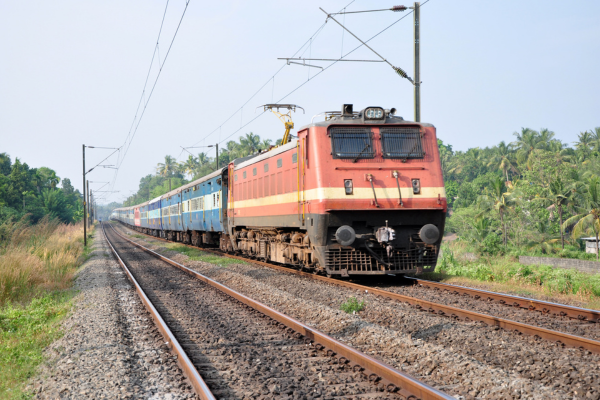
Indian Railways has entered a new phase of sustainable transportation with the launch of the country's first indigenously developed hydrogen-powered passenger train, which will begin operations on the Jind–Sonipat route under Northern Railway on 17 July 2026. The initiative marks India's entry into the select group of nations exploring hydrogen-powered rail technology and represents a major step towards cleaner, low-emission public transport.
Developed entirely in India in accordance with specifications prepared by the Research, Design and Standards Organisation (RDSO), the train has been designed as a pilot project to evaluate the operational feasibility of hydrogen fuel cell technology for railway applications. The project also supports the government's vision of Atmanirbhar Bharat and complements India's long-term decarbonisation goals.
The train comprises 10 coaches, including two Hydrogen Driving Power Cars (DPCs) and eight trailer coaches, with a passenger capacity of approximately 2,600. It is powered by a 1,200 kW Proton Exchange Membrane Fuel Cell (PEMFC) propulsion system and is approved to operate at a maximum speed of 75 kmph, with a design speed of 110 kmph. The service will connect Jind Junction, Gohana Junction and Sonipat, while serving several intermediate stations along the route.
Unlike conventional diesel locomotives, the train generates electricity onboard through a chemical reaction between hydrogen and oxygen inside the fuel cell. The process produces only water vapour and heat, eliminating carbon emissions during operation. Hydrogen also offers a significantly higher energy density than diesel, making it a promising alternative fuel for future railway operations.
To support the new service, Indian Railways has established the country's largest railway hydrogen storage and refuelling facility at Jind, Haryana, with the capacity to store nearly 3,000 kg of hydrogen. The facility has received the necessary approvals from the Petroleum and Explosives Safety Organisation (PESO) and has been developed in accordance with international safety standards, including NFPA-2 and the ISO 19880 series. The complete hydrogen ecosystem has also undergone an independent safety assessment by TÜV SÜD, Germany.
Extensive operational preparedness and safety measures have been integrated into the project. These include hydrogen leak detectors, flame detection systems, continuous ventilation, automated hydrogen shut-off mechanisms, real-time system monitoring in the locomotive cab and dedicated maintenance infrastructure at Shakurbasti in Delhi. During the initial phase of operations, trained technical personnel will accompany the train, while the hydrogen refuelling system will remain under round-the-clock monitoring.
The hydrogen train project extends beyond the introduction of a new passenger service. It establishes the infrastructure, safety protocols and technical expertise required for future hydrogen-powered rail operations in India. As Indian Railways continues its modernisation programme, the initiative is expected to contribute to the National Green Hydrogen Mission, reduce dependence on fossil fuels and support the country's objective of achieving net-zero carbon emissions through cleaner and more resilient transport systems.
Source: PIB
Advertisement













 Facebook
 Whatsapp
