Advertisement






What really powers the cloud? Behind every Google search, A...
A lot of what defines a home isn’t visible at handover. I...
Private equity has played a significant role in shaping Indi...
Luxury real estate is one of the most talked-about segments ...
Airports play a much bigger role than just enabling travel -...
• The Supreme Court has directed that contempt petitions alleging violations of its 2024 guidelines on demolition drives, commonly referred to as 'bulldozer justice', be transferred to the respective High Courts.
• The apex court observed that such cases involve disputed questions of fact that are better examined by jurisdictional High Courts.
• The Court clarified that its earlier safeguards against arbitrary demolitions remain in force and that interim protection granted in pending matters will continue until the High Courts consider them.
• The ruling shifts the adjudication of alleged non-compliance with the Supreme Court's demolition guidelines to constitutional courts at the state level.
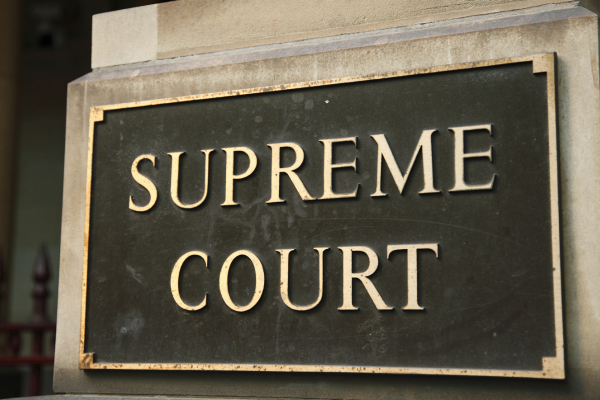
The Supreme Court has directed that contempt petitions alleging violations of its landmark 2024 judgment on demolition drives be transferred to the respective High Courts, holding that such matters require detailed examination of facts that are more appropriately undertaken by constitutional courts at the state level. The decision was delivered by a bench comprising Chief Justice of India Shri Surya Kant, Justice Joymalya Bagchi and Justice V. Mohana.
The petitions before the apex court alleged that several authorities had carried out demolition drives in contravention of the safeguards laid down in the Supreme Court's 2024 ruling, which prescribed procedural requirements to prevent arbitrary demolition of properties. Petitioners sought initiation of contempt proceedings against officials for alleged non-compliance with those directions.
While declining to entertain the contempt petitions directly, the bench observed that each case involved distinct factual issues requiring scrutiny of official records, notices issued by local authorities, the legal status of the properties concerned and compliance with applicable municipal and revenue laws. The Court noted that such fact-intensive inquiries are better suited to the jurisdictional High Courts rather than being undertaken by the Supreme Court in contempt proceedings.
Accordingly, the Supreme Court ordered that the records of all pending contempt petitions be transferred to the respective High Courts for adjudication. It clarified that the High Courts would be free to call for official records, seek evidence where necessary and determine whether the authorities had complied with the procedural safeguards laid down in the earlier judgment. The apex court also stated that it had not expressed any opinion on the merits of the individual allegations.
The bench further directed that the interim protection granted by the Supreme Court in the pending matters would continue until the concerned High Courts examine the cases. At the same time, it left it open to the parties to seek modification or vacation of those interim orders before the respective High Courts in accordance with law.
During the hearing, the Court also clarified that its 2024 judgment should not be interpreted as imposing a blanket prohibition on demolition drives. It observed that authorities remain empowered to remove illegal constructions and encroachments, provided they strictly adhere to the procedure established under the relevant municipal and statutory laws and ensure due process is followed.
The ruling reinforces the role of High Courts in examining allegations of non-compliance with the Supreme Court's demolition safeguards while preserving the legal principles laid down in the 2024 judgment. Going forward, aggrieved parties alleging unlawful demolitions will be required to approach the respective High Courts, which will determine each case based on its individual facts and applicable legal provisions.
Source PTI
Advertisement













 Facebook
 Whatsapp
