Advertisement






What really powers the cloud? Behind every Google search, A...
A lot of what defines a home isn’t visible at handover. I...
Private equity has played a significant role in shaping Indi...
Luxury real estate is one of the most talked-about segments ...
Airports play a much bigger role than just enabling travel -...
The Delhi government has initiated trials of spray injection road patching technology as part of its efforts to improve road maintenance and address potholes more efficiently, including during the monsoon season. Public Works Department (PWD) Minister Parvesh Sahib Singh recently witnessed a live demonstration of the fully mechanised repair system, which enables permanent pothole repairs in wet conditions while minimising traffic disruption. The technology repairs individual potholes within two to five minutes and allows roads to reopen immediately after completion. Officials said the process provides longer-lasting repairs than conventional cold mix methods, which often deteriorate within weeks. Following the trial, the government will assess the technology's performance before considering its wider adoption across Delhi's road network to strengthen maintenance practices and improve commuter safety.
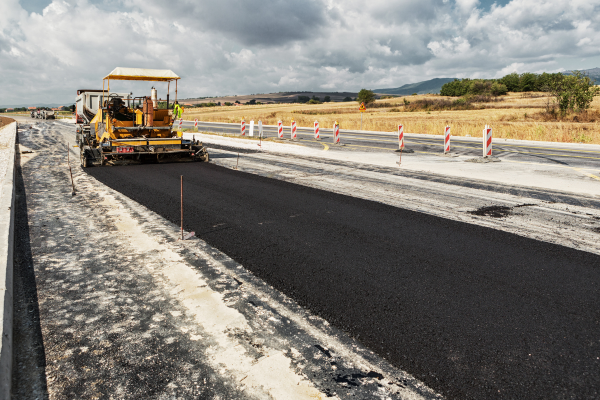
The Delhi government has commenced trials of spray injection road patching technology to improve pothole repairs across the Capital, with Public Works Department (PWD) Minister Parvesh Sahib Singh reviewing a live demonstration of the fully mechanised system during the past week. The initiative is intended to enable faster, durable and all-weather road repairs while reducing disruption to traffic, particularly during the monsoon when conventional repair methods are less effective.
According to the minister, the spray injection patching technique offers a modern approach to road maintenance by enabling permanent repairs with minimal inconvenience to commuters. He said the government was committed to adopting technologies that improve infrastructure quality and public services, adding that the trial would help determine whether the system should be deployed more widely across Delhi's road network.
Officials explained that the process is carried out using a single machine that first cleans the pothole with high-velocity compressed air before applying a bonding layer of bitumen emulsion. The equipment then injects emulsion-coated aggregates under high pressure into the pothole, with the force of the injection itself achieving the required compaction. As the method eliminates the need for rolling or additional machinery, each repair can be completed within two to five minutes, allowing the road to be reopened to traffic immediately after the work is finished.
The PWD said the bitumen emulsion bonds the aggregate to the walls of the pothole, resulting in repairs that are expected to remain effective for several years. In contrast, conventional cold mix patching methods often deteriorate within weeks, particularly during periods of heavy rainfall. Officials also noted that the technology can operate effectively on wet road surfaces, making it suitable for maintenance during the monsoon season when pothole formation is most severe.
The fully mechanised system is designed to minimise traffic disruption by requiring only a small operating crew and limited work space. According to officials, a single machine can repair approximately 100 to 150 potholes in a day, enabling quicker coverage of large stretches of road compared with traditional repair techniques. The process can also be used to repair deep potholes, edge breaks, utility cuts and wide pavement cracks across different categories of roads.
Following the trial, the Delhi government will evaluate the technology's operational performance before deciding on its broader implementation. The initiative forms part of the government's efforts to modernise road maintenance practices through technology-driven solutions that improve road durability, enhance commuter safety and reduce recurring maintenance requirements across the city's transport infrastructure.
Source - PTI
Advertisement













 Facebook
 Whatsapp
