Advertisement






What really powers the cloud? Behind every Google search, A...
A lot of what defines a home isn’t visible at handover. I...
Private equity has played a significant role in shaping Indi...
Luxury real estate is one of the most talked-about segments ...
Airports play a much bigger role than just enabling travel -...
Bengaluru, India's largest office market, recorded a 21% year-on-year decline in gross office leasing during the first half of 2026, as corporates delayed leasing decisions amid geopolitical uncertainty and AI-led business transformation, according to JLL India. The city leased 9.37 million sq ft of office space between January and June, compared with 11.79 million sq ft a year earlier. Across the seven major office markets, gross leasing declined 4% to 37.90 million sq ft. While Bengaluru, Delhi-NCR and Kolkata registered lower leasing volumes, Mumbai, Pune, Hyderabad and Chennai posted growth. JLL said Global Capability Centres (GCCs) remained the principal driver of demand, accounting for 41.7% of total leasing activity, while co-working operators achieved record absorption, reflecting continued demand for flexible office space from domestic and multinational occupiers.
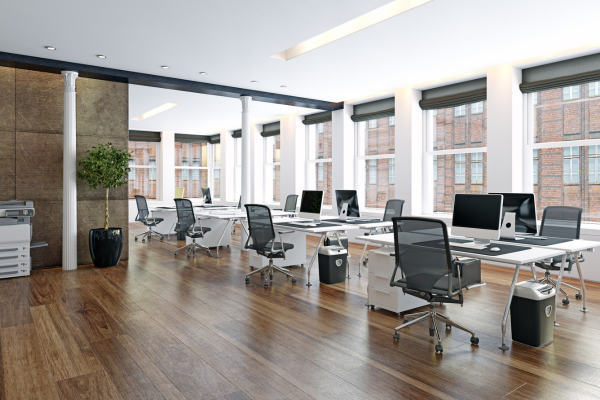
Bengaluru, India's largest office market, recorded a 21% year-on-year decline in gross office leasing during the January–June period of 2026, with occupiers adopting a cautious approach to expansion amid global geopolitical uncertainty and evolving business strategies influenced by artificial intelligence (AI), according to real estate consultancy JLL India.
The city recorded gross leasing of 9.37 million sq ft during the first half of 2026, compared with 11.79 million sq ft in the corresponding period last year. Gross leasing includes all concluded lease transactions and confirmed pre-commitments but excludes lease renewals and transactions that remain under negotiation.
Across India's seven major office markets, gross leasing declined by 4% to 37.90 million sq ft during the first six months of 2026 from 39.45 million sq ft in the year-ago period.
Among the major office markets, Bengaluru, Delhi-NCR and Kolkata witnessed lower leasing activity, while Mumbai, Pune, Hyderabad and Chennai reported year-on-year growth.
Delhi-NCR recorded a 21% decline in gross leasing to 6.6 million sq ft from 8.37 million sq ft during the same period last year. Kolkata registered the steepest fall among the seven cities, with leasing declining 29% to 0.67 million sq ft from 0.95 million sq ft.
In contrast, Chennai recorded a marginal 2% increase in leasing activity, with gross absorption rising to 3.98 million sq ft from 3.89 million sq ft. Hyderabad posted an 18% increase to 5.38 million sq ft, compared with 4.58 million sq ft in the corresponding period of the previous year.
Maharashtra's office markets also reported stronger performance. Mumbai witnessed an 18% rise in leasing to 5.88 million sq ft from 4.99 million sq ft, while Pune recorded the highest growth among the major markets, with gross leasing increasing 23% to 6.02 million sq ft from 4.88 million sq ft.
Commenting on the market, JLL said India's office sector continues to demonstrate resilience despite global occupiers taking a more measured approach to expansion as businesses adapt to AI-driven transformation and geopolitical developments.
Radha Dhir, Chief Executive Officer, India, JLL, said the office market is undergoing a structural shift, with Global Capability Centres (GCCs) emerging as the dominant source of demand. She noted that GCCs accounted for 41.7% of total leasing activity during the first half of 2026 and had already leased 15.8 million sq ft, placing the segment on course to surpass the record leasing volumes achieved in 2025.
According to Dhir, GCCs continue to leverage India's skilled workforce in artificial intelligence, data science and digital engineering to support product development, analytics platforms and innovation. She added that demand is also being driven by the banking, financial services and insurance (BFSI) and manufacturing sectors, alongside increasing occupier interest from retail, logistics, infrastructure and aerospace companies.
JLL further noted that co-working operators recorded a historic high of 10.23 million sq ft of leasing during the first half of 2026, reflecting sustained demand for flexible workspace solutions from both domestic and international occupiers.
Source - PTI
Advertisement













 Facebook
 Whatsapp
