Advertisement






What really powers the cloud? Behind every Google search, A...
A lot of what defines a home isn’t visible at handover. I...
Private equity has played a significant role in shaping Indi...
Luxury real estate is one of the most talked-about segments ...
Airports play a much bigger role than just enabling travel -...
Naveen Jindal Group is evaluating locations across at least nine states, including Gujarat, Odisha, Andhra Pradesh, Tamil Nadu, Jharkhand and Chhattisgarh, for the development of nuclear power projects with a planned capacity of 18 GW. The proposed investment, estimated to run into lakhs of crores of rupees, forms part of the group's diversification strategy and is intended to support the Centre's target of achieving 100 GW of nuclear power capacity by 2047. The projects will be undertaken through Jindal Nuclear Power Private Limited, a wholly owned subsidiary of Jindal Renewables. The group is also holding discussions with technology providers and state governments while assessing sites based on land availability, water resources, transmission connectivity, regulatory readiness and long-term project feasibility.
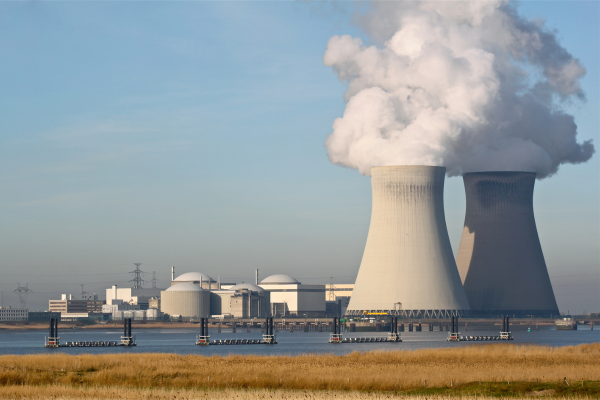
Naveen Jindal Group is exploring multiple locations across at least nine states to establish nuclear power projects with a combined planned capacity of 18 GW, as the conglomerate expands its presence in the energy sector. The company is evaluating sites in several coastal states, including Gujarat, Odisha, Andhra Pradesh and Tamil Nadu, as well as Jharkhand and Chhattisgarh, according to a group official familiar with the development.
The proposed projects form part of the group's strategy to diversify its energy portfolio and contribute to the Central government's objective of developing 100 GW of nuclear power capacity by 2047. The investments required for the planned capacity are expected to run into lakhs of crores of rupees.
The nuclear business will be undertaken through Jindal Nuclear Power Private Limited, a wholly owned subsidiary of Jindal Renewables. The Naveen Jindal Group has an existing presence across steel, mining, power, renewable energy and real estate.
According to the official, discussions are underway with multiple state governments regarding potential project locations. The company is assessing more than nine states as it identifies suitable sites for the planned nuclear facilities.
The locations are being evaluated on several technical and regulatory parameters, including the availability of contiguous land parcels, access to adequate water resources, geological and seismic suitability, transmission infrastructure, regulatory preparedness and the long-term viability of each project.
The official said the proposed plants are expected to deploy large module reactors (LMRs) with individual generating capacities of 700 MW and above. These reactors are intended to form the basis of the group's planned 18 GW nuclear generation portfolio.
Alongside site selection, the group is also holding discussions with multiple organisations to explore partnerships for sourcing nuclear technologies required for the projects. The official did not disclose the names of the companies involved in these discussions.
Citing industry estimates, the official said developing 1 GW of nuclear power capacity typically requires an investment of between INR 15,000 crore and INR 20,000 crore. The official also indicated that a project generally takes around three years to progress from concept to commissioning, although implementation timelines would depend on regulatory approvals, technology selection and project execution.
India has been pursuing a long-term expansion of its nuclear power capacity as part of its clean energy transition strategy. The Centre has identified nuclear energy as a key component of its future electricity mix to support rising power demand while reducing carbon emissions.
If implemented, the proposed projects would represent one of the largest planned private sector investments in India's nuclear power sector, subject to site approvals, regulatory clearances, technology partnerships and the prevailing policy framework governing private participation in nuclear energy development.
Source - PTI
Advertisement













 Facebook
 Whatsapp
