Advertisement






What really powers the cloud? Behind every Google search, A...
A lot of what defines a home isn’t visible at handover. I...
Private equity has played a significant role in shaping Indi...
Luxury real estate is one of the most talked-about segments ...
Airports play a much bigger role than just enabling travel -...
Uttar Pradesh showcased its infrastructure-led development strategy at the 16th RAHSTA Expo, with senior government officials highlighting plans to expand the state's expressway network, industrial corridors and digital infrastructure. The state currently has 22 expressways at various stages of planning and development, including nine operational, while the Uttar Pradesh State Industrial Development Authority (UPSIDA) is developing an 8,000-acre industrial land pipeline alongside over 5,000 acres of readily allotable land. National Highways Authority of India (NHAI) officials also outlined the country's highway development roadmap for 2026-27, focusing on technology adoption, digital project planning, asset monetisation and the construction of 5,000 km of national highways.
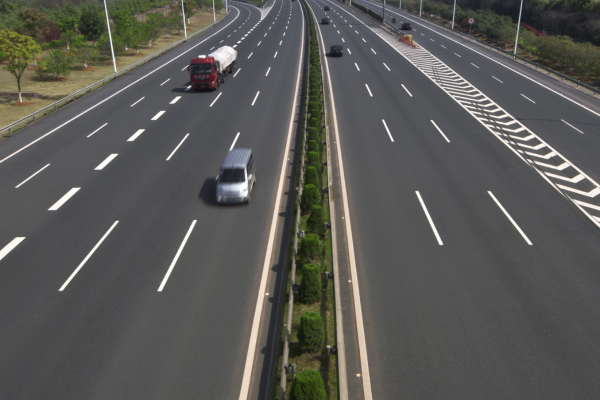
Uttar Pradesh presented its long-term infrastructure and industrial development strategy at the 16th RAHSTA Expo in Mumbai earlier this week, with senior state government officials outlining plans to expand expressway connectivity, industrial infrastructure and technology-driven project execution to strengthen the state's manufacturing and logistics ecosystem.
Delivering the keynote address, Srihari Pratap Shahi, IAS, Additional Chief Executive Officer of the Uttar Pradesh Expressways Industrial Development Authority (UPEIDA), said the state is integrating world-class expressway infrastructure with industrial development to support manufacturing, logistics and regional economic growth. He noted that the expanding expressway network is being used to develop industrial ecosystems, improve connectivity and attract investments across multiple sectors.
Speaking on Uttar Pradesh's industrial growth strategy, Deeksha Jain, IAS, Additional Chief Executive Officer of the Uttar Pradesh State Industrial Development Authority (UPSIDA), said the state's infrastructure expansion has been supported by sustained manufacturing growth and investment-friendly policies. She stated that Uttar Pradesh's manufacturing sector is recording annual growth of nearly 15%, while exports continue to increase steadily, with infrastructure emerging as a key driver of economic development.
Jain said Uttar Pradesh currently has 22 expressways under various stages of planning and development, of which nine are already operational. She added that the state also has five international airports, dedicated freight corridors, a large industrial land bank and one of the country's largest micro, small and medium enterprise (MSME) ecosystems.
Highlighting UPSIDA's role in industrial development, Jain said the authority has established 167 industrial areas across the state. It currently has more than 5,000 acres of industrial land available for allotment and is developing an additional pipeline of 8,000 acres for future industrial expansion.
She added that UPSIDA is adopting engineering, procurement and construction (EPC)-based project execution models, digital project monitoring systems, transparent online land allotment processes, third-party quality audits, drone-based monitoring and sustainable infrastructure practices to improve project delivery. The authority is also promoting sector-specific industrial clusters focused on automobiles, pharmaceuticals, logistics and advanced manufacturing, supported by plug-and-play infrastructure and single-window investor clearance mechanisms.
Addressing the conference, Mridul Dubey, Chief General Manager (Finance) at the National Highways Authority of India (NHAI), outlined the agency's priorities for the 2026-27 financial year. He said NHAI plans to award 4,000 km of highway projects while targeting construction of 5,000 km of national highways through improved project preparation, digital planning tools and integrated infrastructure development under the PM Gati Shakti initiative.
Dubey said India's highway sector is increasingly adopting advanced technologies, including drone surveys, artificial intelligence-based traffic management systems, digital inspections and Multi Lane Free Flow (MLFF) tolling, to improve operational efficiency and the user experience. He added that FASTag has reduced average toll waiting time by nearly 90% while generating mobility data to support infrastructure planning.
He also highlighted NHAI's financing strategy, stating that the authority has expanded the use of asset monetisation through Toll-Operate-Transfer (TOT) projects, Infrastructure Investment Trusts (InvITs) and project-specific financing models to recycle capital for future highway development.
The discussions at the RAHSTA Expo focused on integrating highways, industrial corridors, logistics infrastructure and digital technologies to strengthen India's transport network and manufacturing competitiveness, with Uttar Pradesh presented as a key example of infrastructure-led economic development.
Source - PTI
Advertisement













 Facebook
 Whatsapp
