Advertisement






What really powers the cloud? Behind every Google search, A...
A lot of what defines a home isn’t visible at handover. I...
Private equity has played a significant role in shaping Indi...
Luxury real estate is one of the most talked-about segments ...
Airports play a much bigger role than just enabling travel -...
The World Bank has approved a USD 890 million financing package to support the expansion of India's PM Surya Ghar: Muft Bijli Yojana, aimed at accelerating rooftop solar adoption across 10 million households. The funding comprises an USD 820 million loan, a USD 60 million concessional loan and a USD 10 million grant, while also seeking to mobilise USD 4.2 billion in private financing. The programme is expected to increase residential solar installations, lower household electricity costs and generate an estimated 1.7 million jobs across manufacturing, installation and renewable energy services, supporting India's transition towards a cleaner energy mix.
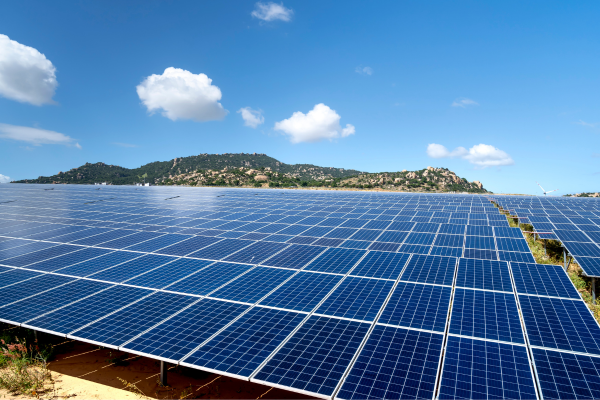
The World Bank Group has approved a USD 890 million financing package to support the expansion of India's national rooftop solar programme, strengthening efforts to increase residential adoption of clean energy and advance the country's renewable energy targets. The funding, approved by the World Bank's Board of Executive Directors earlier this week, is expected to help accelerate rooftop solar installations across millions of households while creating employment opportunities throughout the renewable energy value chain.
According to the World Bank, the financing package comprises an USD 820 million loan from the International Bank for Reconstruction and Development (IBRD), a USD 60 million concessional loan from the Clean Technology Fund and a USD 10 million grant from the IBRD's Livable Planet Fund.
In addition to the multilateral financing, the World Bank said it will facilitate the mobilisation of approximately USD 4.2 billion in private sector financing through commercial loans to enable households to install rooftop solar systems.
The funding will support the Government of India's PM Surya Ghar: Muft Bijli Yojana, which aims to install rooftop solar systems across 10 million urban and rural households. The programme has been designed to reduce household electricity expenses while promoting domestic manufacturing of rooftop solar equipment and expanding the country's clean energy capacity.
India has committed to achieving net-zero carbon emissions by 2070 and increasing the share of non-fossil fuel-based energy sources to 60% of its electricity generation mix by 2035. While utility-scale solar projects have expanded rapidly in recent years, residential rooftop solar adoption has remained comparatively limited, prompting the government to introduce targeted incentives under the PM Surya Ghar scheme.
The World Bank noted that it has been supporting India's rooftop solar sector for more than a decade, mobilising over USD 2 billion in financing that helped increase installed rooftop solar capacity from around 500 MW to more than 27 GW.
Paul Proccee, Acting Country Director for India at the World Bank, said the new financing would help accelerate the growth of residential rooftop solar while generating employment across manufacturing, installation and associated service industries.
Moez Cherif, Task Team Leader for the programme, said the initiative is intended to address financial barriers that have constrained residential solar adoption. He stated that the programme will also strengthen the capacity of electricity distribution companies, financial institutions and equipment vendors to provide integrated services to consumers.
According to the World Bank, the programme will enable households to access collateral-free financing for rooftop solar installations, allowing them to lower monthly electricity bills while contributing to India's clean energy transition.
The World Bank estimates that the programme will create around 1.7 million jobs across renewable energy manufacturing, system installation and related services, supporting both employment generation and the country's long-term sustainability objectives.
Source - PTI
Advertisement













 Facebook
 Whatsapp
