Advertisement






The Gulf conflict has disrupted global supply chains, pushed...
REITs have changed the way commercial real estate is owned a...

What does it take to preserve a real estate legacy while bui...
What really powers the cloud? Behind every Google search, A...
A lot of what defines a home isn’t visible at handover. I...
India recorded 5,13,563 road accidents in 2025, resulting in 1,83,382 deaths, with over-speeding emerging as the leading cause, according to information shared in Parliament. Road Transport and Highways Minister Nitin Gadkari also provided updates on road safety, national highway maintenance, EV adoption, highway asset monetisation, and project awards. During the first half of 2026, more than 2.85 lakh road accidents were reported. The government said it is continuing highway maintenance, expanding road infrastructure, and increasing the share of electric vehicles while taking action against contractors for poor-quality work.
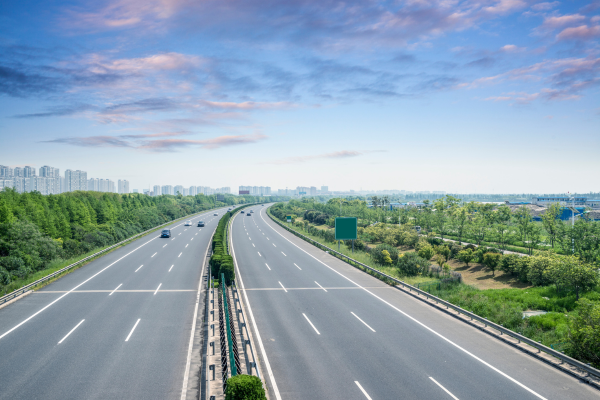
India recorded 5,13,563 road accidents in 2025, a 5.3 per cent increase compared to the previous year, with over-speeding remaining the biggest reason behind crashes, Road Transport and Highways Minister Nitin Gadkari informed the Lok Sabha during the past week. The accidents claimed 1,83,382 lives, which translates to nearly 21 deaths every hour, while an average of 59 road accidents occurred every hour across the country.
In a written reply, Gadkari said over-speeding was responsible for 82,124 road accidents in 2025, accounting for around 16 per cent of the total reported accidents. He added that driving on the wrong side and lane indiscipline resulted in 4,089 accidents, while jumping traffic signals caused 276 accidents. The use of mobile phones while driving was linked to 136 road accidents during the year.
The minister further informed Parliament that police departments across states and Union Territories reported 2,85,770 road accidents during the first six months of 2026, indicating that road safety continues to remain a major concern despite ongoing awareness campaigns and enforcement measures.
Among all states, Tamil Nadu reported the highest number of road accidents with 71,387 cases in 2025. Uttar Pradesh recorded the highest number of fatalities, with 27,550 people losing their lives in road crashes during the year.
Responding to another question, Gadkari said the adoption of electric vehicles (EVs) has been increasing because of their lower operating costs and zero tailpipe emissions compared with internal combustion engine (ICE) vehicles. According to VAHAN data, EV penetration increased from 0.71 per cent in FY 2019-20 to 8.26 per cent in FY 2025-26.
He also informed the House that, as of July 26, 2026, India had 1,00,23,396 registered electric vehicles across all vehicle categories, reflecting the steady growth of the country's EV market. The government has been supporting EV adoption through various policy measures and incentives over the past few years to reduce emissions and dependence on conventional fuels.
On highway financing, Gadkari said the government has monetised assets worth INR 1,72,898 crore through the Toll-Operate-Transfer (TOT) model, Infrastructure Investment Trusts (InvITs), and project-based financing. He added that between FY 2021-22 and FY 2025-26, a total of 317 projects covering 11,711.81 km were awarded under the Hybrid Annuity Model (HAM) and Build-Operate-Transfer (BOT) model, involving a total capital investment of INR 4,57,547.46 crore.
Providing an update on the National Highway network, the minister said highway development and maintenance is a continuous exercise. He informed Parliament that around 11,500 km of National Highways had been reported to be in poor or damaged condition over the last three years and the current year, and immediate maintenance work had been carried out on these stretches.
Gadkari further stated that India's National Highway network currently spans around 1.46 lakh km. Of this, nearly 36,000 km is under development, around 58,000 km is under the Defect Liability Period (DLP) or concession period, while about 41,000 km is under maintenance through Short-Term Maintenance Contracts (STMC), Performance-Based Maintenance Contracts (PBMC), and departmental maintenance by the Border Roads Organisation (BRO), which covers approximately 4,000 km.
Looking ahead, the government plans to undertake maintenance work on 20,000 km of National Highways during 2026-27 as part of its target to bring the entire National Highway network under regular maintenance coverage.
The minister also informed Parliament that 21 concessionaires and contractors had been blacklisted or penalised during the last two years for poor-quality execution of works and other violations related to tender conditions.
Source PTI
Advertisement













 Facebook
 Whatsapp
