Advertisement






What really powers the cloud? Behind every Google search, A...
A lot of what defines a home isn’t visible at handover. I...
Private equity has played a significant role in shaping Indi...
Luxury real estate is one of the most talked-about segments ...
Airports play a much bigger role than just enabling travel -...
India's warehousing and industrial real estate market recorded steady growth during the first half of 2026, supported by strong occupier demand across key sectors and continued infrastructure development. According to Vestian, leasing activity increased 16 per cent year-on-year to 22 million square feet across seven major cities, while institutional investments rose 53 per cent to USD 49 million. Although investment volumes improved, the segment continued to account for only 1 per cent of total institutional investments, indicating that investors remain selective despite positive market fundamentals.
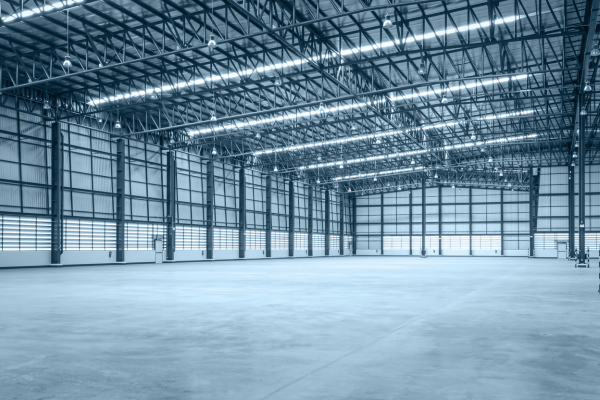
India's warehousing and industrial real estate segment witnessed healthy growth during the first half of 2026, with leasing activity and institutional investments both registering annual increases, according to a report released by Vestian.
The US-based real estate consultancy said leasing of warehousing and industrial space reached 22 million square feet across the seven major cities of Mumbai, Delhi-NCR, Chennai, Kolkata, Pune, Hyderabad and Bengaluru during the first half of 2026, marking a 16 per cent year-on-year increase. The report noted that occupier demand remained resilient despite the evolving global economic environment.
Demand for warehousing space continued to be led by third-party logistics (3PL) companies, followed by the consumer goods and services and engineering and manufacturing sectors. Vestian attributed the rise in leasing activity to sustained expansion in domestic manufacturing, strong consumption demand and continued investment in infrastructure, all of which have strengthened the need for modern logistics and warehousing facilities.
The report also highlighted an increase in institutional investments in the segment. During the first six months of 2026, institutional investments reached USD 49 million, compared with USD 32 million in the corresponding period last year, reflecting a 53 per cent annual growth.
However, despite this improvement, the warehousing and industrial segment accounted for only 1 per cent of the overall institutional investments in the Indian real estate sector during the first half of 2026. According to Vestian, this indicates that investors continue to adopt a cautious approach while allocating capital to the sector.
Providing his assessment of the market, Shrinivas Rao, Chief Executive Officer of Vestian, said the Indian warehousing sector is moving beyond its traditional focus on supply chain optimisation, operational efficiency and proximity to demand centres. He observed that sustainability has become an increasingly important factor for occupiers, with more companies preferring Grade A green warehouses that support their environmental, social and governance (ESG) goals while meeting long-term operational requirements.
Rao further stated that favourable government policies and ongoing infrastructure development are expected to accelerate this transition. He added that these factors are likely to strengthen the sector's attractiveness for both global occupiers and long-term institutional investors.
The positive outlook is also supported by broader policy measures taken over the past few years. Initiatives such as the PM Gati Shakti National Master Plan, expansion of dedicated freight corridors, the implementation of the Goods and Services Tax (GST), and continued investment in multimodal logistics infrastructure have contributed to improving supply chain efficiency and boosting demand for organised warehousing across key industrial and consumption centres. At the same time, the growing presence of e-commerce, manufacturing and organised retail has continued to support demand for Grade A logistics facilities.
Looking ahead, Vestian expects both leasing activity and institutional investments in the warehousing and industrial segment to increase further during the second half of 2026, supported by continued occupier demand, infrastructure expansion and an improving investment environment.
Source PTI
Advertisement













 Facebook
 Whatsapp
