Advertisement






The Gulf conflict has disrupted global supply chains, pushed...
REITs have changed the way commercial real estate is owned a...

What does it take to preserve a real estate legacy while bui...
What really powers the cloud? Behind every Google search, A...
A lot of what defines a home isn’t visible at handover. I...
A home-buying budget of INR 1 crore delivers vastly different outcomes across India's residential markets in 2026, reflecting the country's wide variations in property prices. While the amount may secure only a compact apartment in premium locations such as Mumbai or South Delhi, it can buy a spacious three or four-bedroom home in cities like Ahmedabad, Kolkata or Lucknow. Based on prevailing residential price trends across key micro-markets in 2026, this comparison highlights how location continues to be the single biggest determinant of home size, affordability and value for money.
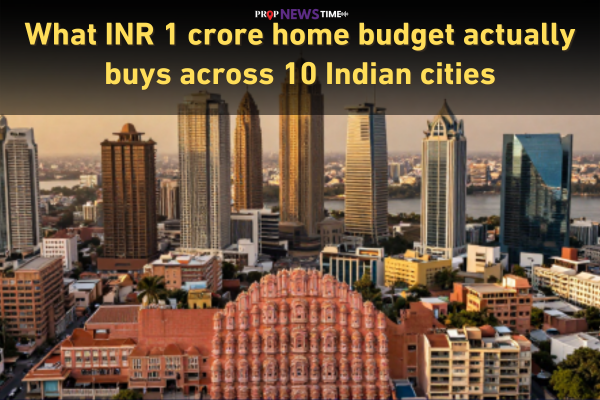
In 2026, a budget of INR 1 crore remains a significant financial milestone for many Indian homebuyers. However, the purchasing power of that amount changes dramatically depending on the city, and even the neighbourhood, where one plans to buy. Residential prices across India's metropolitan and emerging urban markets continue to vary widely, resulting in substantial differences in the size, configuration and type of home that buyers can acquire for the same investment.
While premium business districts command some of the country's highest prices, suburban and emerging locations continue to offer considerably larger homes at comparatively lower rates. The comparison below provides a broad indication of what an INR 1 crore budget can typically purchase across 10 major Indian cities based on prevailing 2026 residential asking prices. Actual transaction values may vary depending on the project, developer, specifications and negotiations.
Mumbai: The country's costliest housing market
Mumbai remains India's most expensive residential market. In established suburbs such as Ghatkopar, Mulund and Chembur, an INR 1 crore budget generally buys around 400–590 sq ft, typically sufficient for a compact one-bedroom apartment. Moving towards Thane increases the available area to roughly 400–830 sq ft, while Navi Mumbai locations such as Panvel, Ulwe and Kharghar can offer between 670 and 1,650 sq ft, making larger two or even three-bedroom homes possible. In South Mumbai's premium neighbourhoods, however, the same budget may not be enough for anything beyond a studio apartment.
Delhi NCR: Three distinct residential markets
Delhi NCR presents three very different housing markets. In Gurgaon, buyers can expect approximately 500–770 sq ft in mid-market locations such as Sohna Road, New Gurgaon and Dwarka Expressway. Noida offers significantly better value, where INR 1 crore can purchase around 830–1,100 sq ft, suitable for a comfortable two or small three-bedroom apartment. Delhi itself varies sharply, with East Delhi offering homes exceeding 1,000 sq ft, while prime South Delhi localities may provide less than 300 sq ft within the same budget.
Bengaluru: Balanced pricing across the city
Bengaluru continues to maintain relatively balanced pricing compared with other technology hubs. Based on average city prices, INR 1 crore can typically buy around 825 sq ft, suitable for a standard two-bedroom apartment. More affordable areas such as Yelahanka or Hennur Road offer between 1,100 and 1,540 sq ft, whereas premium localities including Whitefield and Koramangala reduce the available space to approximately 540–770 sq ft.
Pune: Greater space outside premium corridors
Pune offers considerably better value outside its premium residential pockets. At average city prices, buyers can expect around 770 sq ft. Affordable localities such as Wagholi, Moshi and Undri allow purchases ranging from 1,250 to 2,000 sq ft, making spacious three-bedroom homes possible. Prime areas including Baner and Kharadi generally provide between 625 and 1,000 sq ft.
Hyderabad: Strong value among IT destinations
Hyderabad remains one of India's more affordable technology-driven housing markets. At prevailing average prices, INR 1 crore can buy roughly 1,075 sq ft, accommodating a comfortable two or three-bedroom apartment. Premium western corridors such as Gachibowli, HITEC City, Kokapet and Banjara Hills typically offer between 665 and 1,250 sq ft, while outer growth corridors can exceed 1,500 sq ft.
Chennai: Larger homes beyond the city centre
Chennai continues to witness relatively stable residential pricing compared with several other metropolitan cities. Along the OMR corridor and southern suburbs, a budget of INR 1 crore generally purchases between 1,250 and 1,400 sq ft, making spacious three-bedroom apartments common. In premium central neighbourhoods including T. Nagar and Poes Garden, the available space reduces to around 770 sq ft.
Kolkata: High affordability with generous space
Among India's metropolitan cities, Kolkata remains one of the most affordable housing markets. Premium locations such as New Town, Salt Lake and EM Bypass can still offer between 1,265 and 1,800 sq ft within an INR 1 crore budget. In relatively lower-priced eastern and northern parts of the city, buyers may find homes exceeding 2,000 sq ft.
Ahmedabad: Maximum value for homebuyers
Ahmedabad offers perhaps the strongest value proposition among India's major cities. With average residential prices significantly lower than most metropolitan markets, INR 1 crore can purchase nearly 2,270 sq ft on average. Buyers can often choose between spacious three or four-bedroom apartments and, in many localities, even independent houses within this budget.
Chandigarh, Mohali and Zirakpur: Sharp contrasts within one region
The Chandigarh region demonstrates considerable variation in pricing. Prime sectors within Chandigarh city generally offer only 555–830 sq ft for INR 1 crore because of limited land availability and sustained demand. However, neighbouring Mohali and Zirakpur provide between 1,250 and 2,000 sq ft within the same budget, making them attractive alternatives for buyers prioritising space.
Lucknow: Spacious homes in a growing Tier-II city
Lucknow continues to combine affordability with improving infrastructure. At current average prices, a budget of INR 1 crore typically buys around 1,490 sq ft, making large three-bedroom apartments widely accessible. Developing peripheral areas provide even greater value for buyers seeking larger residences.
Ultimately, an INR 1 crore home budget has no single definition in India's housing market. In cities such as Mumbai and premium parts of Delhi NCR, it may secure only a compact apartment, whereas in Ahmedabad, Kolkata, Lucknow or emerging suburban corridors across several metros, the same investment can buy a substantially larger home with additional amenities. As infrastructure expands and new growth corridors emerge, affordability is increasingly being shaped not only by the city itself but also by the specific micro-market, making location the defining factor in determining value for money.
Source: SquareYards, 99acres, NoBroker, Cyril Jarnias, Business Standard/Anarock, ZYN33, Homefleet, Blox.xyz, SBP Group, and Housivity.
Advertisement













 Facebook
 Whatsapp
