Advertisement






What really powers the cloud? Behind every Google search, A...
A lot of what defines a home isn’t visible at handover. I...
Private equity has played a significant role in shaping Indi...
Luxury real estate is one of the most talked-about segments ...
Airports play a much bigger role than just enabling travel -...
Mumbai is set to develop India's first travelator-equipped skywalk integrating Metro, Monorail and suburban railway services into a single pedestrian corridor. The project aims to improve last-mile connectivity, reduce interchange time and provide safer, weather-protected movement for commuters between major transit systems. By creating a seamless multimodal transport link, the initiative is expected to enhance passenger convenience, encourage greater use of public transport and support Mumbai's broader urban mobility and infrastructure development goals.
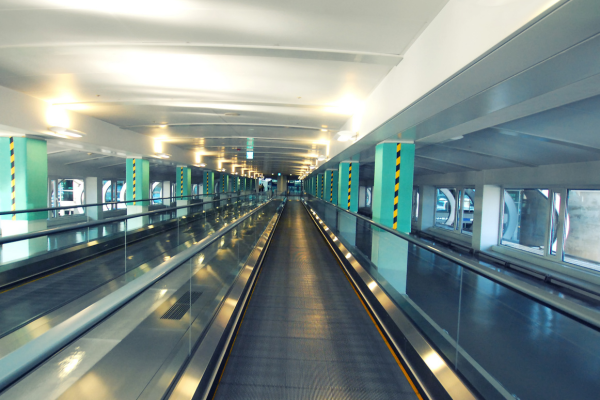
Mumbai is preparing to introduce India's first travelator-equipped skywalk designed to connect the city's Metro, Monorail and suburban railway networks through a seamless pedestrian corridor. The proposed infrastructure project represents an important step towards improving multimodal connectivity by enabling commuters to transfer between different modes of public transport more efficiently while reducing dependence on road-based travel for last-mile movement.
The planned skywalk will incorporate automated travelators to assist pedestrian movement along the interchange route, making daily commutes faster and more convenient, particularly during peak hours. By linking three major public transport systems within a single integrated corridor, the project seeks to minimise walking distances, improve accessibility and reduce congestion around transit hubs where large passenger volumes converge every day.
Mumbai's public transport network carries millions of passengers daily across suburban railways, Metro corridors and the Monorail system. However, interchanging between these modes often requires commuters to navigate busy roads, negotiate traffic intersections or walk considerable distances between stations. The proposed skywalk has been conceived to address these challenges by providing a continuous, elevated and weather-protected pathway that enables safer and more efficient movement.
Apart from enhancing commuter convenience, the project is expected to strengthen the city's broader strategy of promoting integrated urban mobility. Transport planners increasingly recognise that the success of mass transit systems depends not only on rail infrastructure but also on the quality of interchange facilities that connect different modes of transport. Seamless transfers encourage greater use of public transport by reducing travel time and improving the overall commuting experience.
The travelator-equipped skywalk is also expected to improve accessibility for senior citizens, persons with disabilities and passengers carrying luggage by reducing the physical effort required during station interchanges. The inclusion of mechanised pedestrian infrastructure aligns with international practices adopted in several major metropolitan transit systems where travelators facilitate movement across large transport terminals and interchange stations.
The initiative complements Mumbai's ongoing investment in transport infrastructure, including Metro expansion, suburban railway upgrades, road connectivity projects and multimodal integration programmes. As these networks continue to expand, efficient pedestrian connectivity between them becomes increasingly important to maximise infrastructure utilisation and improve passenger distribution across the transport system.
From an urban planning perspective, the project demonstrates a shift towards integrated mobility solutions that prioritise pedestrians alongside large-scale transport infrastructure. Elevated walkways equipped with modern commuter facilities can help reduce surface-level congestion, improve road safety and create more organised access to transit stations. Such infrastructure also supports transit-oriented development by making public transport more attractive for daily commuters.
Once completed, the travelator skywalk is expected to become a landmark addition to Mumbai's transport ecosystem and the first project of its kind in the country. By bringing together Metro, Monorail and suburban rail services through a single integrated pedestrian link, the project has the potential to transform the commuting experience while reinforcing Mumbai's position as a leader in adopting innovative urban mobility solutions. The initiative is expected to serve as a reference model for multimodal transport integration in other rapidly growing Indian cities.
Advertisement













 Facebook
 Whatsapp
