Advertisement






What really powers the cloud? Behind every Google search, A...
A lot of what defines a home isn’t visible at handover. I...
Private equity has played a significant role in shaping Indi...
Luxury real estate is one of the most talked-about segments ...
Airports play a much bigger role than just enabling travel -...
India's Gati Shakti Cargo Terminal (GCT) network continued to expand, with 142 operational terminals handling 146 million tonnes of freight during FY26, according to information shared by Railway Minister Ashwini Vaishnaw in the Lok Sabha. The terminals, developed under a policy aimed at attracting private investment, have an estimated annual freight handling capacity of 224 million tonnes and have drawn around INR 10,000 crore in private investment. The initiative supports multiple industries by improving rail connectivity, reducing logistics costs and strengthening the country's multimodal freight infrastructure.
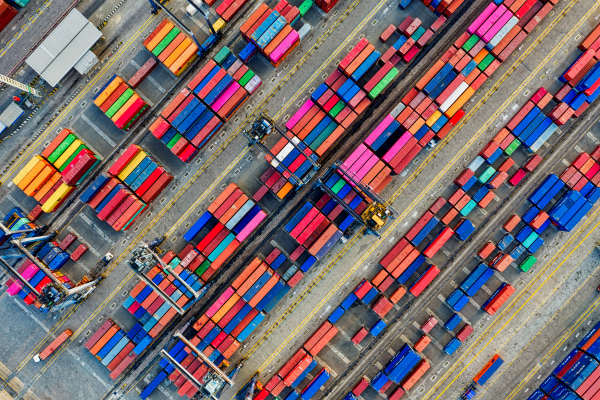
The network of Gati Shakti Cargo Terminals (GCTs) handled 146 million tonnes (MT) of freight during FY26, Railway Minister Ashwini Vaishnaw informed the Lok Sabha in a written reply while providing an update on the implementation and performance of the cargo terminal programme.
The minister said 142 Gati Shakti Cargo Terminals have been commissioned across the country so far. In addition, In-Principle Approvals (IPAs) have been granted for the development of another 310 GCTs at different locations, indicating that the rail freight infrastructure network is set to expand further in the coming years.
According to the minister, the 142 operational terminals have an estimated freight handling capacity of 224 million tonnes per annum (MTPA). These terminals collectively handled 146 MT of freight during FY26.
He further informed the House that the Gati Shakti Cargo Terminal policy has attracted nearly INR 10,000 crore in private investment. The policy was introduced to encourage private participation in the development of rail-linked cargo terminals, helping expand freight infrastructure without relying entirely on public funding.
The minister also shared that the terminals handle a wide range of commodities, including cement, steel, foodgrains, fertilisers, coal, fly ash, minerals, containers, automobiles, agricultural produce, and several other bulk as well as non-bulk cargo.
Vaishnaw stated that the policy has supported key sectors such as cement, steel, power, mining, agriculture, logistics and manufacturing by providing better rail connectivity and modern cargo handling facilities.
He added that the development of Gati Shakti Cargo Terminals has improved the efficiency of rail freight movement by enabling faster loading and unloading operations, reducing first-mile and last-mile logistics costs, improving wagon turnaround time and encouraging a shift of freight movement from road to rail. These improvements have contributed to making rail-based logistics more efficient and competitive.
The Gati Shakti Cargo Terminal policy forms part of the government's broader PM Gati Shakti National Master Plan, which aims to integrate transport infrastructure across railways, roads, ports, airports and logistics networks. The initiative is intended to improve multimodal connectivity, reduce logistics costs and strengthen supply chains for industries across the country.
Source PTI
Advertisement













 Facebook
 Whatsapp
